Excavation depth and base thickness written into every quote
Compacted in lifts, not once at the end
Edge restraint on every open edge
Pavers only, so we do one thing properly
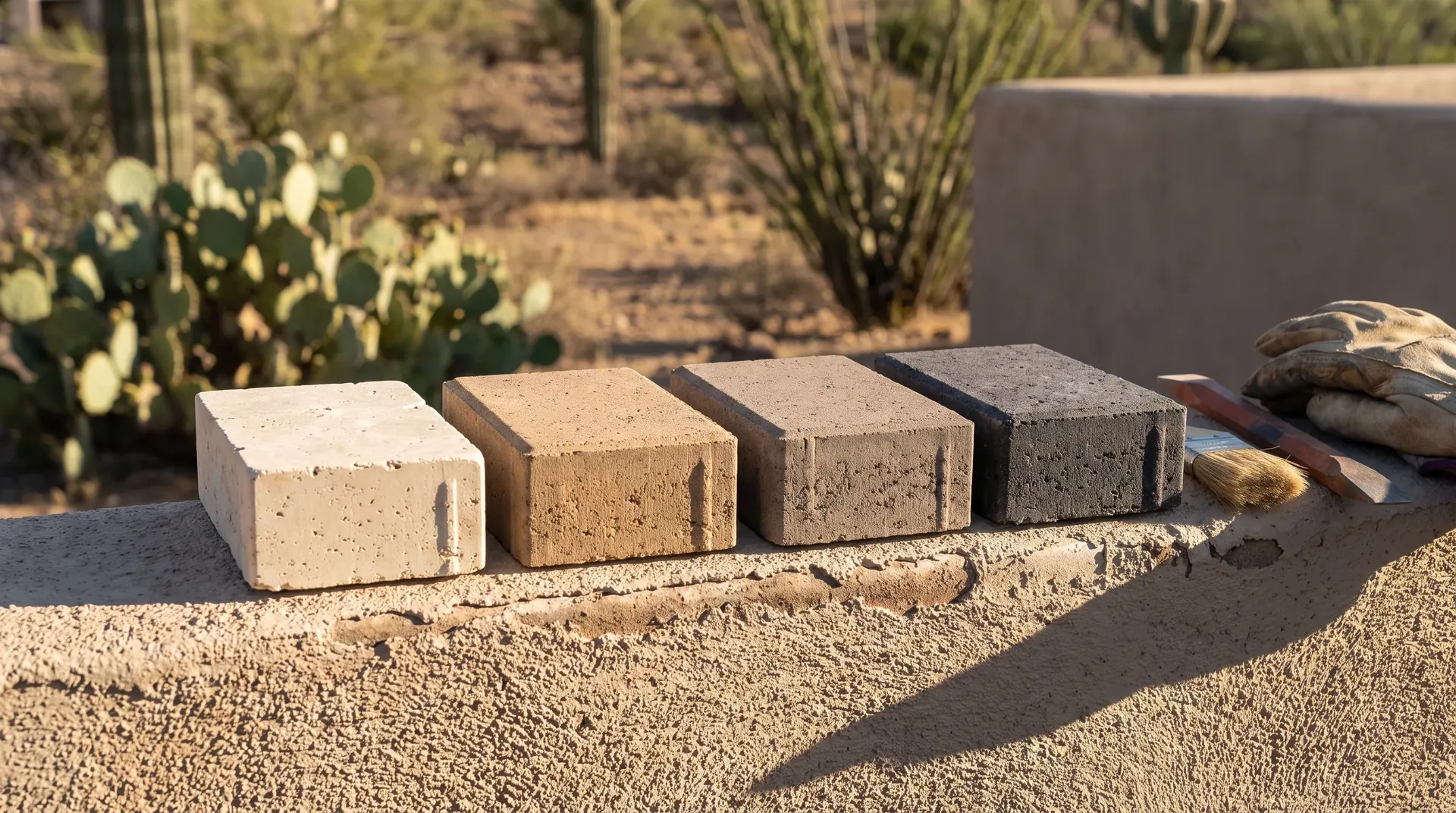
Colour beats material, and shade beats both. If you remember nothing else from this page, remember that order, because it is the opposite of how the question usually gets answered.
A pale travertine and a pale concrete paver in the same position on the same afternoon are close to each other. A pale paver and a charcoal paver of the same material are not remotely close. And any of them under a solid roof is comfortable, while any of them in full afternoon sun in July is not.
The air temperature is the least of it
On a 105 degree afternoon the air is not the problem. A surface in direct sun absorbs solar energy all day and re radiates it, so by mid afternoon an unshaded hard surface is far hotter than the air above it. That is why the short walk from the back door to the pool is the part everybody remembers.
Three things decide how hot a given surface gets. How much sunlight it reflects rather than absorbs, which is overwhelmingly a function of colour. How much heat it can store, which is a function of mass and material. And how long it has been in the sun, which is why a west facing patio is at its worst at five in the afternoon rather than at noon.
Colour dominates the first factor, and the first factor dominates the outcome.
Roughly coolest to hottest, in full sun
1. Pale travertine and light natural stone
The best common performer. Naturally light in colour, and travertine has a well earned reputation on Arizona pool decks for exactly this reason. Its surface texture also helps, since a pitted face has less contact area with a bare foot than a smooth one.
2. Light concrete pavers in buff, sand and pale grey
Very close behind, and the workhorse choice for most yards. Widely available in genuinely light tones, and the joints break up the surface slightly.
3. Pale porcelain
Light porcelain performs well and is dimensionally precise. Worth noting that a dark porcelain is one of the hottest surfaces on this list, so the material tells you nothing without the colour.
4. Clay brick in lighter buffs
Mid range. Standard red clay brick sits below this, closer to the middle of the list, because the colour is doing what colour does.
5. Standard red and umber clay brick
Middling and perfectly usable in a courtyard or an entry, less ideal as a large unshaded pool surround.
6. Plain grey concrete
Middling, and better than most people assume. It also lightens as it weathers, which works in its favour over time.
7. Dark charcoal and deep brown pavers
Attractive in photographs and genuinely unpleasant barefoot in July. If you want a dark surface, put it where it is shaded or where nobody walks without shoes.
8. Dark stained or sealed dark surfaces in full sun
The hottest option, combining a dark colour with thermal mass. These hold heat into the evening, which matters if you use the space after sunset in summer.
Spend on shade before you spend on the surface
Any surface on that list, under a solid roof, is comfortable. That is not a partial improvement, it removes the mechanism that heats the surface in the first place.
So on an unshaded area that you intend to use in summer, a ramada or a solid patio cover does more for usability than any material upgrade you can buy for the same money, and it keeps working in twenty years when the colour has softened.
Two practical notes. An open topped pergola filters sun rather than removing it, so it helps meaningfully but does not deliver the same result as a solid roof. And a tree that will eventually shade a patio is worth planting now, because eventually arrives faster here than people expect.
We do not build shade structures, so treat that as a genuine recommendation rather than an upsell.
Be sceptical of specific numbers
Light coloured, textured surfaces genuinely do run cooler than dark, smooth ones, and that is well understood physics rather than marketing.
What deserves scepticism is any product claiming a dramatic temperature reduction independent of its colour, or claiming a surface stays comfortable in direct summer sun here. If a product is pale, it will help. If someone quotes you a specific degree reduction, ask what conditions it was measured under and at what time of day.
This is the one decision you cannot change later
You can add shade to a dark patio, and that is the usual fix. You cannot make an installed surface lighter without replacing it.
So have the conversation before you choose a colour, standing in the actual space, thinking honestly about which hours you will use it. Look at samples outdoors in real sunlight, not on a screen and not under shop lighting. Any contractor who does not raise surface temperature in a Tucson yard has not thought about it.
From a People Also Ask harvest
Questions people actually ask
What are the best pavers for Arizona heat?
The lightest colour you are happy to live with, in a material with some surface texture. Pale travertine, and light buff, sand or pale grey concrete pavers, are the usual answers and they perform similarly to each other. Material category matters far less than tone. Whatever you choose, adding shade over the area people actually stand in will do more than any material decision.
Do pavers get hot?
Yes, all of them, and how hot depends mostly on colour. A pale buff paver in full Tucson sun is tolerable barefoot for short periods and a charcoal one in the same spot is not. No paver stays cool in direct afternoon sun in July, and any product marketed on that basis is overstating what colour and material can do.
Are pavers heat resistant?
They tolerate heat without damage, so nothing on this list will be harmed by a Tucson summer. The more useful question is how hot the surface gets underfoot, which is a different property and one that colour controls. Heat resistance and surface temperature get conflated in marketing fairly often. ---
If you would rather we did it
The work behind this guide
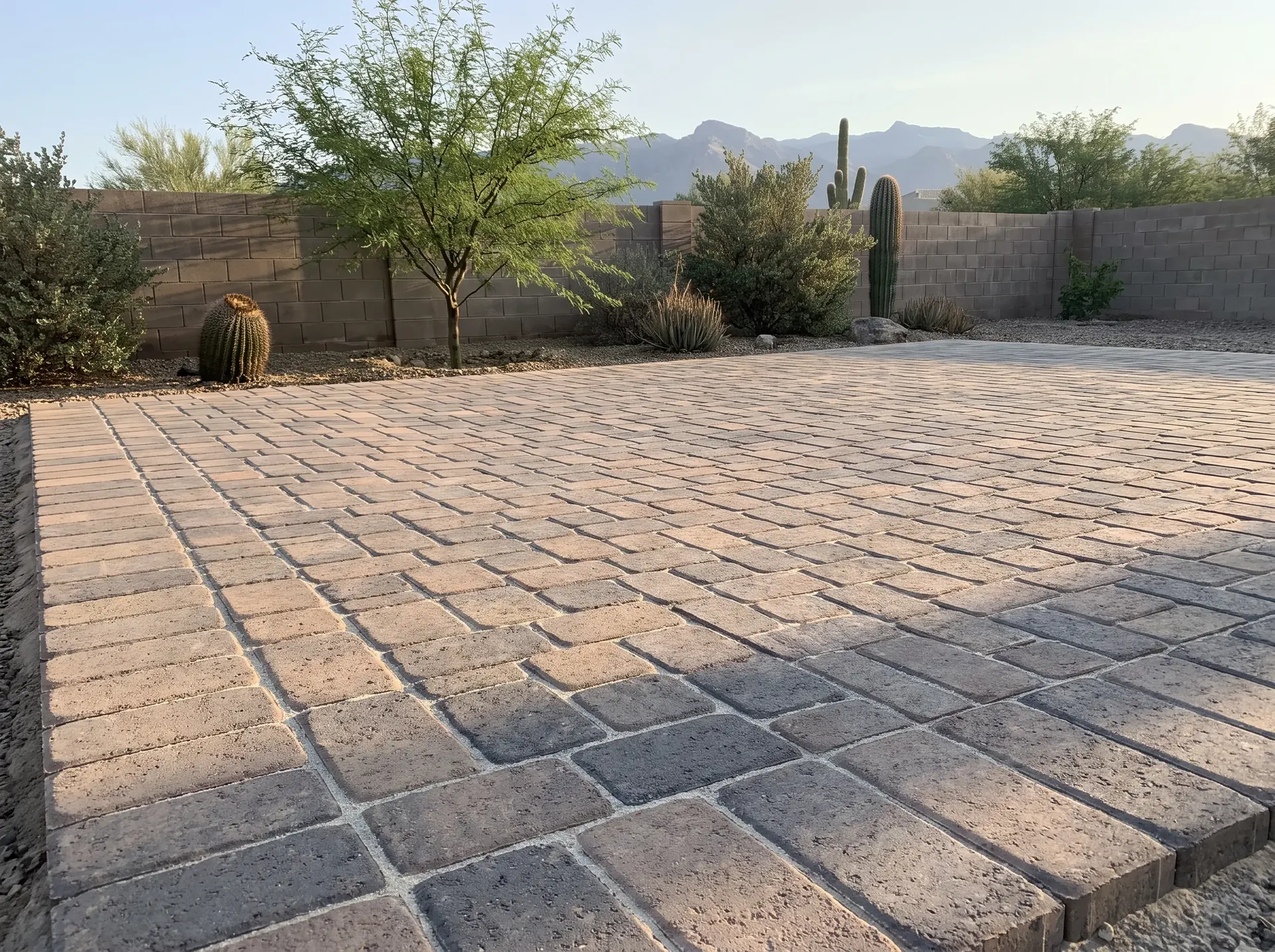 Paver PatiosThe main entertaining surface, sized around what actually goes on it and laid with the fall running away from the house. Excavation and base depth quoted in writing, edge restraint on every open edge.See the detail
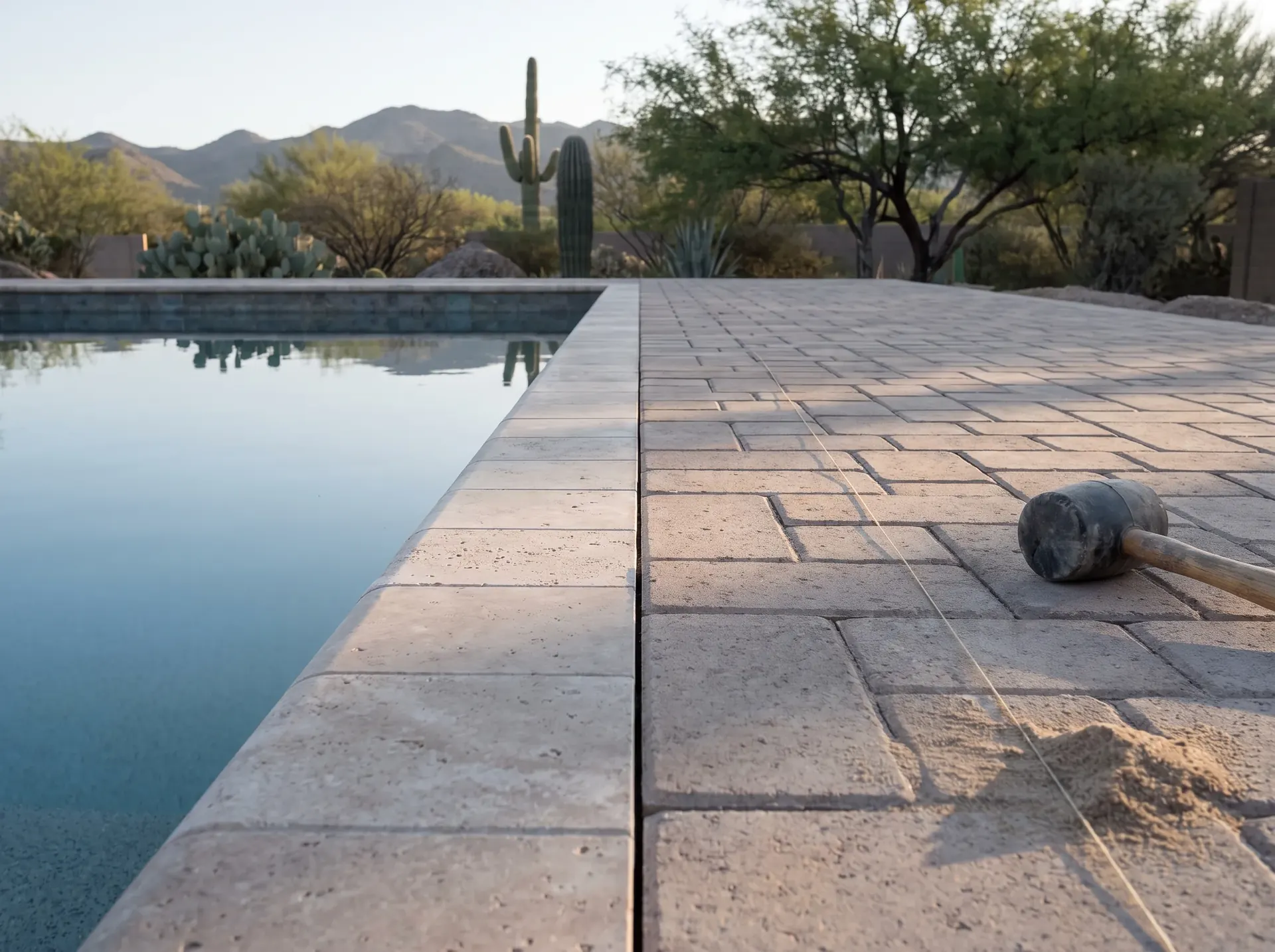 Pool Deck Pavers and CopingCoping set first and the deck built to it, fall running away from the water rather than into it, and light materials chosen because people cross this surface barefoot and wet.See the detail
Free on site quote
Choosing a colour?
Tell us where the area is, which direction it faces and what hours you want to use it. We will bring samples out and look at them in the sun rather than in a showroom.
Or call (520) 555-0194. Mon to Fri, 7am to 5pm. Saturday by appointment.
That is with us
We will call to arrange the site visit, usually the same working day. If it is urgent, call(520) 555-0194.