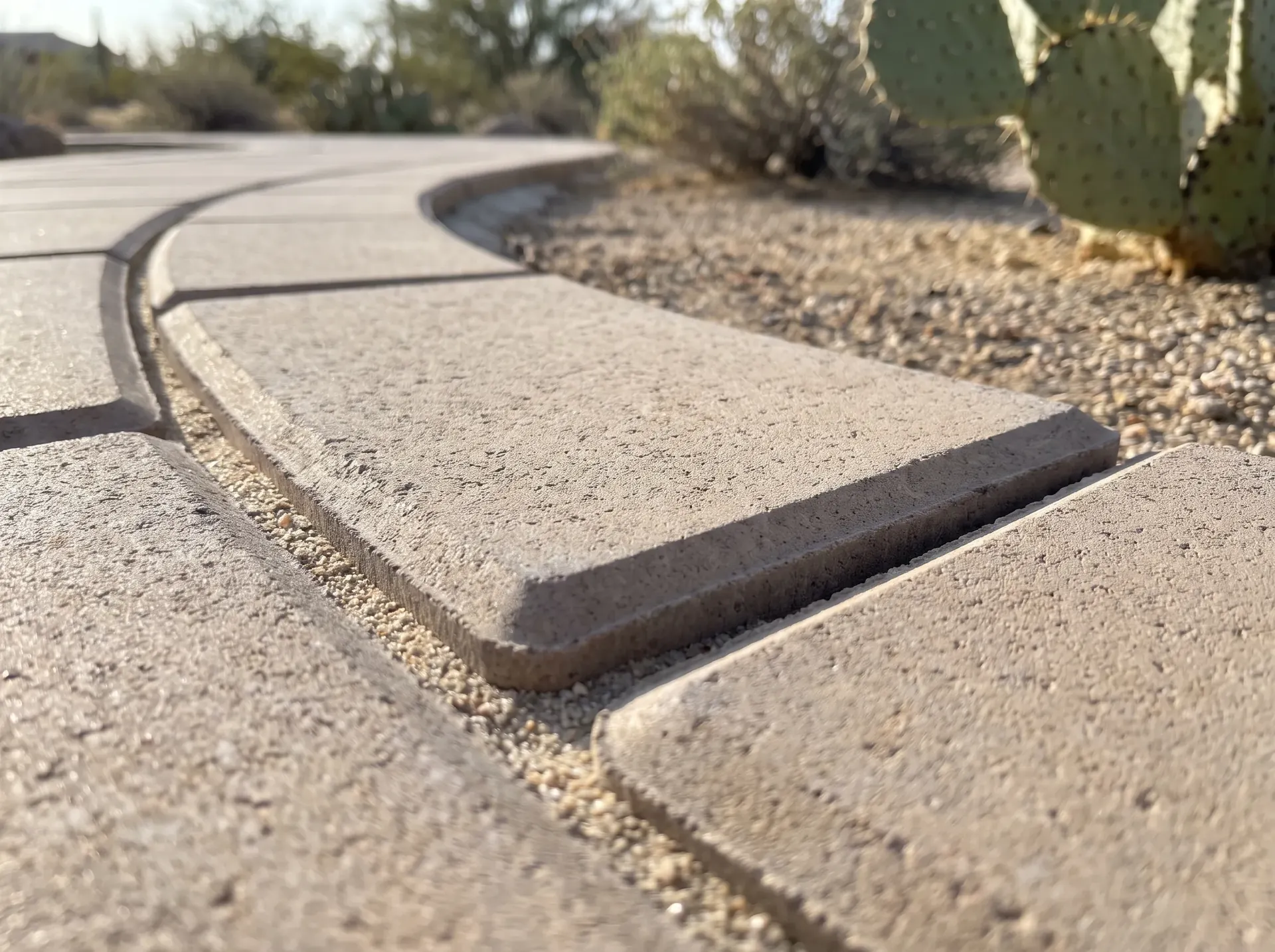
Both edges restrained, not just the visible one
Installation
Paver Walkways and Paths in Tucson
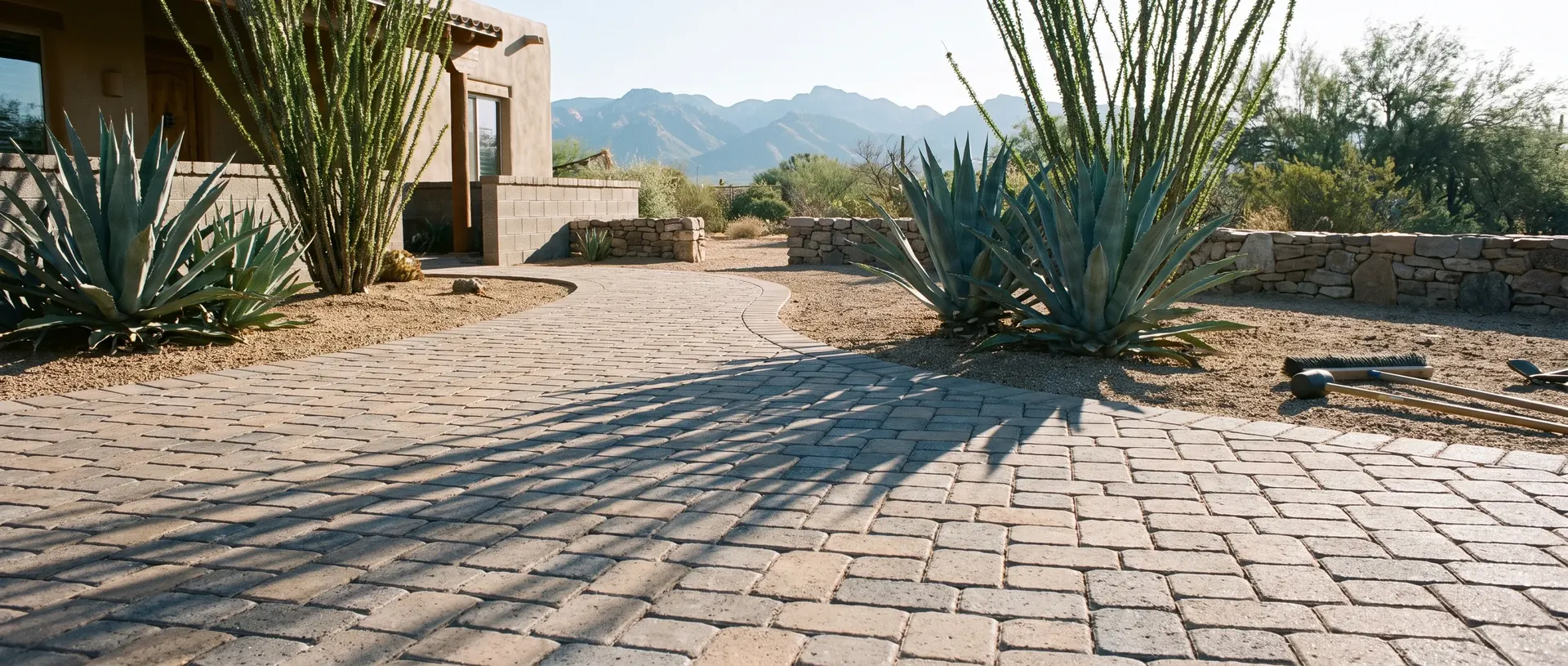
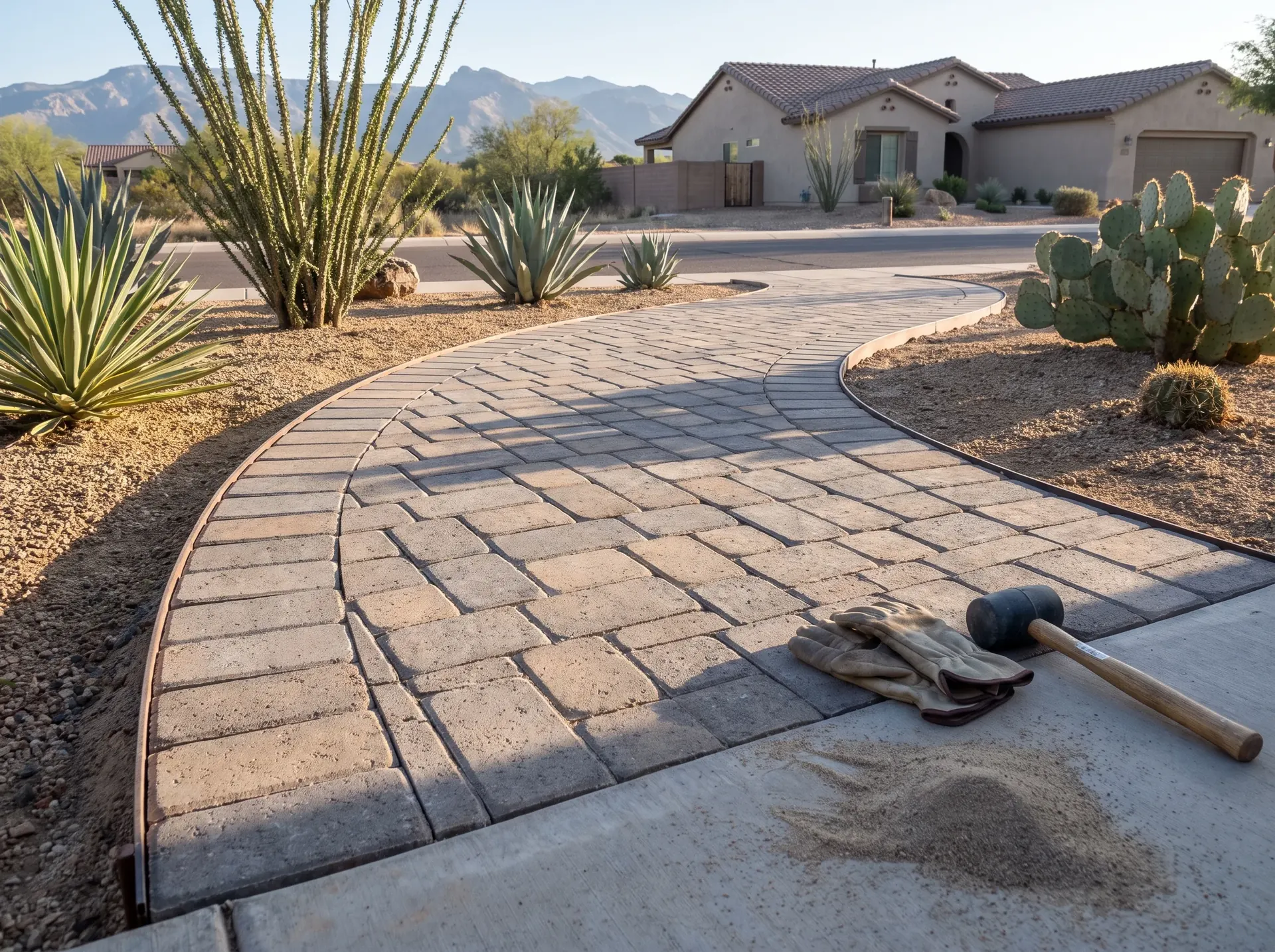
Every edge is an outside edge on a path. Both of them get restrained, curves get set to a radius, and cuts get made on a saw.
Curves set to a radius rather than eyeballed
Route walked with you before it is built
Cuts made on a saw, never snapped by eye
Before you choose anything
A path is three feet wide and completely unforgiving
A patio is a big field. A small variation in level or a slightly wandering course disappears into the middle of it and nobody ever sees it.
A path is not. It is often three feet across, which means every single paver is a border paver, every cut is visible from standing height, and any drift in the line is obvious because there is usually a dead straight house wall or driveway edge running alongside it for comparison. There is nowhere for a mistake to hide.
Then there is the desert specific problem that catches most paths here. A front path in Tucson usually runs through decomposed granite or gravel. Without a proper restraint on both sides, two things happen at once: the loose material migrates onto the path, and the outer courses of the path migrate into the loose material. Neither is dramatic. Within two or three seasons the crisp line you paid for has blurred into a vague gravelly zone, and the only fix is rebuilding the edges.
Restraining both sides of a narrow path is twice the restraint material and twice the labour per square foot of surface compared with a patio. It is the first thing a cheap path quote removes, and it is the only thing holding the shape.
The work itself
What we build
Front entry paths
From the drive or the street to the door, often on the shadeless west side of a house and usually the first thing anyone sees. Width matters more than people plan for, because two people should be able to walk in side by side.
Side yard runs
The narrow strip between house and boundary wall, which is the route everything takes to the back yard and which turns into a mud channel every monsoon. A restrained paver run solves the access problem and the drainage problem together.
Garden paths and stepping runs
Routes through planting, between a patio and a shed or casita, or around a pool enclosure. Curves, changes of width and stepping stone layouts, set out so they look intentional rather than improvised.
Line by line
What is included
Route and setting out
The route marked on the ground so you can walk it before it is built, and set where the desire line already is rather than where a drawing says. Curves struck to a radius, because a freehand curve reads as a mistake once there are pavers in it.
Excavation, base and bedding
Excavation to depth, subgrade compacted, aggregate base compacted in lifts, then a screeded bedding layer. The prepared base extends past the paver edge on both sides so the restraint sits on something solid, which is the detail most often skipped on narrow work.
Laying, cutting and borders
Pavers laid to a string line, border cuts made on a saw, and a soldier course or contrasting band along the edges where the design calls for it. On curves the cuts are struck to the radius rather than approximated.
Restraint, joints and reinstatement
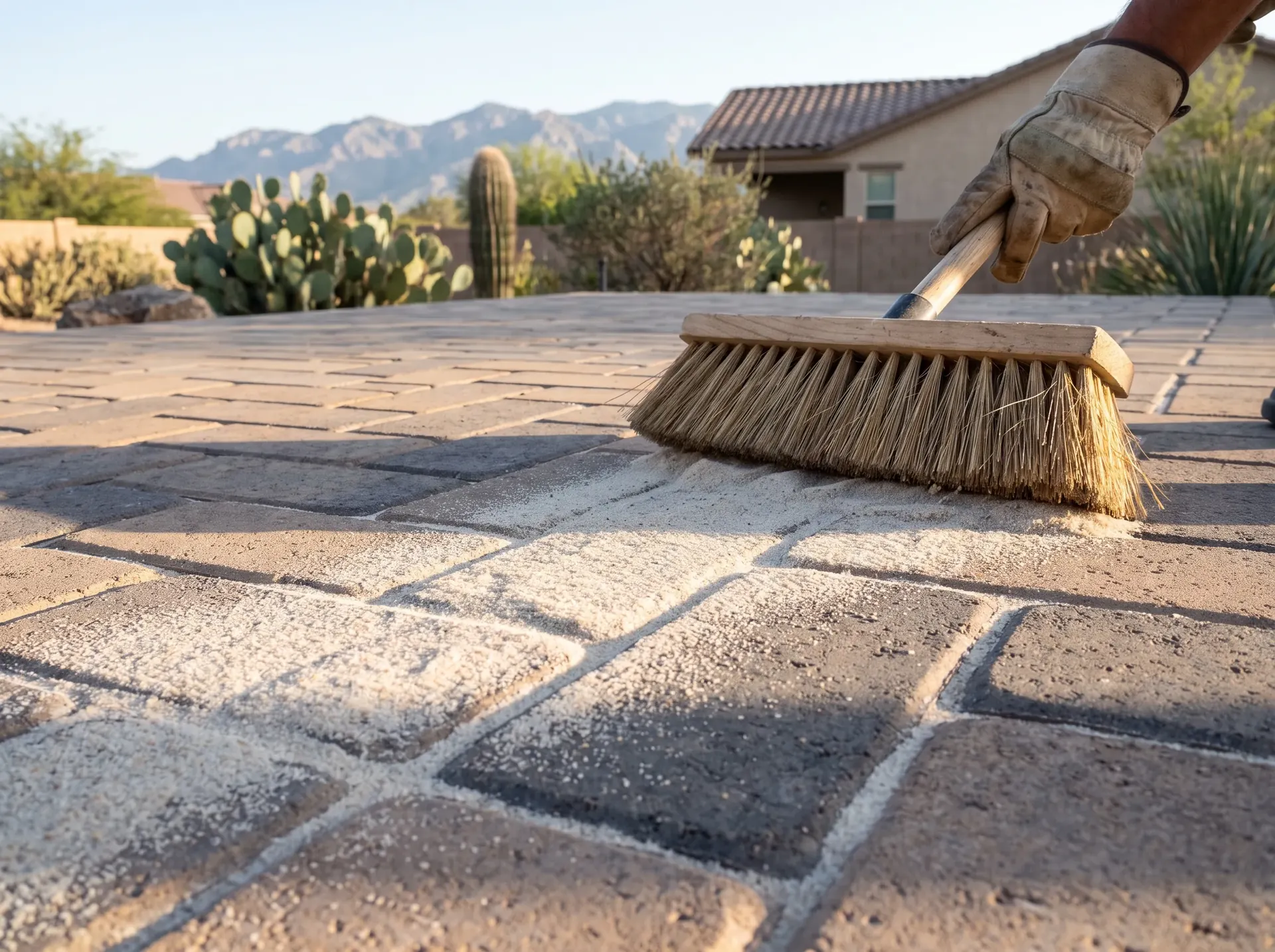
Restraint spiked along both edges, joint sand swept and settled, the field compacted, then the path washed down and the surrounding granite or planting raked back to a clean line.
Six steps, in this order
How the build runs
1Site visit and route
We walk the route with you, look at where people already cut the corner, and check the fall away from the house. Paths work best built where the traffic already goes.
2Width, material and layout
Width agreed by standing in it rather than by measuring on paper, then paver and border chosen to relate to the house rather than to the back yard patio.
3Fixed quote
Itemised by linear foot, with base depth, restraint on both edges and any steps shown separately.
4Utilities and irrigation
Blue stake locates before we dig. Irrigation lines are the usual find on a front yard path, and they get rerouted properly rather than cut and capped.
5Install
Excavate, compact, base in lifts, screed, lay, cut, restrain both sides, sand, compact, top up.
6Walkthrough
We walk it with you, literally, and check the line and the edges together before we clear the site.
Why us
Why build with us
We restrain both edges as standard rather than as an upgrade. On a narrow surface it is the difference between a path and a suggestion.
We think about the sun before you choose a colour. A west facing front path here takes brutal afternoon exposure, and a charcoal paver on that path will be genuinely unpleasant underfoot in July for anyone who steps out barefoot to fetch the post. We raise it at the sample stage, not afterwards.
And we set curves properly. A radius struck with a tape and a pin looks resolved. A curve drawn by eye looks like the crew ran out of patience, and once the pavers are cut to it there is no fixing it.
Want a real number on your path?
Send us a photo of the route and roughly how long it is. We will come out and walk it with you.
From a People Also Ask harvest
Walkway questions
How much does it cost to have a paver walkway installed?
Paths are priced per linear foot rather than per square foot, and they cost more per square foot of surface than a patio does. Both edges need restraint, almost every paver is a border unit, and curves multiply the cutting. A straight three foot path and a curving four foot path of the same length are different jobs.
What do you put under pavers for a walkway?
The same assembly as a patio: compacted aggregate base over a compacted subgrade, then a thin screeded bedding layer. On a path the prepared area has to extend past both paver edges so the restraint has compacted base underneath it, otherwise the edge is anchored into loose soil and the field spreads from the outside in.
What is the best thing to put between pavers?
Sand, in one form or another. Standard joint sand is fine on a sheltered surface with tight joints. Polymeric sand binds when wetted and resists washout and weeds better, which suits exposed sites and slopes, and it is fussier to install and harder to repair later. On a path with wide joints or a stepping stone layout, a decomposed granite or fine gravel joint sometimes suits better than either.
How much does it cost to install 400 sq ft of pavers?
400 square feet as one open patio and 400 square feet as a long narrow path are different prices, because the path has vastly more edge and vastly more cutting per square foot. Ask for the shape to be priced rather than the area.
Pima County
Where we build
We build across Tucson, Oro Valley, Marana, Vail, Sahuarita, Green Valley, Catalina Foothills, Casas Adobes, Rita Ranch, Dove Mountain, Corona de Tucson and Tanque Verde.
Next door to this one
Related paver work
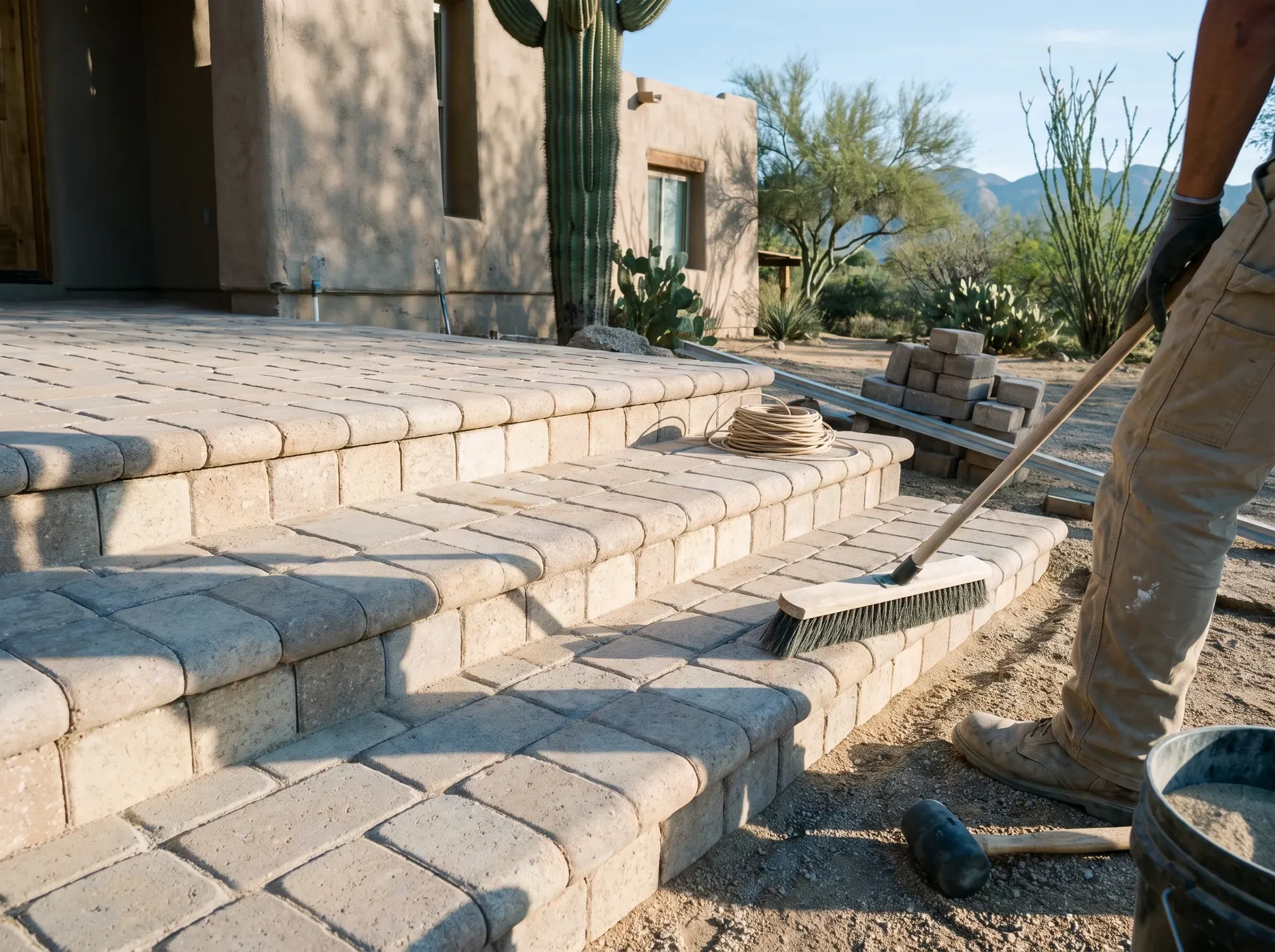 Paver Steps and EntriesBuilt on footings rather than stacked on fill, with a consistent rise and going checked across every step. This is the detail with a safety consequence and it is the one we will not negotiate on.See the detail
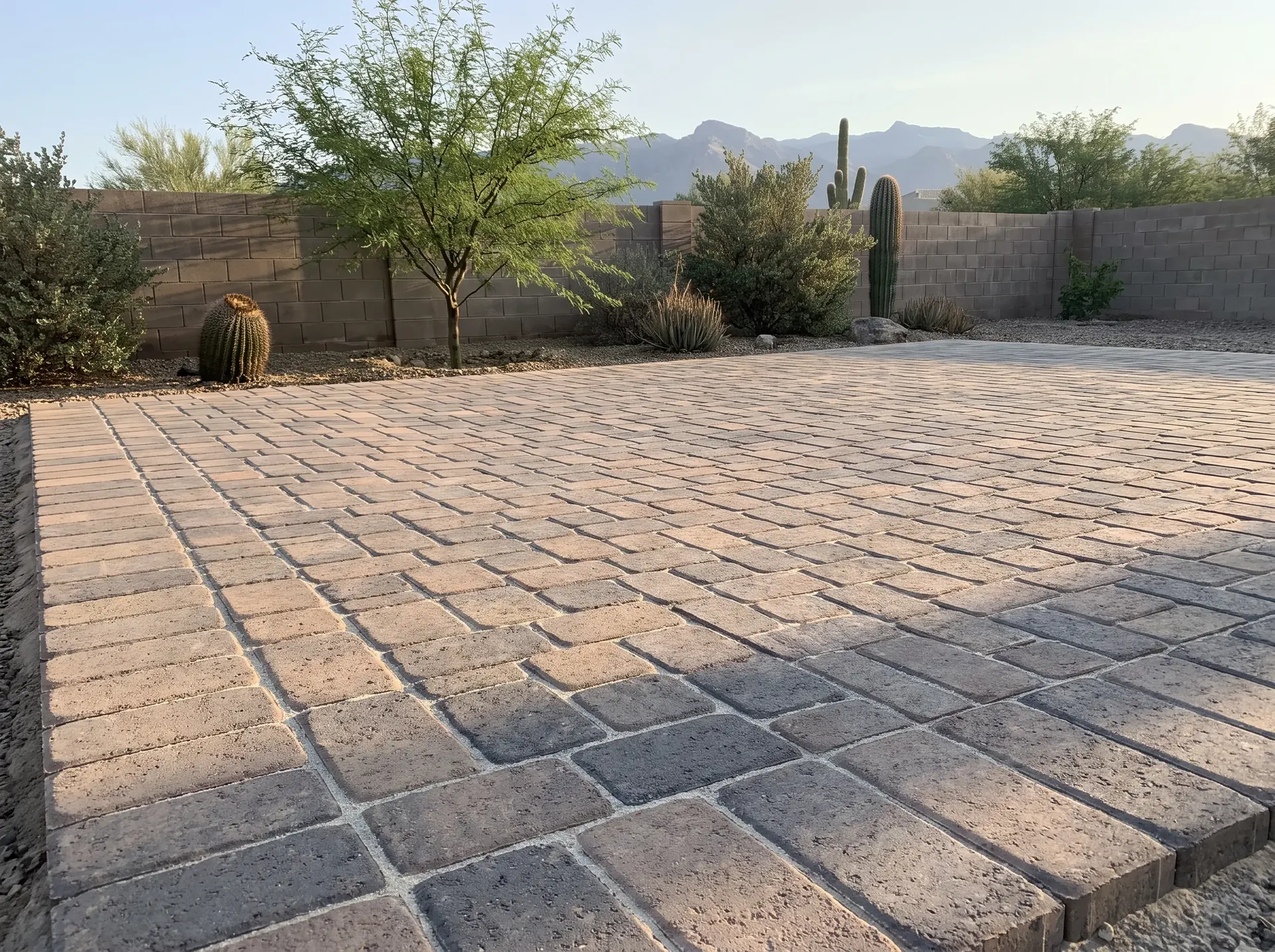 Paver PatiosThe main entertaining surface, sized around what actually goes on it and laid with the fall running away from the house. Excavation and base depth quoted in writing, edge restraint on every open edge.See the detail
 Paver Edging and BordersOne of the five services we offer that does not have a page of its own yet. It is on the services hub, and we are happy to quote it.On the services hub
 Joint Sand ReplacementJoints cleaned out and refilled properly, with a straight answer on whether polymeric sand suits your surface or whether plain sand is the better call.See the detail
Free on site quote
Get a quote for your walkway
Tell us roughly how long the route is and whether it curves or steps. Photos of the whole run help a lot.
Or call (520) 555-0194. Mon to Fri, 7am to 5pm. Saturday by appointment.
That is with us
We will call to arrange the site visit, usually the same working day. If it is urgent, call(520) 555-0194.