Set on a compacted base, never on sand over dirt
Materials
Travertine Pavers in Tucson
Natural stone with real colour variation, unusually cool underfoot for its tone, and porous enough that it genuinely wants sealing.
Pieces laid out dry and sorted before anything is set
French pattern set out to avoid repeating blocks
Honest advice on sealing a porous stone
Before you choose anything
It is a natural stone, and it behaves like one
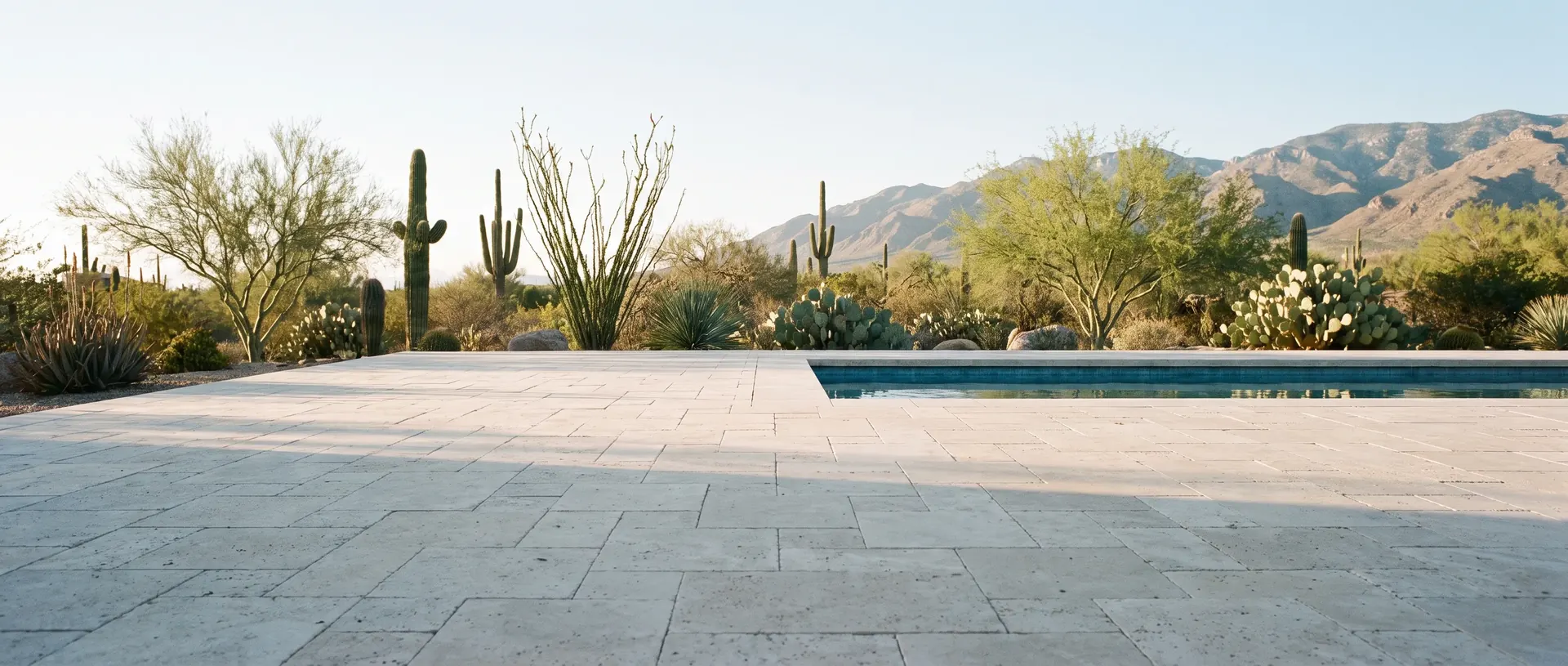
Travertine is the default upgrade around Arizona pools and there is a real reason for it. For its colour it runs noticeably cooler than concrete, the pale cream and walnut tones suit desert light, and it has enough natural surface texture to be safe wet without being abrasive underfoot.
It is also a natural stone, which means it comes with the things natural stone comes with, and those are worth knowing before you buy rather than after.
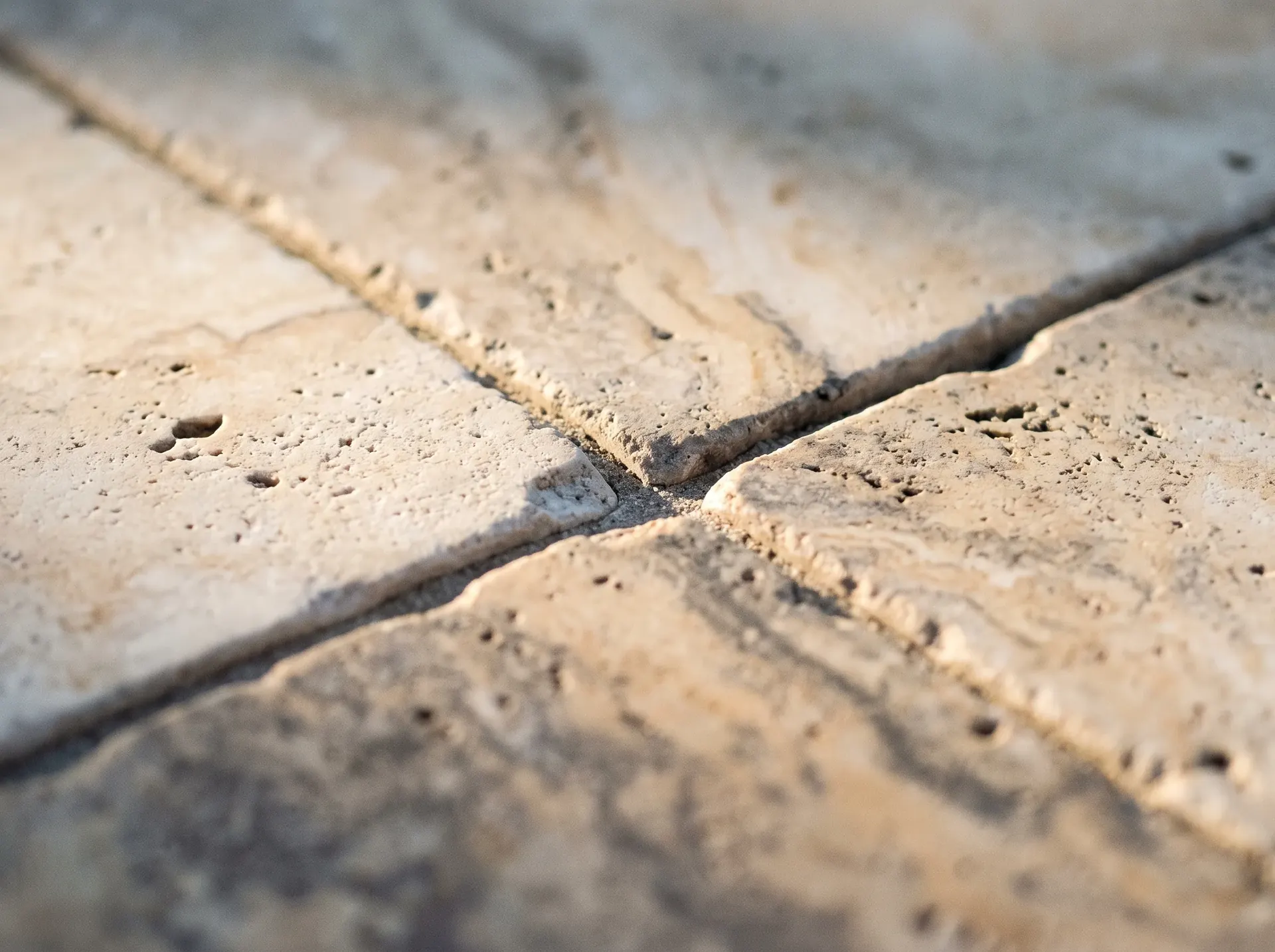
It is porous, considerably more so than a concrete paver, so it stains more readily and it benefits from sealing in a way concrete pavers do not require. It is softer, so edges can chip if a heavy piece of furniture is dragged across a corner. And it varies piece to piece, sometimes a lot, which is either the entire appeal or a problem depending on the person. We will show you a real pallet rather than one clean sample, because a single sample tells you nothing about the range.
The installation difference that matters most is layout. Travertine usually comes in a french pattern of four sizes, and if you lay it straight off the pallet in the order it arrives you get visible repeating blocks and clusters of similar colour. Sorting and dry laying before anything is set is what makes a travertine surface look considered rather than random.
The work itself
What we build
Travertine pool decks
The most common use here, and the one where the material earns its premium: cool underfoot, textured when wet, and a colour that sits well against water and desert planting.
Travertine patios and courtyards
Entertaining surfaces where the natural variation reads as quality rather than as inconsistency. Works particularly well against stucco and against older Tucson architecture.
Travertine steps, coping and treads
Bullnose coping and step treads in matching stone, tying a deck or a flight together with the field. The nosing units are where the material quality really shows.
Line by line
What is included
Selection and dry layout
Choosing the stone from a real pallet rather than a single sample, then sorting and dry laying the pattern so colour and size distribute properly before anything is permanently set.
Excavation, base and bedding
Excavation to depth, subgrade compacted, aggregate base compacted in lifts and a screeded bedding layer, exactly as for a concrete paver. Travertine set on sand over unprepared ground fails the same way anything else does.
Laying, cutting and edges
Pieces laid to the sorted layout with consistent joints, cuts made wet on a saw because dry cutting natural stone chips it, and edges finished with bullnose or a proper border rather than a raw cut.
Joints, sealing advice and clean up
Joints filled and settled, the surface cleaned down, and a straight conversation about sealing, which on this stone is a genuine recommendation rather than an automatic upsell.
Six steps, in this order
How the build runs
1Site visit and use
We look at the area, how much sun it takes, and whether it is a pool deck, a patio or both. The answer changes which finish and which thickness suits.
2Stone selection
Seen outdoors, in daylight, from a real pallet. We will show you the full colour range including the pieces at the edges of it, because that is what actually turns up.
3Fixed quote
Itemised, with the stone, the base work, the cutting and any coping or step units shown separately.
4Utilities and preparation
Blue stake locates before we dig, and around a pool the shell and tile get protected before anything else happens.
5Install
Excavate, compact, base in lifts, screed, sort and dry lay, set, wet cut, edge, joint, clean.
6Walkthrough and sealing plan
We walk it with you and set out honestly when to seal, what it will do to the appearance, and what it commits you to.
Why us
Why build with us
We sort and dry lay before setting. It adds time to the job and it is the difference between a travertine surface that looks designed and one that looks like it came off a pallet in pallet order.
We cut it wet. Dry cutting natural stone chips the edge and leaves a bruised line that shows for the life of the surface, particularly on a pale stone. It is slower and messier and it is the right way.
And we are straight about the downsides. Travertine is porous, it is softer than concrete pavers, it will show a spill that a concrete paver would shrug off, and it needs sealing to perform well outdoors here. If that does not suit how you actually use the space, we will tell you and we will show you the concrete paver that gets you most of the look.
Want a real number on travertine?
Send us the area and tell us whether it is a pool deck or a patio. We will come out with a real pallet range.
From a People Also Ask harvest
Travertine questions
What are the downsides of travertine?
It is porous, so it stains more readily than a concrete paver and it wants sealing. It is softer, so edges and corners can chip under impact or a dragged furniture leg. It varies piece to piece, which some people love and some people find inconsistent. And it costs more than a concrete paver of the same size. Against all of that it stays notably cool for its colour, which around a pool here is worth a great deal.
How expensive are travertine pavers?
Travertine carries a material premium over concrete pavers, and the installed gap is smaller than the material gap because the base work underneath is identical. Grade and thickness move the material price considerably, and the cheapest grades carry more filled voids and more colour inconsistency.
Is travertine cheaper than pavers?
No. Concrete pavers are generally the cheaper material, and travertine sits above them. Because the excavation, base and bedding underneath are the same either way, the difference in the installed price is proportionally smaller than the difference in the material price. If travertine is out of budget, the honest alternative is a light coloured concrete paver rather than a cheaper grade of stone.
What looks like travertine but is cheaper?
Concrete pavers made to imitate travertine are the usual answer and some of them are convincing, particularly from a few feet away and particularly in a french pattern. What they do not replicate is the natural pitting and the piece to piece variation, so they read more uniform. Porcelain in a travertine look is the other option, and it is harder, less porous and more precise, though it costs more than concrete.
Is travertine in style in 2026?
It has been the standard premium pool deck material in the Southwest for a long time and there is nothing about it that reads as dated here, largely because the reason for using it is functional rather than fashionable. What does date is a very yellow or very orange stone. Paler creams, greys and walnut tones are the safer long term choice.
How do you make travertine look new again?
Usually a proper clean with a pH neutral stone cleaner, filling any voids that have opened up, and resealing. What ruins travertine is the opposite: acidic cleaners, which etch the surface permanently, and high pressure washing, which erodes the softer areas and opens the pitting further. If a surface has been damaged that way, honing is sometimes possible but it is a specialist job.
Pima County
Where we build
We build across Tucson, Oro Valley, Marana, Vail, Sahuarita, Green Valley, Catalina Foothills, Casas Adobes, Rita Ranch, Dove Mountain, Corona de Tucson and Tanque Verde.
Next door to this one
Related paver work
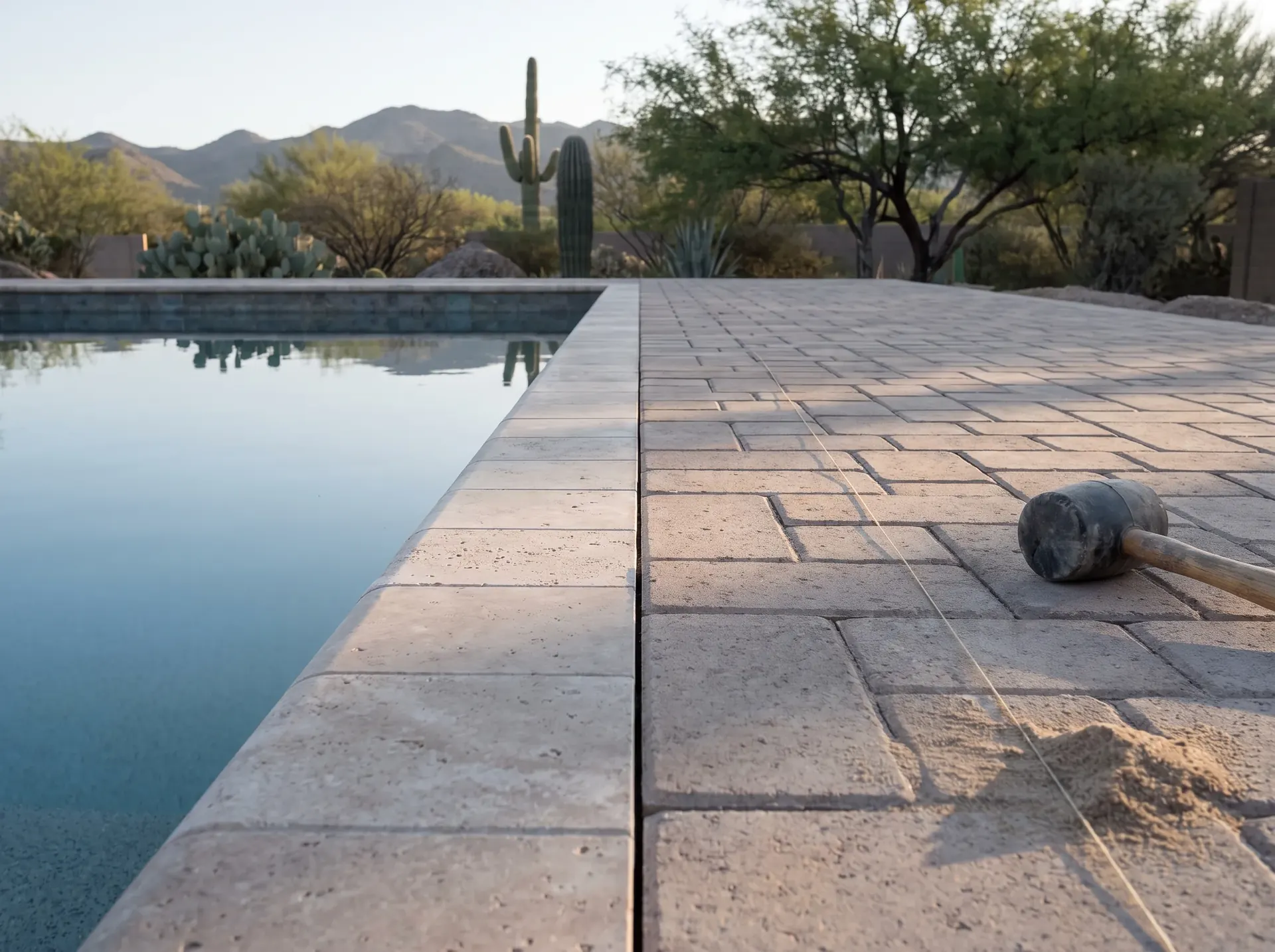 Pool Deck Pavers and CopingCoping set first and the deck built to it, fall running away from the water rather than into it, and light materials chosen because people cross this surface barefoot and wet.See the detail
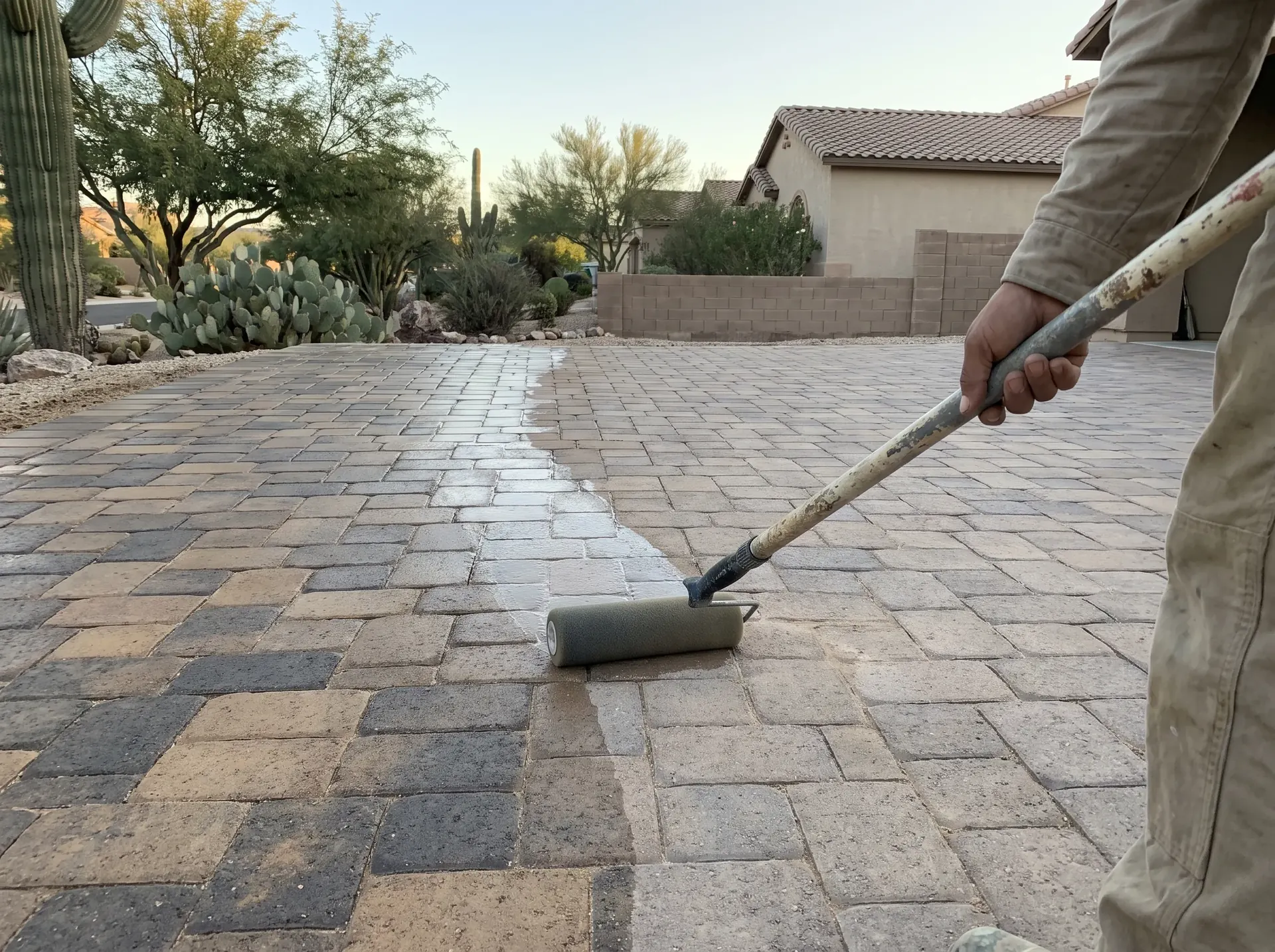 Paver SealingSealer specified for Tucson UV and applied at the right coverage rate, on the surfaces where it genuinely helps. We will tell you honestly when it is not worth doing.See the detail
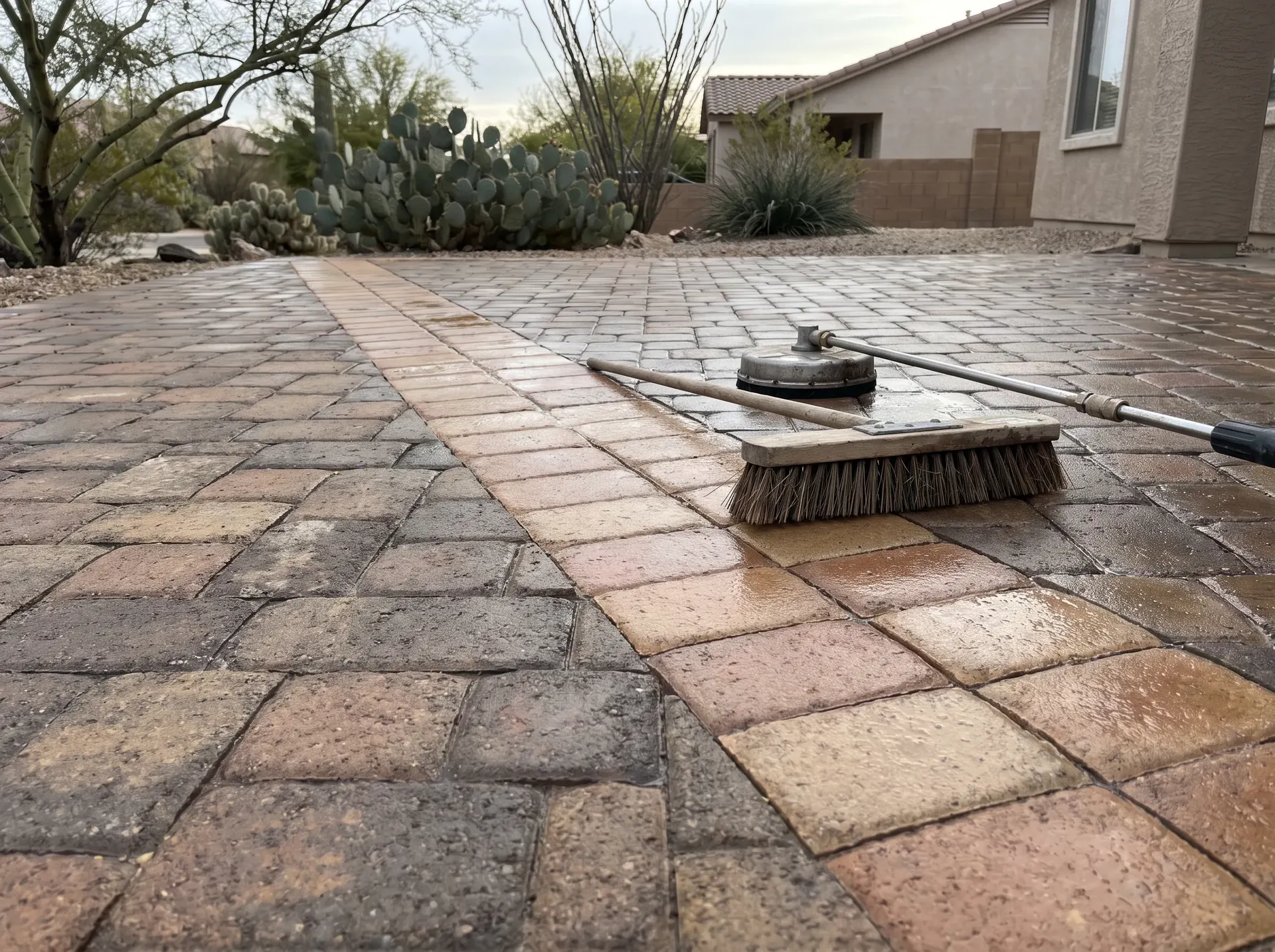 Paver CleaningHard water deposits, efflorescence, oil, rust and organic staining, dealt with at a pressure that does not strip the joint sand out of the whole field.See the detail
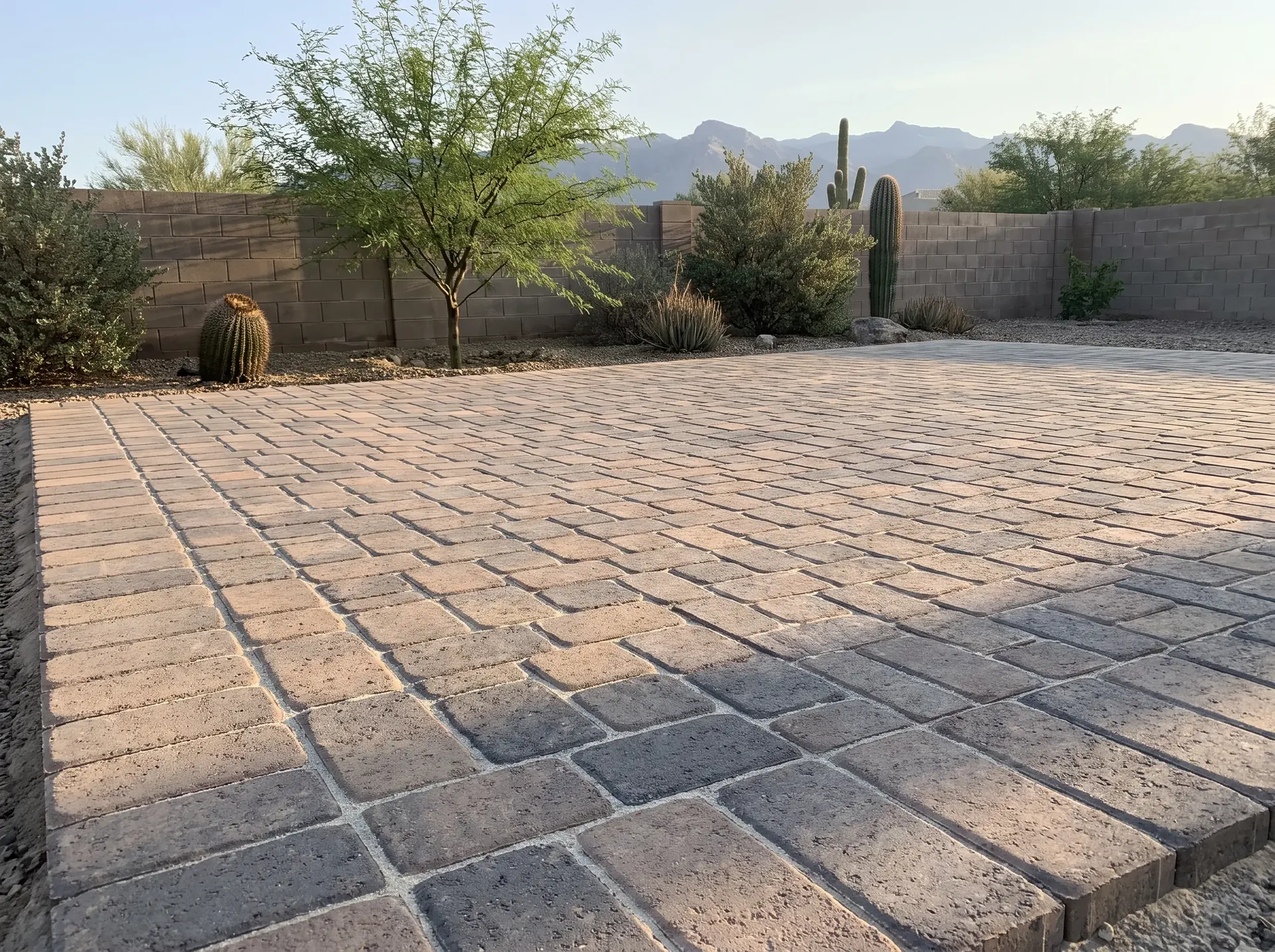 Paver PatiosThe main entertaining surface, sized around what actually goes on it and laid with the fall running away from the house. Excavation and base depth quoted in writing, edge restraint on every open edge.See the detail
Free on site quote
Get a quote for travertine
Tell us the area and whether it is around a pool. We will come out with the real colour range rather than one clean sample.
Or call (520) 555-0194. Mon to Fri, 7am to 5pm. Saturday by appointment.
That is with us
We will call to arrange the site visit, usually the same working day. If it is urgent, call(520) 555-0194.