Excavation depth and base thickness written into every quote
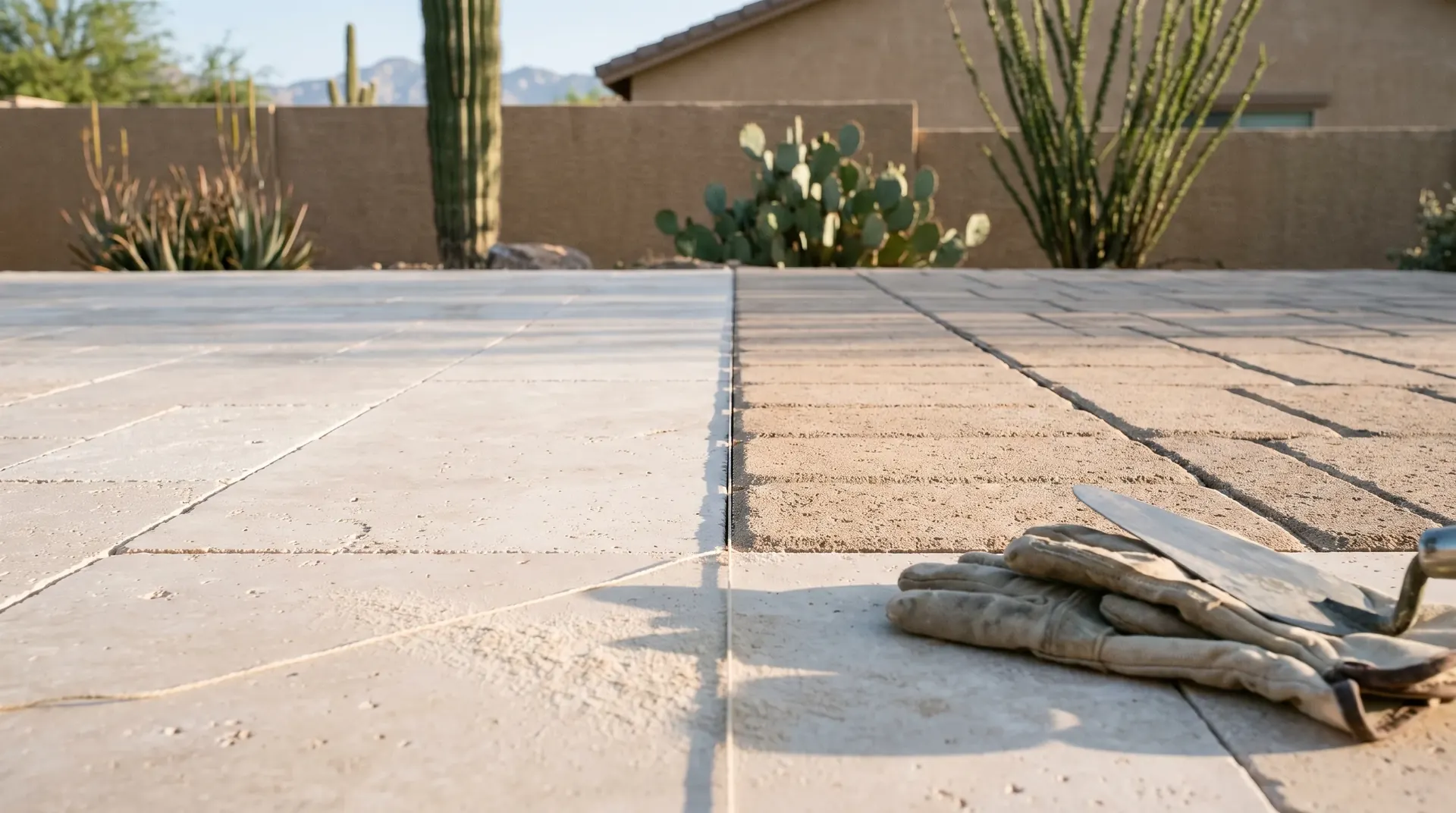
Compacted in lifts, not once at the end
Edge restraint on every open edge
Pavers only, so we do one thing properly
Both are good choices around a Tucson pool and most people choose on looks and budget, which is a perfectly reasonable way to decide.
Where they genuinely differ is in four places: how they age, how they handle staining, how they chip, and how easy they are to match if a piece ever needs replacing. Heat, which is the thing everyone asks about first, is much closer between them than people expect, because it is mostly a function of colour.
Closer than you think, if the colours match
A pale travertine and a pale concrete paver in the same position on the same afternoon perform similarly. Travertine has a slight edge, partly because it is naturally light and partly because its pitted surface has less contact area with a bare foot, but this is a smaller difference than the marketing suggests.
The much larger difference is between a light surface and a dark one, whichever material it is. A charcoal concrete paver is dramatically hotter than a cream travertine, and a dark stone would be too.
So if heat is your main concern, choose the palest option you like the look of and stop worrying about which material it is. Then spend the argument money on shade.
Both fine, with a caveat each
Textured concrete pavers and tumbled or brushed travertine both give good grip wet, which is why both are standard around pools here.
The caveat on travertine is that a polished or honed finish is a different product entirely and has no place at a water edge. If you are being shown travertine, check which finish.
The caveat on concrete pavers is the opposite: a very smooth faced unit, particularly a large format one, can be slick when wet. Ask for a textured face.
Sealing affects both. Some film forming sealers make a wet surface noticeably slicker, which around a pool matters more than anywhere else.
The clearest difference between them
Travertine is porous, considerably more so than concrete pavers. Sunscreen, spilled drinks, food and leaf tannins all soak in more readily and are harder to remove afterwards. This is the reason sealing travertine is closer to a recommendation than an option.
Concrete pavers are denser and shrug off more of it, and they are more tolerant of the cleaning methods you might reach for.
Around a pool there is a specific consideration: pool chemistry. Travertine is a calcium based stone and it does not react well to acidic products, so an acid based cleaner used on splash out staining will etch it permanently. Concrete pavers are also damaged by acid but the failure is less dramatic.
If your pool area sees a lot of sunscreen, food and drink, this is a real point in favour of concrete pavers.
Travertine is softer
Travertine is a softer stone, so corners and edges chip more readily under impact, and a dragged furniture leg or a dropped tool leaves a mark that a concrete paver would have absorbed.
Around a pool, where metal furniture gets dragged and pool equipment gets set down, that is worth thinking about honestly.
Both materials will last decades. Neither is going to wear out. The difference is in accumulated small damage over years of use.
Where concrete pavers win clearly
If a piece needs replacing in eight years, the concrete paver is much more likely to be matchable, because it is a manufactured product with consistent colouring, and because the surrounding units will have weathered fairly evenly.
Travertine varies naturally piece to piece and batch to batch, and the stone available in eight years will not be from the same quarry run. That variation is the entire appeal of the material, and it is also the reason a replacement piece can stand out.
Our usual advice on either material is the same: buy extra at the time of installation and store it somewhere dry. On travertine it matters more.
The gap is smaller installed than it looks in the yard
Travertine carries a clear material premium over concrete pavers.
The structural point is the one that matters: the excavation, base and bedding underneath are identical either way, and that work is a large share of the installed cost. So the percentage gap in the installed price is meaningfully smaller than the percentage gap in the material price. If travertine is close to affordable on the material, it is usually closer than expected once the whole job is priced.
How we would actually call it
Choose travertine if you want the natural stone look and the piece to piece variation, if the deck sees relatively civilised use, and if you are willing to seal it and keep sealing it.
Choose concrete pavers if the pool area gets heavy family use with sunscreen and food, if you want a uniform look, if matching a future repair matters to you, or if the budget is the binding constraint.
Choose neither if the existing concrete deck is structurally sound and your complaint is only that it is hot and tired. A light textured overlay is far cheaper and may be all you need. We do not do overlays, so that recommendation costs us the job.
Look at both, outdoors
Samples in a showroom tell you almost nothing. Look at both materials outdoors, in sun, ideally wet, and stand on them barefoot if you can. Fifteen minutes of that settles the question better than any comparison article, including this one.
From a People Also Ask harvest
Travertine care questions people actually ask
How do professionals clean travertine floors?
With pH neutral stone cleaners and mechanical agitation rather than chemistry or pressure. On outdoor travertine that usually means a neutral cleaner, a soft brush or a rotary brush, plenty of dwell time and a thorough rinse. High pressure is avoided because it erodes the softer areas and opens up the pitting, and acids are avoided entirely because they etch the stone permanently.
Can I use vinegar to clean travertine?
No. Vinegar is acidic and travertine is a calcium based stone, so vinegar will etch the surface and leave dull marks that do not wash off. The same applies to lemon juice and to most bathroom and tile cleaners, which are frequently acidic. This is the single most common way people damage travertine at home.
Can you clean travertine with a steam mop?
On outdoor travertine there is little reason to, and it is not the tool for the job. Steam can drive moisture into a porous stone and, on a sealed surface, repeated steam can affect the sealer. A neutral cleaner, a brush and a rinse does the work better outdoors.
What is the best floor cleaner for travertine?
A cleaner specifically labelled pH neutral and safe for natural stone. What matters more than the brand is what it is not: not acidic, not a bleach based product used at strength, and not a degreaser aggressive enough to strip a sealer. If a label does not say it is safe for natural stone, assume it is not. ---
If you would rather we did it
The work behind this guide
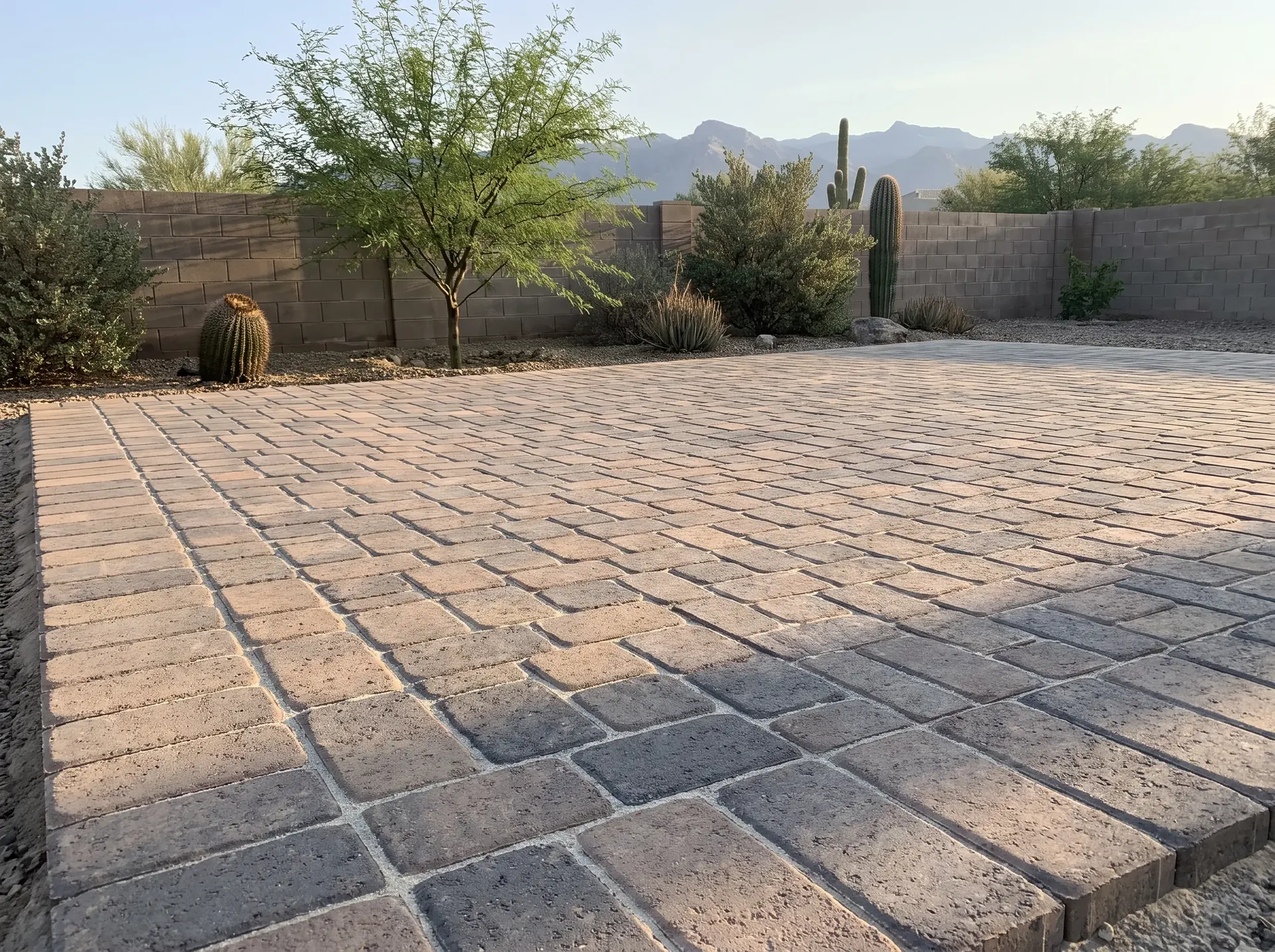 Paver PatiosThe main entertaining surface, sized around what actually goes on it and laid with the fall running away from the house. Excavation and base depth quoted in writing, edge restraint on every open edge.See the detail
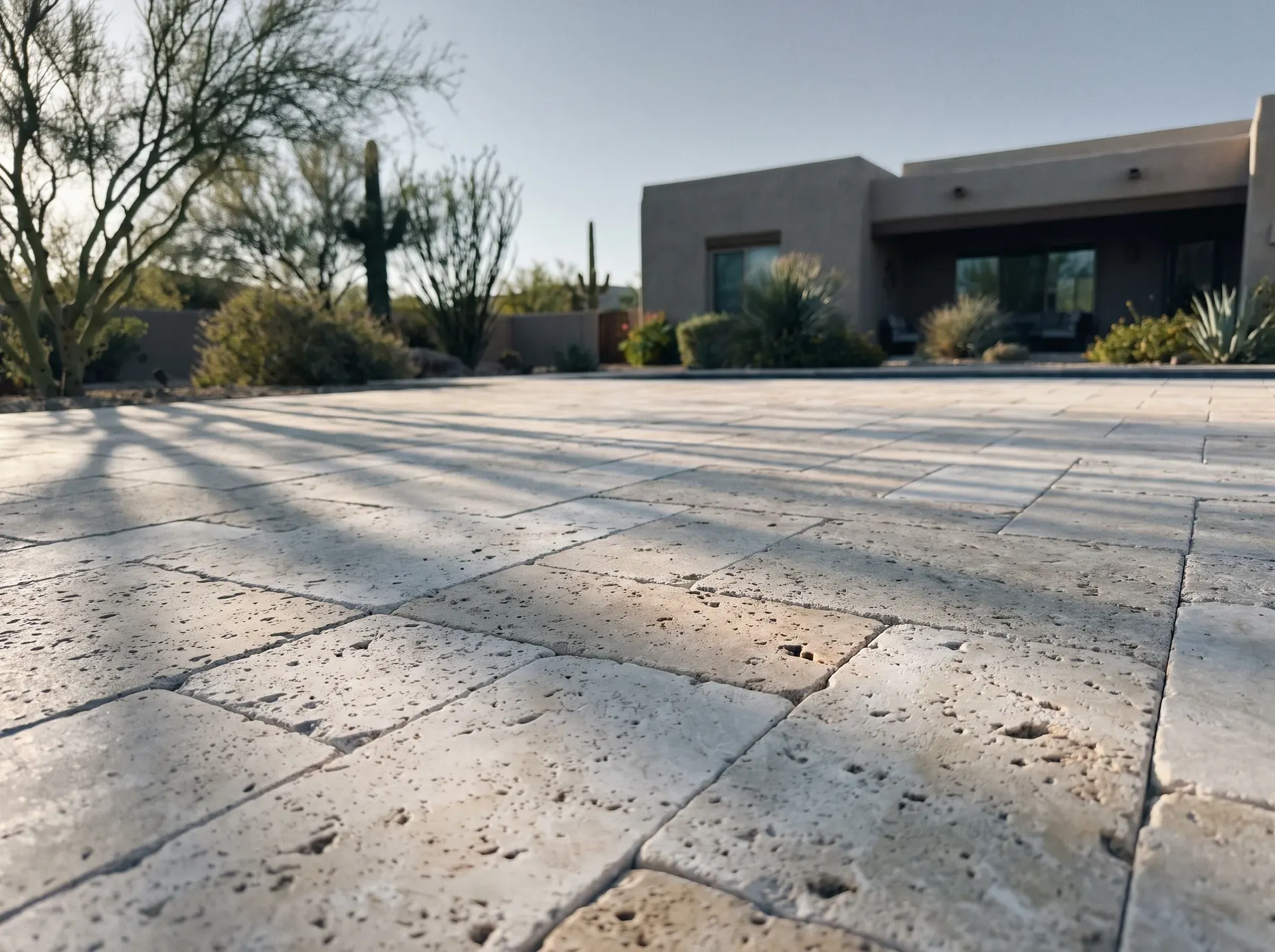 Travertine PaversNatural stone with real colour variation, noticeably cool underfoot for its tone, and porous enough that it wants sealing. Set on a compacted base, never on sand over dirt.See the detail
Free on site quote
Want to see both on your deck?
Tell us the pool deck size and whether the coping is being replaced too. We will bring both materials out and put them next to the water so you can see them in context.
Or call (520) 555-0194. Mon to Fri, 7am to 5pm. Saturday by appointment.
That is with us
We will call to arrange the site visit, usually the same working day. If it is urgent, call(520) 555-0194.