Excavation depth and base thickness written into every quote
Compacted in lifts, not once at the end
Edge restraint on every open edge
Pavers only, so we do one thing properly
Most of the damaged paver surfaces we get called to look at in Tucson were damaged by cleaning, not by weather, traffic or age.
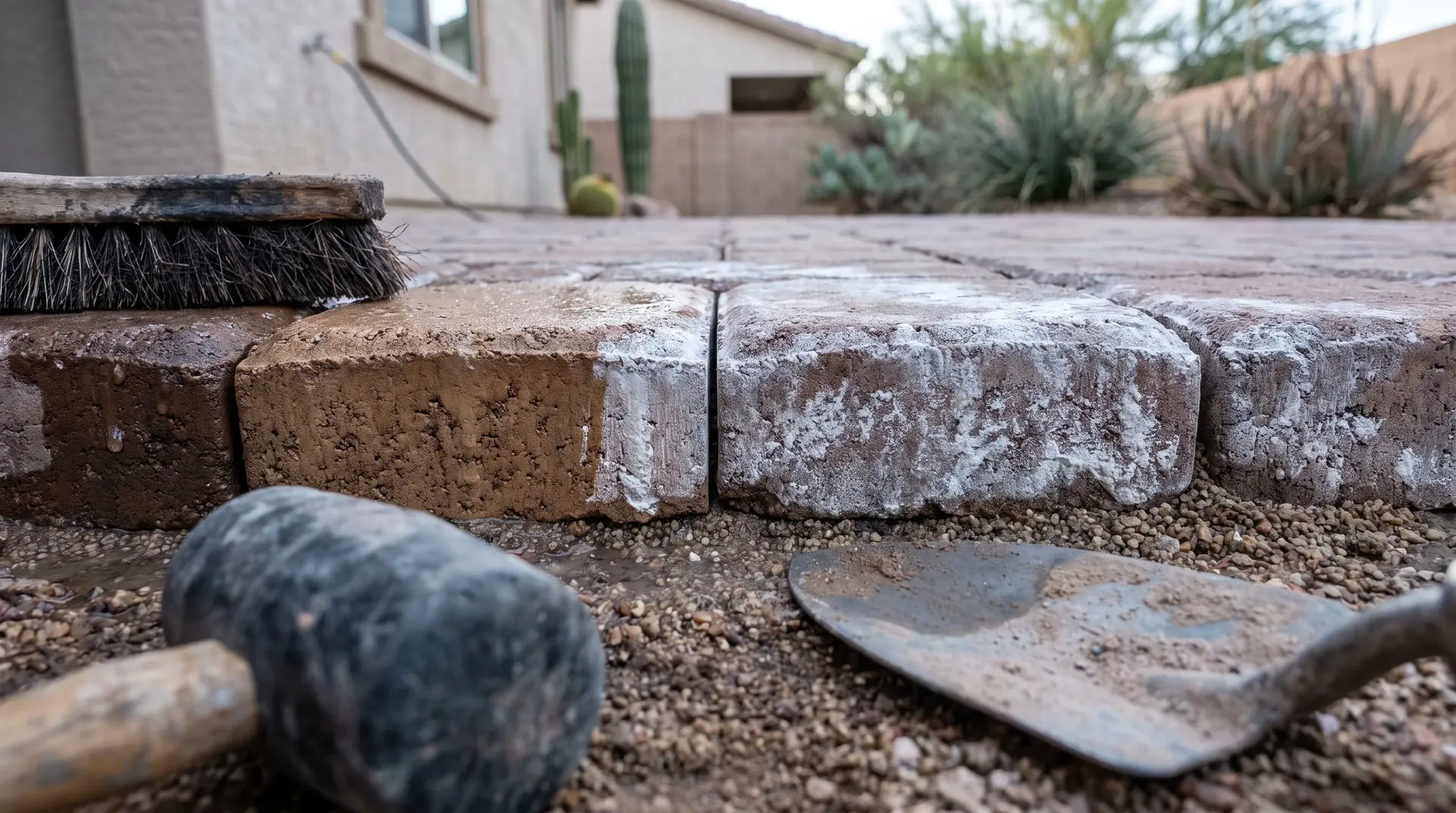
A pressure washer with a narrow tip will take almost anything off almost any surface. It will also blast the joint sand out of every joint it crosses, etch the face of a concrete paver, erode the softer areas of travertine, and leave permanent wand marks in a pattern that traces exactly where the operator walked. All of it in an afternoon, and none of it reversible.
The right approach is the opposite instinct: identify the stain, use the least aggressive thing that removes it, and refill the joints afterwards.
The part people do not notice
Joint sand is not filler. It transfers load between pavers so the surface behaves as one pavement rather than as hundreds of separate blocks.
Blow it out and each unit carries its own load. Pavers start rocking, edges chip where they knock together, water goes straight down into the bedding layer and starts moving it, and the field slowly spreads.
So a cleaning job that leaves joints empty and does not refill them has not finished. It has traded a cosmetic problem for a structural one. If you are hiring someone to clean pavers, the question that matters most is whether refilling the joints is included.
What is actually on your patio
Hard water and mineral deposits
Chalky white marks along irrigation lines, around pool edges and under sprinkler overspray. Tucson water leaves a lot behind. These respond to specific mineral removers, and to acid, which is the trap. Acid takes it off quickly and permanently etches travertine and strips colour from concrete pavers.
Efflorescence
A white haze that blooms out of the paver itself as moisture moves through it and carries salts to the surface. Common on new installations and often mistaken for hard water staining or a cleaning failure. It usually works itself out over the first year, and there are specific efflorescence removers for when it does not. It is a reason not to seal a new surface too early.
Oil
Vehicle oil on driveways, cooking oil near an outdoor kitchen. Needs an alkaline degreaser and dwell time rather than pressure. Old oil that has soaked deep in may lighten rather than disappear, and that is worth knowing before you start.
Rust
From sprinkler heads, metal furniture feet and fertiliser. Needs a specific rust remover. Most general purpose cleaners do nothing to it, and scrubbing harder mostly damages the surface.
Organic staining
Dark tannin marks under mesquite, palo verde and citrus, plus algae in permanently damp shaded corners. Oxygen based cleaners handle most of it with dwell time.
Least aggressive thing first
Sweep thoroughly, because a surprising amount of what looks like staining is dust sitting in surface texture.
Wash with water and a stiff brush. On a lot of surfaces this is genuinely enough.
Neutral cleaner and dwell time if it is not. Let chemistry do the work rather than force.
Stain specific treatment for the particular problem, tested in an inconspicuous area first. On natural stone this test is not optional.
Pressure, last, and gently: wide fan tip, moderate pressure, wand well back, kept moving, worked along the joints rather than across them.
Refill the joints afterwards. Always. Some sand comes out no matter how careful you are.
Four things that cause permanent damage
Acid on natural stone. Travertine and other calcium based stone will etch permanently. This includes vinegar, lemon juice and many household tile and bathroom cleaners.
A narrow high pressure tip. Etches concrete paver faces, erodes travertine, strips joint sand and leaves wand marks visible in raking light for years.
Wire brushes on soft stone. Leaves scratches that collect dirt and show up worse than the original stain.
Anything that leaves a film. Residue in the surface texture attracts dirt and will interfere with any sealer applied later.
Most of this is an irrigation problem
Hard water marks along one edge of a patio almost always mean a sprinkler head is spraying the surface. Adjust it and the staining stops arriving.
Organic staining concentrated in one corner usually means a tree above and a drainage low point below. Improving the fall in that area does more than cleaning it annually.
Oil on a driveway is easier to remove in the first week than in the first year. Sealing helps here, which is one of the genuinely good reasons to seal a driveway.
Cleaning without fixing the cause is a subscription, not a repair.
When to hand it over
Natural stone, anything you have already tried and failed to shift, large areas where hiring equipment costs more than a professional visit, and any surface where you do not know what was used on it before.
Send a close photo and a wider one. Most stains are identifiable from pictures, and it is usually possible to tell you what will come out completely, what will improve, and what is permanent before anyone comes out.
From a People Also Ask harvest
Questions people actually ask
What is the best way to clean dirty pavers?
Sweep, wash with water and a stiff brush, then a neutral cleaner with dwell time if that has not done it, then a stain specific product for whatever is left. Pressure is a last resort at moderate settings, and joints get refilled afterwards. Starting with the pressure washer is the common mistake and it is how surfaces get damaged.
Will Dawn soap clean pavers?
On light grease and general grime over a small area, yes, and it is a reasonable first thing to try. It will not touch hard water deposits, efflorescence, rust or oil that has soaked in, which between them account for most paver staining in Tucson. Rinse very thoroughly, because residue left in the joints attracts dirt and shows up under a sealer later.
Can you use Clorox wipes on travertine?
No. Most household wipes contain either bleach or acidic cleaning agents, and neither belongs on a calcium based natural stone. Bleach can discolour it and acid will etch it permanently. Use a cleaner specifically labelled as pH neutral and safe for natural stone.
Can you clean travertine with Dawn dish soap?
For a light clean, diluted well and rinsed thoroughly, it is unlikely to do harm. It is not effective on the stains travertine actually gets outdoors here, which are mineral deposits and organic staining, and any soap residue left in a porous stone attracts dirt. A neutral stone cleaner is a better tool for the same effort.
What is the average cost to clean and seal pavers?
Cleaning and sealing are priced per square foot and preparation drives the range. A clean, sound, never sealed surface sits at the bottom. A heavily stained surface, or one with a failing previous sealer that needs stripping first, can be several times that. Ask for cleaning and sealing to be quoted as separate lines so you can see which is which.
If you would rather we did it
The work behind this guide
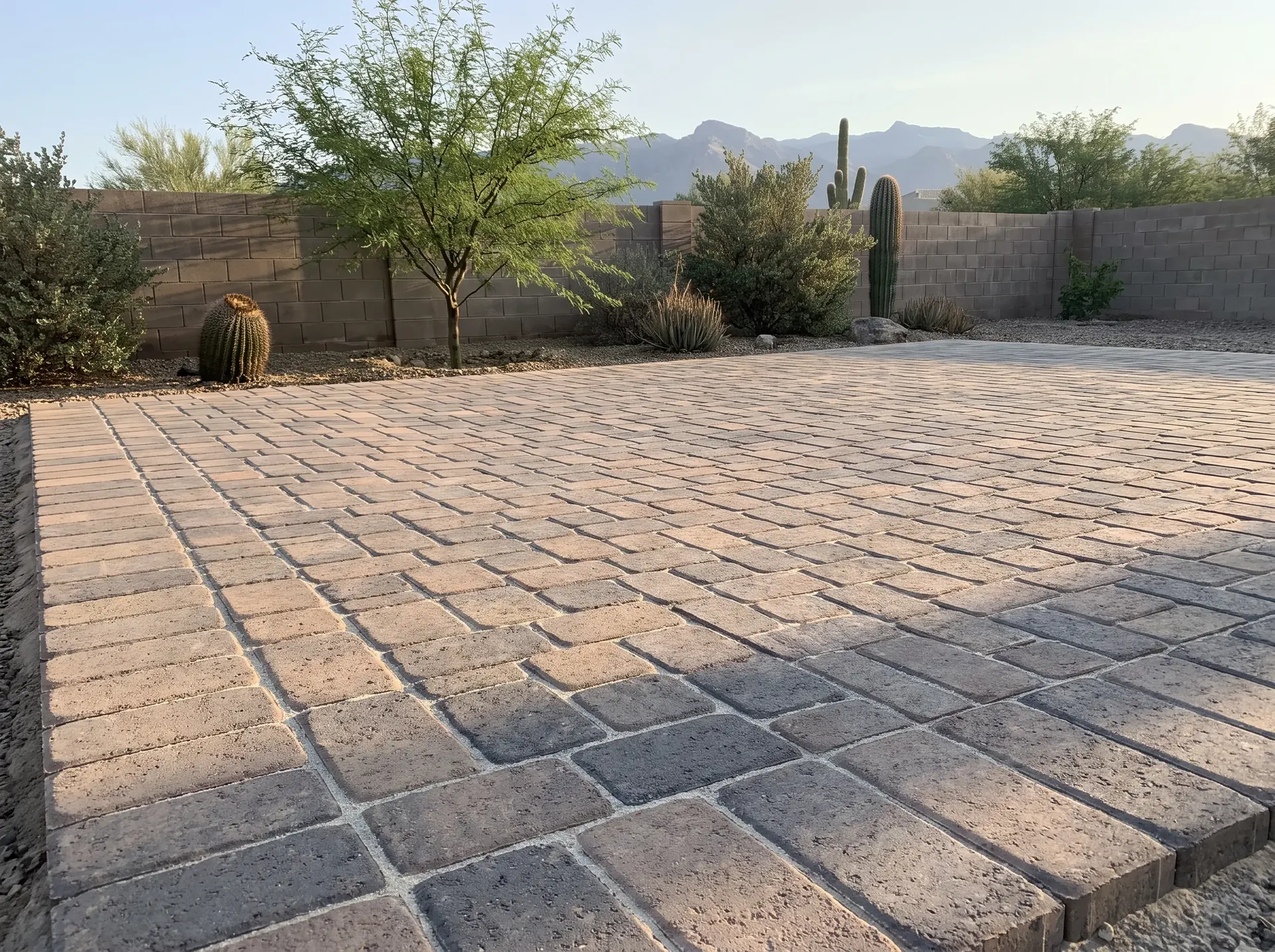 Paver PatiosThe main entertaining surface, sized around what actually goes on it and laid with the fall running away from the house. Excavation and base depth quoted in writing, edge restraint on every open edge.See the detail
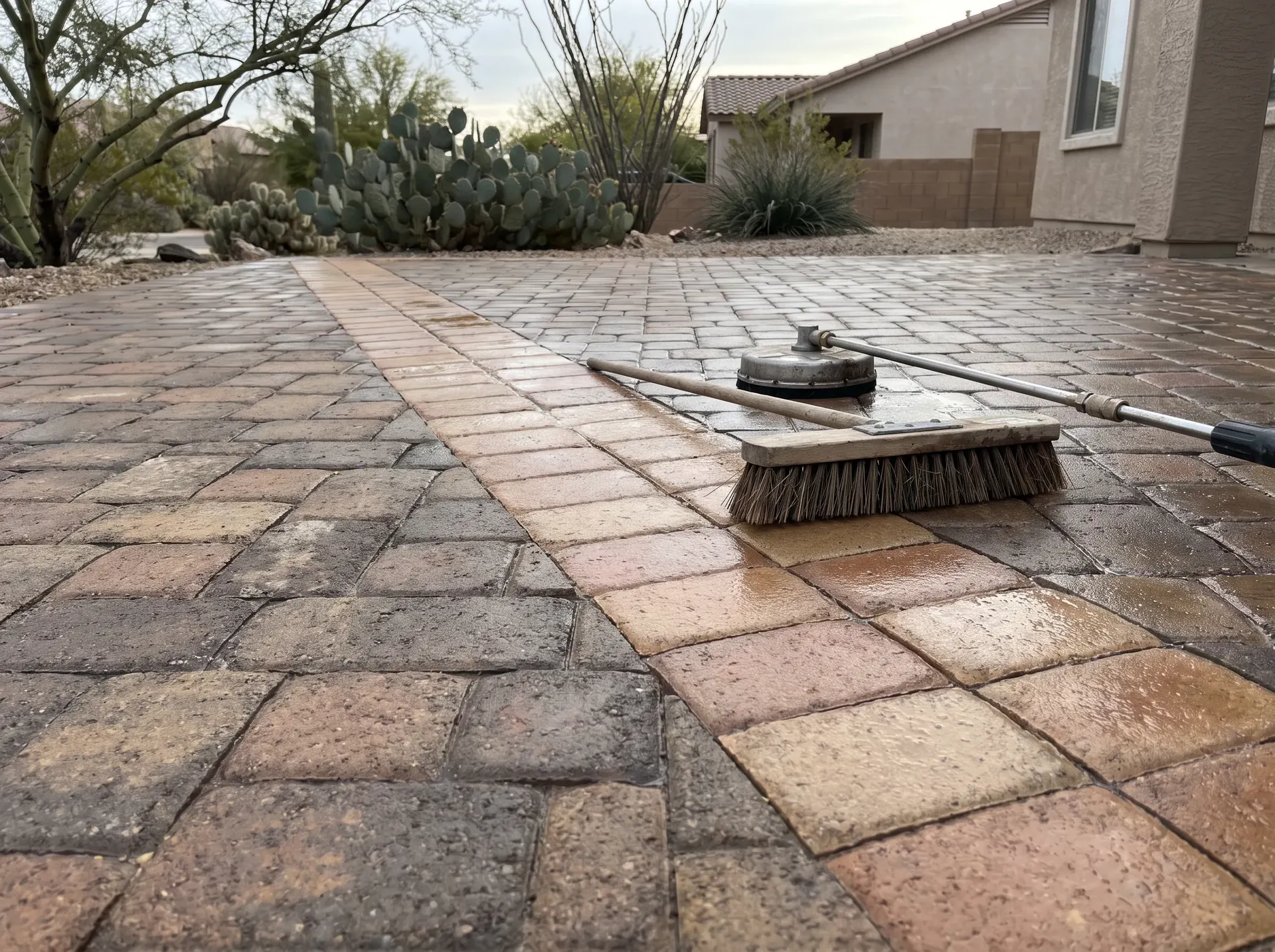 Paver CleaningHard water deposits, efflorescence, oil, rust and organic staining, dealt with at a pressure that does not strip the joint sand out of the whole field.See the detail
Free on site quote
Not sure what the stain is?
Send us a close photo and a wider one. We can usually identify it from pictures and tell you honestly whether it will come out.
Or call (520) 555-0194. Mon to Fri, 7am to 5pm. Saturday by appointment.
That is with us
We will call to arrange the site visit, usually the same working day. If it is urgent, call(520) 555-0194.