Stain identified before anything is applied
Maintenance and repair
Paver Cleaning in Tucson
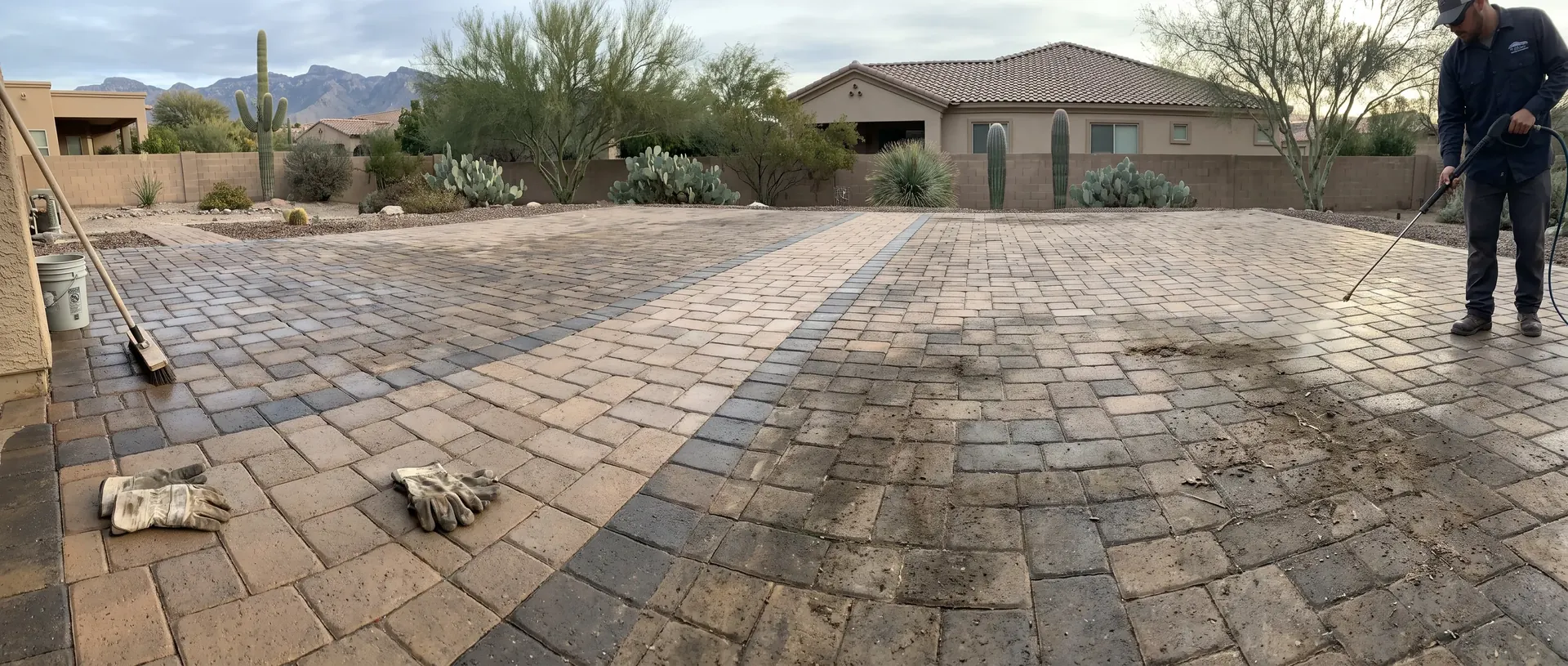
Pressure is the easy part and it is also what wrecks paver surfaces. The skill is identifying the stain and using the least aggressive thing that removes it.
Pressure kept at a level the joint sand survives
Joints topped up after cleaning as standard
No acid on natural stone
Before you choose anything
Most damaged pavers in this city were damaged by cleaning
The pressure washer is the most over used tool in this trade. A narrow tip held close will take almost any stain off almost any surface, and it will also blast the joint sand out of every joint it passes over, etch the face of a concrete paver, erode the softer areas of travertine and leave permanent wand marks in a pattern that traces exactly where the operator walked.
Once joint sand is gone the field loses the load transfer that makes an interlocking pavement work. Pavers start rocking individually, edges chip, and the surface starts moving. So a cleaning job that leaves the joints empty and does not refill them has not finished the work, it has started a different problem.
The other half is that not all stains respond to the same thing, and using the wrong chemistry does permanent damage. Tucson gives us a specific set: hard water deposits from irrigation overspray and pool splash out, efflorescence working its way out of the pavers themselves, oil on driveways, rust from irrigation and from patio furniture, and organic staining under mesquite and palo verde.
Acid takes hard water deposits off quickly. It also etches concrete pavers, strips colour and permanently damages travertine and other calcium based stone. Knowing which surface you are standing on before you reach for anything is the entire job.
The work itself
What we clean
General wash and joint top up
Accumulated dust, dirt and light staining across a whole surface, cleaned at a pressure the joints survive, then the joints topped up and settled. The routine job, and the one that keeps a surface from needing anything more serious.
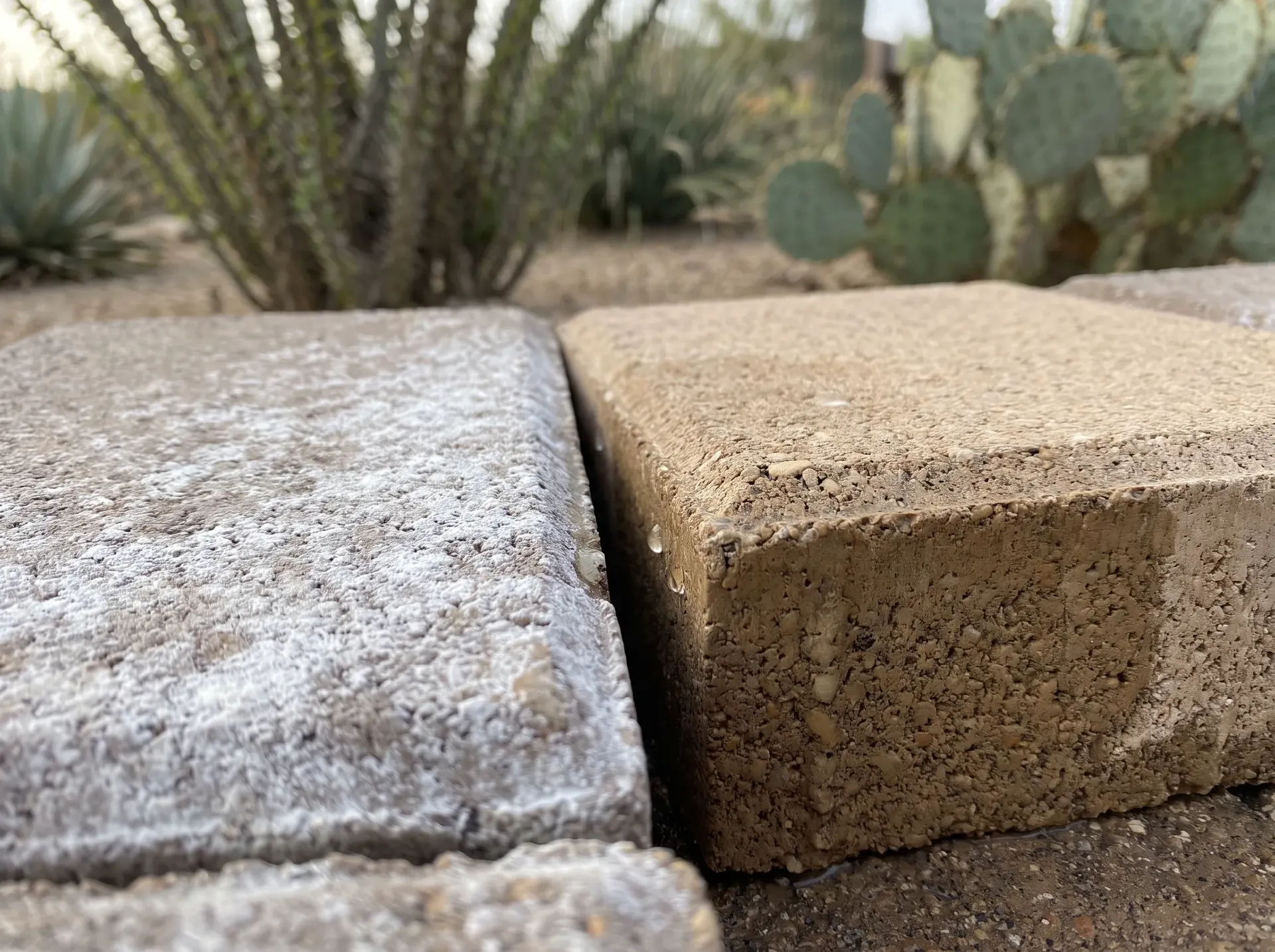
Hard water, efflorescence and mineral deposits
The chalky white marks along irrigation lines, around pool edges and blooming out of new pavers. Different causes, different treatments, and both need the surface identified first.
Oil, rust and organic staining
Vehicle oil on driveways, rust from sprinkler heads and furniture feet, and the dark tannin staining that builds up under desert trees. Treated as spot work rather than by cleaning the entire surface harder.
Line by line
What is included
Identification and testing
We identify the surface and the stain, then test any treatment in an inconspicuous area before it goes anywhere visible. On natural stone this step is not optional.
Cleaning at the right pressure
Wide fan, moderate pressure, wand kept moving and well back, working with the joints rather than across them. Where a stain needs more than that, the answer is chemistry and dwell time rather than more pressure.
Stain specific treatment
Targeted treatment for oil, rust, efflorescence, hard water and organic staining, chosen for the surface material. We will tell you honestly which stains will lift completely, which will improve, and which are permanent.
Joint sand top up and clean down
Joints refilled and settled after cleaning as part of the job rather than as an extra, the field compacted where needed, and the site left clean.
Six steps, in this order
How the work runs
1Photos or a site visit
A lot of this can be diagnosed from good photographs, which saves you a visit. Where it cannot, we come out and test.
2Identification
Surface material first, stain second. A treatment that is routine on a concrete paver can permanently damage travertine, so this order matters.
3Fixed quote
Itemised, with general cleaning, any stain specific work and the joint sand top up shown separately.
4Preparation
Furniture moved, planting and adjacent surfaces protected, and irrigation turned off so we are not fighting a sprinkler mid job.
5Clean
Test area first, then work the surface systematically at a controlled pressure, with spot treatments where they are needed.
6Joints and handover
Joints refilled and settled, surface rinsed down, and honest advice on what caused the staining so it does not simply come back.
Why us
Why bring us in
We refill the joints. It should be obvious and it is routinely skipped, because it takes extra time and the surface looks finished without it. A cleaned surface with empty joints is a surface that will start moving.
We use the least aggressive method that works. That is slower and it is the difference between a patio that looks new and a patio that looks clean but has wand marks and an etched face when the sun hits it sideways in a year.
And we go after the cause. Hard water marks along one edge usually mean an irrigation head is spraying the patio. Organic staining in one corner usually means a tree and a drainage low point. Cleaning without fixing that is a subscription rather than a repair, and we would rather tell you.
Not sure what the stain is?
Send us a close photo and a wider one. We can usually identify it from pictures and tell you whether it will come out.
From a People Also Ask harvest
Paver cleaning questions
What is the best way to clean pavers?
Start with the least aggressive thing that could work. Sweep, then wash with water and a stiff brush, then a neutral cleaner if that is not enough, then a stain specific treatment for the particular problem. Pressure is a last resort rather than a starting point, and when it is used it should be a wide fan at moderate pressure with the wand kept moving.
How do you clean pavers without removing sand?
Keep the pressure moderate, use a wide fan tip, hold the wand well back and move it along the joints rather than across them. Better still, do most of the work with chemistry and dwell time instead of force. And accept that some sand will always come out, which is why refilling the joints is part of the job rather than an optional extra.
Is it a good idea to pressure wash pavers?
Sometimes, carefully, and it is over used. Done at high pressure with a narrow tip it strips joint sand, etches concrete paver faces, erodes travertine and leaves permanent wand marks that show up in raking light forever. If you are hiring someone, ask what pressure they work at and whether refilling the joints is included.
What not to use to clean pavers?
Acid on natural stone, ever. Acidic cleaners will etch travertine and other calcium based stone permanently and will strip colour from concrete pavers. Also avoid anything that leaves a film, since residue in the surface texture attracts dirt and can interfere with sealing later. And avoid wire brushes on soft stone.
Can I use Dawn dish soap to clean pavers?
For light grease and general grime on a small area, yes, and it is a reasonable first thing to try. It will not touch hard water deposits, efflorescence or oil that has soaked in, which are the three most common problems here. Rinse thoroughly whatever you use, because residue left in the joints attracts dirt and will show up under a sealer applied later.
What do professionals use to clean pavers?
It depends entirely on the surface and the stain, which is the honest answer rather than a dodge. Neutral cleaners for general work, alkaline degreasers for oil, specific efflorescence removers, and oxygen based products for organic staining. Acid based products have a narrow legitimate use on some concrete surfaces and no place at all on natural stone.
How to bring old pavers back to life?
Usually a proper clean, joints refilled and settled, any settled or rocking areas relevelled, and then a decision about sealing. Colour that has softened over years of sun will not come back to new, though a sealer will deepen it noticeably. If a surface still looks tired after all that, the problem is usually the base rather than the appearance.
Pima County
Where we work
We work across Tucson, Oro Valley, Marana, Vail, Sahuarita, Green Valley, Catalina Foothills, Casas Adobes, Rita Ranch, Dove Mountain, Corona de Tucson and Tanque Verde.
Next door to this one
Related paver work
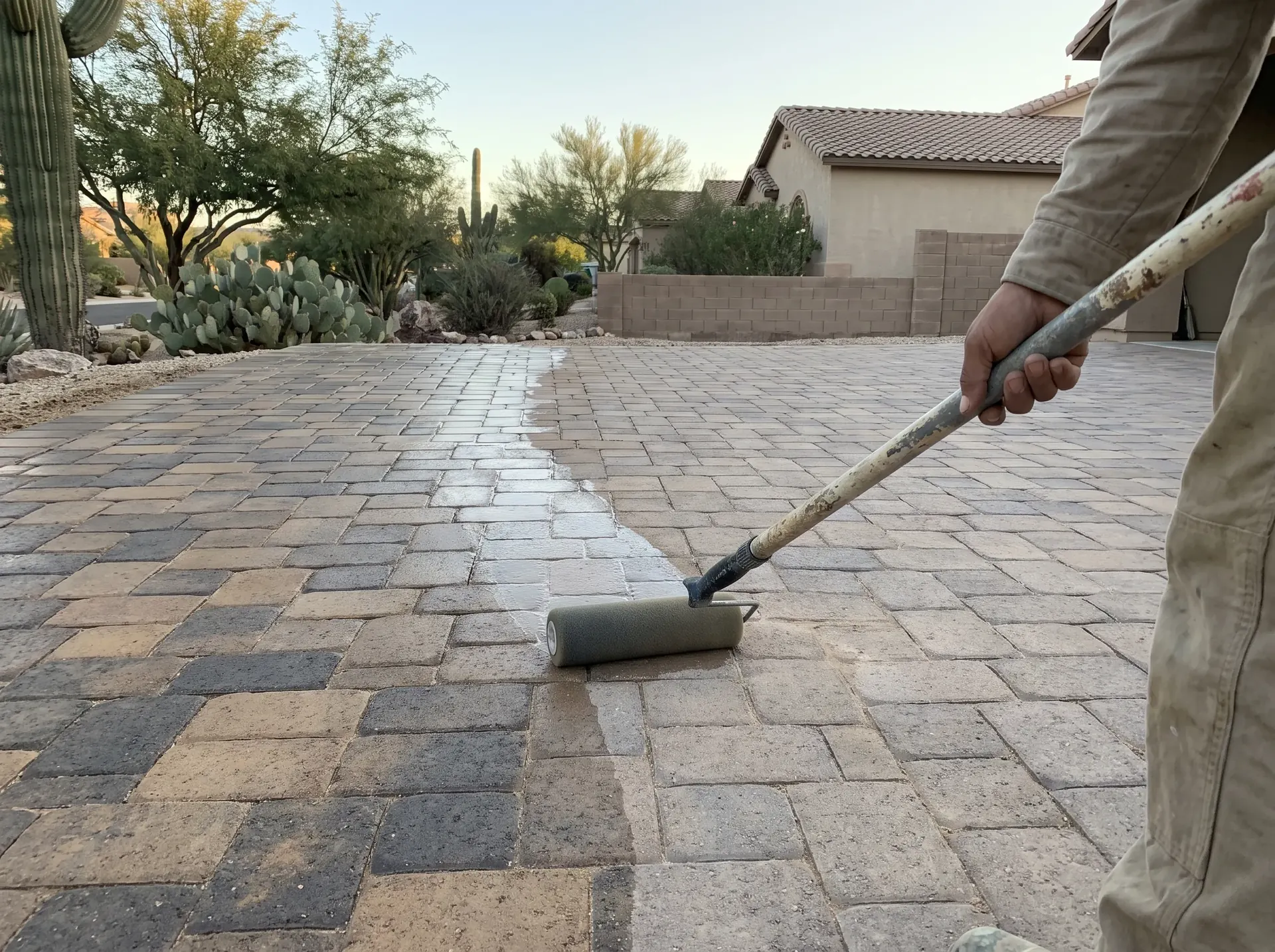 Paver SealingSealer specified for Tucson UV and applied at the right coverage rate, on the surfaces where it genuinely helps. We will tell you honestly when it is not worth doing.See the detail
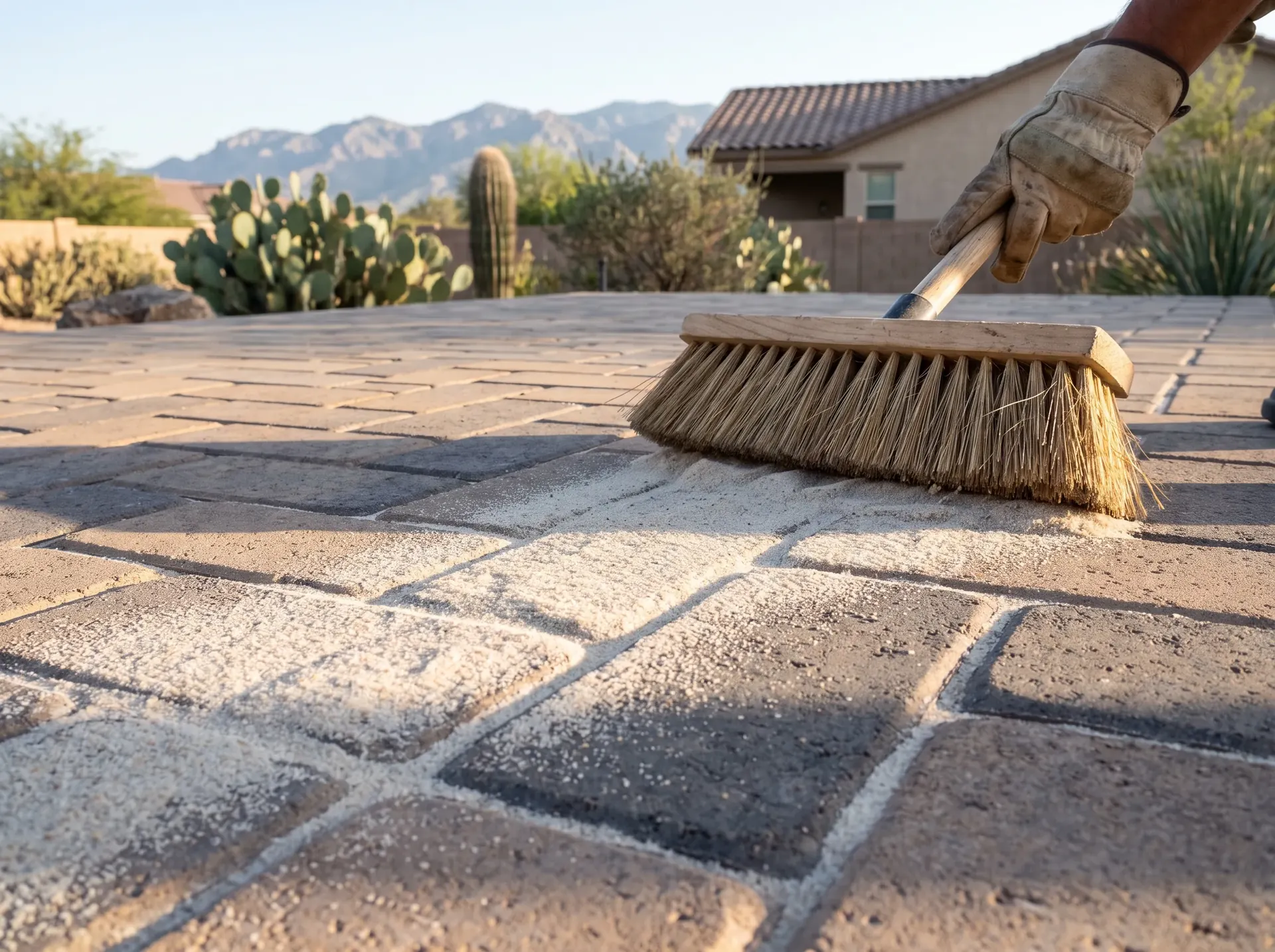 Joint Sand ReplacementJoints cleaned out and refilled properly, with a straight answer on whether polymeric sand suits your surface or whether plain sand is the better call.See the detail
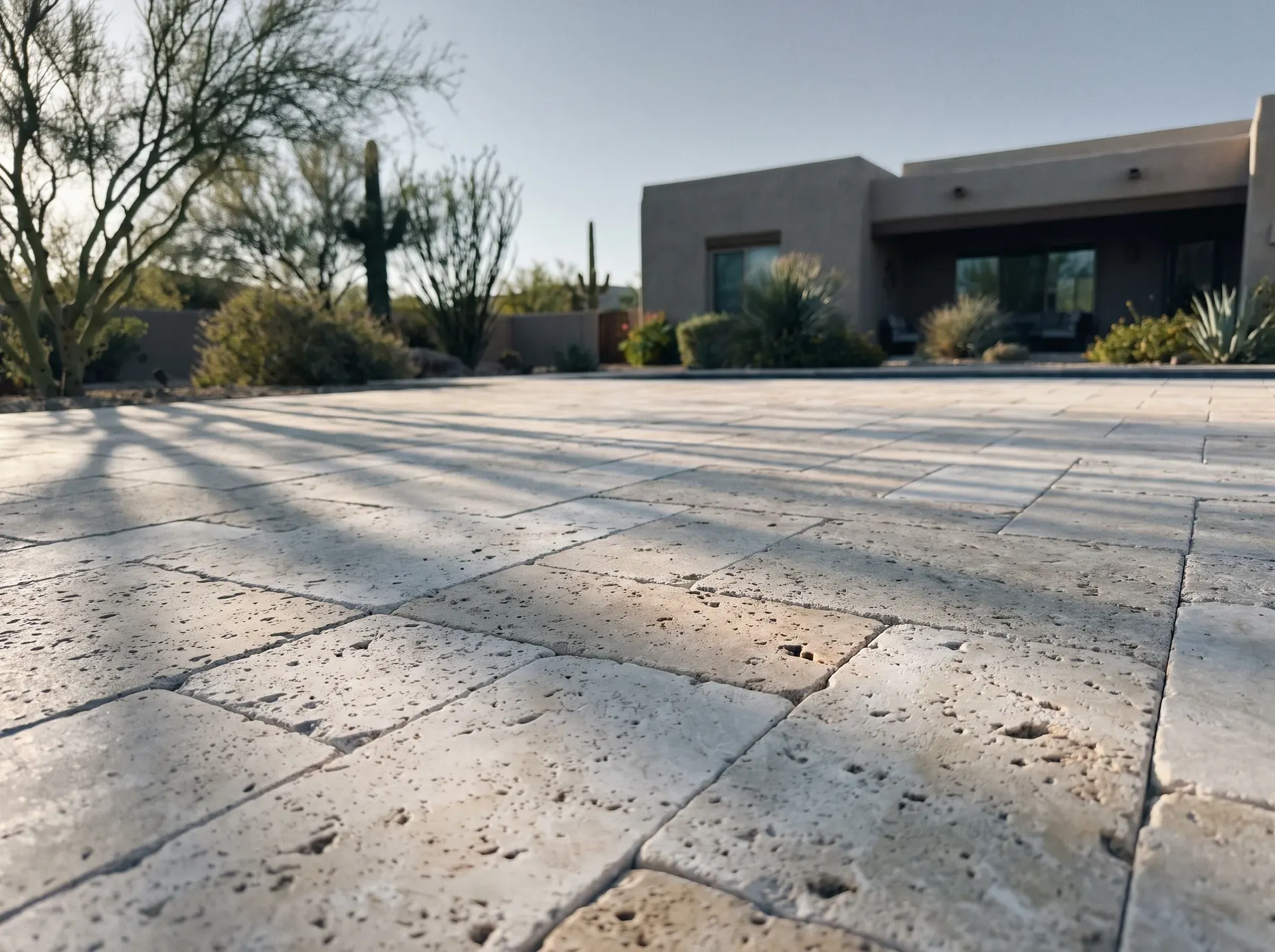 Travertine PaversNatural stone with real colour variation, noticeably cool underfoot for its tone, and porous enough that it wants sealing. Set on a compacted base, never on sand over dirt.See the detail
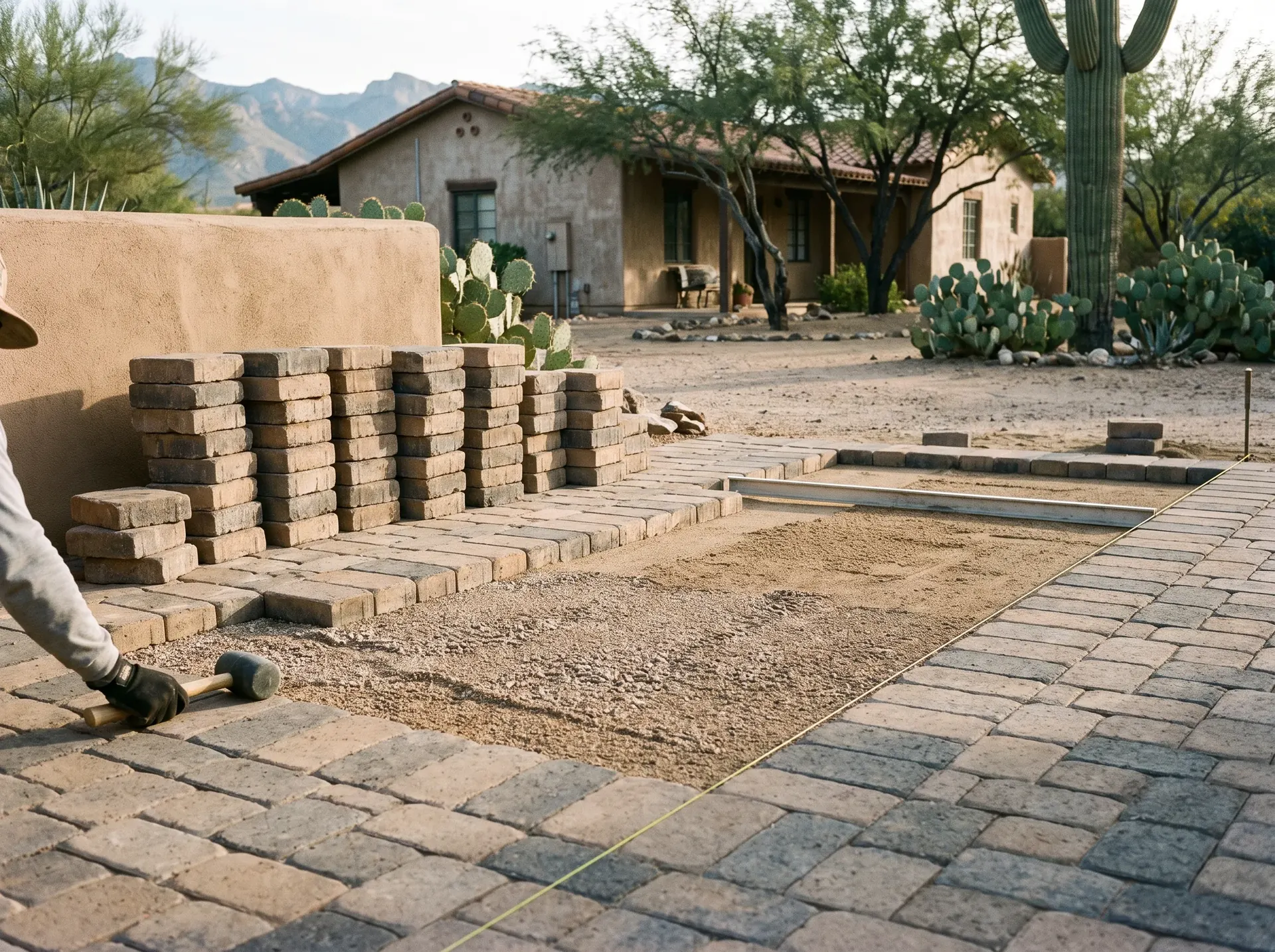 Paver Repair and RelevelingLift, find out why it moved, correct the base and the water source, relay the same pavers. A repair that skips the middle two steps is a repair you will pay for twice.See the detail
Free on site quote
Get a quote for cleaning
Tell us roughly how big the area is and send a close photo of the worst of the staining. We will tell you what will come out.
Or call (520) 555-0194. Mon to Fri, 7am to 5pm. Saturday by appointment.
That is with us
We will call to arrange the site visit, usually the same working day. If it is urgent, call(520) 555-0194.