Excavation depth and base thickness written into every quote
Compacted in lifts, not once at the end
Edge restraint on every open edge
Pavers only, so we do one thing properly
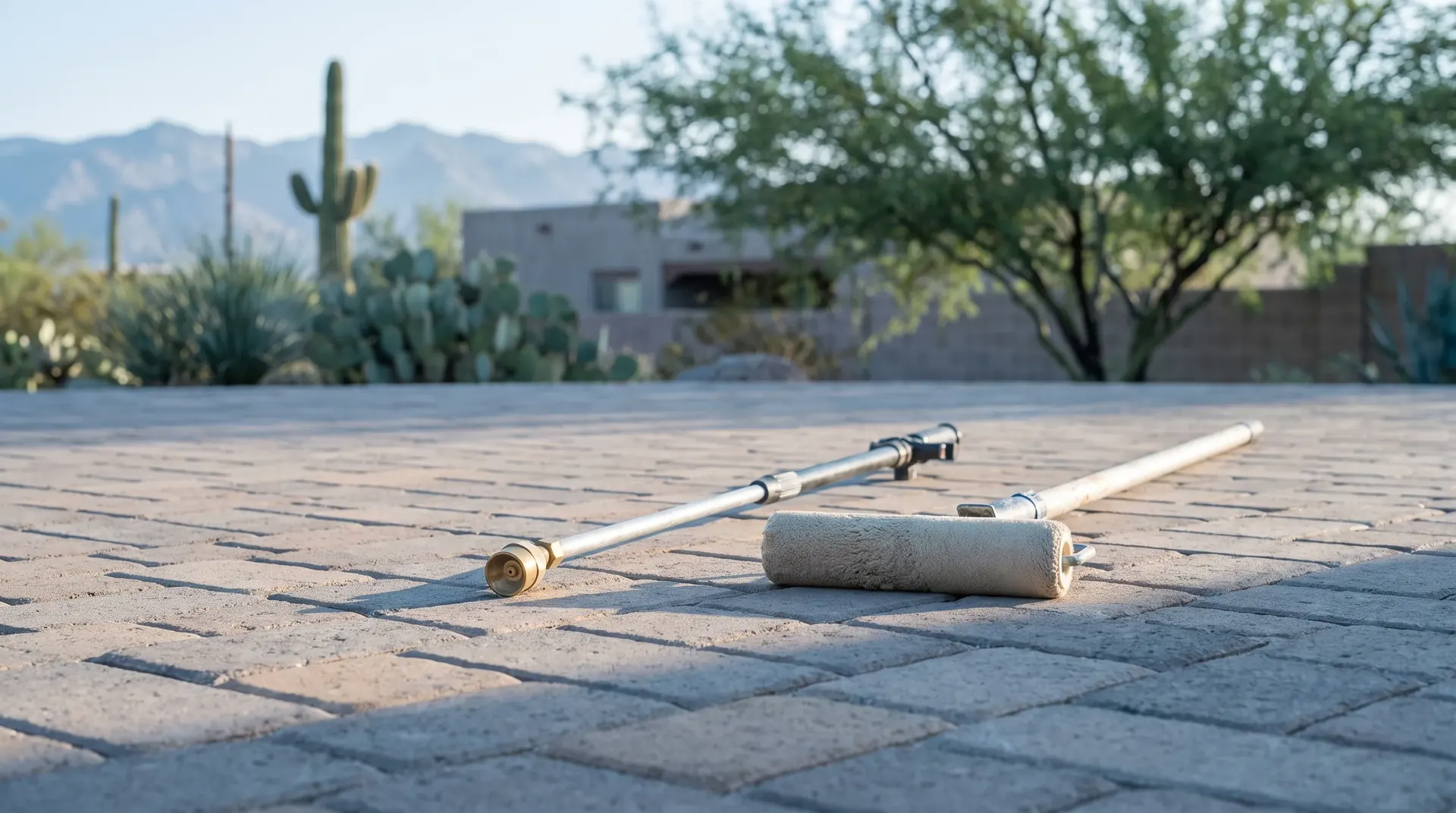
Most professionals use both, in that order: spray to get the product down evenly and into the joints, then back roll to work it in and even out the coverage. On a large open surface, spray only is common and acceptable. On a small or intricate area, roll only is fine.
What actually decides the result is not the tool. It is whether the right amount of product went down per square foot, and whether the surface was genuinely clean and dry underneath. A perfect spraying technique over a damp patio produces a bad job. Everything below is about that.
The honest difference
Spraying
A low pressure sprayer puts product down fast and evenly across a large area, and it gets sealer into the joints, which matters if the product is meant to stabilise joint sand. It is the only sensible method on a driveway or a big pool deck.
The risks are overspray onto walls, stucco, planting and vehicles, which is why masking matters more than people expect, and the fact that it is easy to lay down too much or too little without noticing, because a sprayer gives you no tactile feedback at all.
Rolling
A roller gives you feedback. You can feel the surface taking product and see where it has had enough, and there is essentially no overspray, which makes it the right choice against a house wall or around planting.
It is slow on a large area, it struggles to get product properly into deep joints, and on a heavily textured paver or on travertine it skips over the low points and leaves the pitted areas under covered.
Spray and back roll
Spray for even placement and joint penetration, then immediately back roll to work the product in and pull the coverage even. It takes longer, uses the same amount of product, and it is what most people who do this every day actually do.
Coverage rate
Every sealer has a coverage rate on its datasheet, expressed as an area per unit of product. That number is the specification. Hitting it is the job.
Under apply and you get thin patchy protection that fails early and wears through in traffic lines within a season. Over apply and, depending on the product, you get a surface that stays tacky, dries with a cloudy film, or forms a thick layer that peels rather than wearing.
The way to control it is arithmetic rather than judgement: measure the area, work out how much product it should take, and use that much. If a contractor cannot tell you the coverage rate they are working to, they are applying by eye.
Two coats at half the correct rate is not equivalent to one coat done properly, and it is a common way to make a job look thorough while being under specified.
Heat, timing and the monsoon
Three local factors change how this goes.
Surface temperature. Sealing onto a hot surface in direct sun lets the carrier flash off before the product penetrates. You get a poor bond, a patchy finish and sometimes a white bloom. This is a morning job, and in summer an early one, on a surface that has been in shade rather than baking.
Dryness. The surface has to be genuinely dry all the way through, not just dry to the touch. After a wash that usually means coming back a day or more later. Sealing over trapped moisture causes cloudiness that is difficult to reverse.
The forecast. Rain on uncured sealer can cause permanent blotching, whitening or a failure to cure at all. During monsoon season this means scheduling against the forecast rather than hoping, and being willing to move a date.
The five things worth getting right
Clean it properly, then wait longer than you think for it to dry.
Work out the coverage rate from the datasheet and measure your area, so you know how much product the job should consume.
Mask anything you do not want sealer on, particularly stucco, which is unforgiving.
Start early in the day on a cool surface, and work in sections you can finish before the product starts to set.
Keep off it for as long as the datasheet says, and longer for furniture and vehicles than for foot traffic.
When it is worth handing over
Large areas, previously sealed surfaces where you do not know what was used, natural stone, and anything where a failed job would be expensive to strip. Stripping a bad sealer job costs considerably more than the original sealing did.
From a People Also Ask harvest
Questions people actually ask
Is it better to spray or roll paver sealer?
Both, usually. Spray to place the product evenly and get it into the joints, then back roll immediately to work it in and even out the coverage. Spray only is normal on large open areas, roll only is fine on small or intricate ones. Neither method rescues a surface that was not clean and dry, and neither compensates for the wrong coverage rate.
What is the top rated paver sealer?
There is no single answer and any page that gives you one is usually earning a commission. What matters is matching the product type to your surface and to the finish you want: penetrating products change the appearance least and do not peel, film forming products give the wet look and higher stain resistance and can peel if applied badly. On natural stone the choice is narrower. Ask what is being proposed for your specific surface and why.
What is the best outdoor concrete sealer?
The same answer applies, with one addition specific to this climate. Ultraviolet resistance matters far more here than in most markets, and a product that performs for years elsewhere can cloud or yellow quickly on a fully exposed Tucson surface. Check that whatever is proposed is rated for high UV exposure rather than assuming it. ---
If you would rather we did it
The work behind this guide
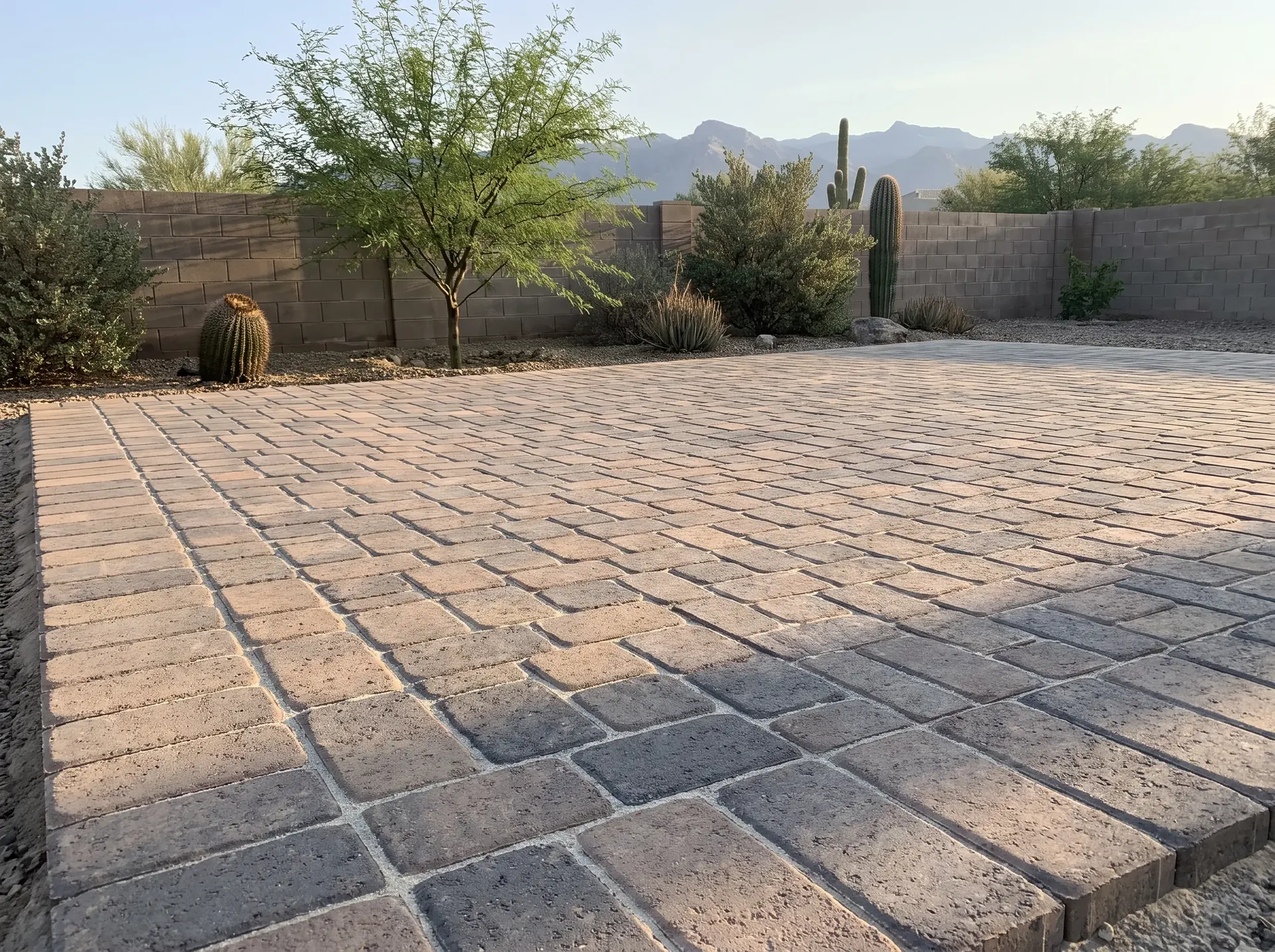 Paver PatiosThe main entertaining surface, sized around what actually goes on it and laid with the fall running away from the house. Excavation and base depth quoted in writing, edge restraint on every open edge.See the detail
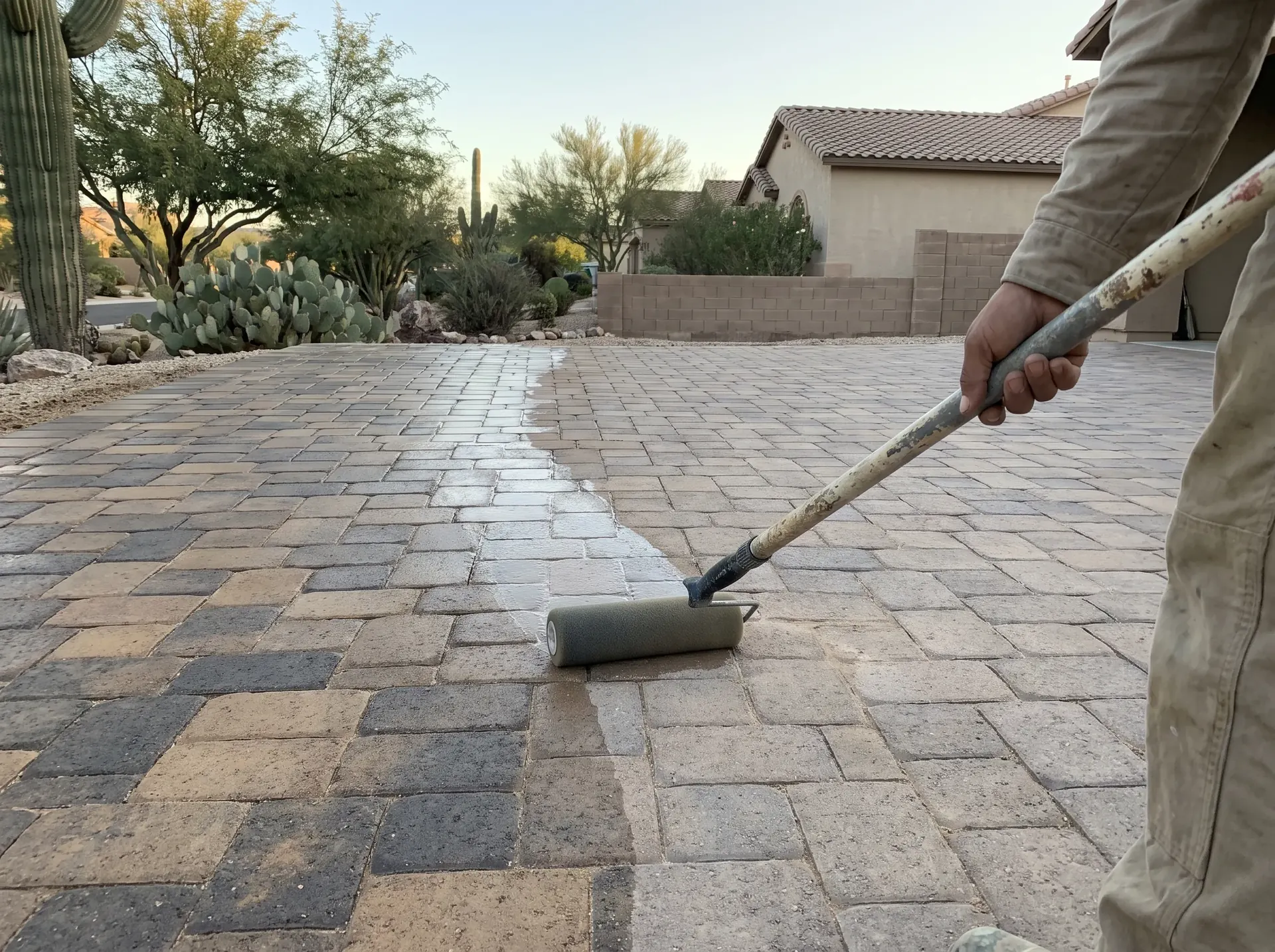 Paver SealingSealer specified for Tucson UV and applied at the right coverage rate, on the surfaces where it genuinely helps. We will tell you honestly when it is not worth doing.See the detail
Free on site quote
Want it done properly?
Tell us roughly how big the area is and whether it has been sealed before. If you do not know what was used last time, say so, because that changes the job.
Or call (520) 555-0194. Mon to Fri, 7am to 5pm. Saturday by appointment.
That is with us
We will call to arrange the site visit, usually the same working day. If it is urgent, call(520) 555-0194.