Surface cleaned and fully dry before anything is applied
Maintenance and repair
Paver Sealing in Tucson
Done properly, on the right surface, for the right reason. And not done at all when that is the honest recommendation.
Coverage rate measured, not guessed
Product matched to the surface and the exposure
We will tell you when not to seal
Before you choose anything
Sealing is optional, and it is sold as if it is not
Nothing structural depends on sealing a paver surface. A properly built patio that is never sealed will be flat and functional in twenty years. That is worth saying plainly, because the way this service gets sold in Tucson often implies the opposite.
There are real reasons to seal. It deepens and enriches colour, which some people love. It makes a surface much easier to clean and considerably more resistant to oil, food and organic staining, which matters near a cooking area or under a mesquite that drops on it. Some products stabilise the joint sand, which helps on an exposed windy site or a slope where sand keeps migrating. On porous natural stone like travertine, sealing is closer to a genuine recommendation than an option.
There are also real reasons not to. Sealer changes the appearance permanently and you cannot go back easily. Some products make a wet surface slicker, which is a problem around a pool. In deep shade a film forming sealer can trap moisture. And once you start, you are committed to reapplying every few years or living with an increasingly patchy finish as it wears unevenly under traffic.
Under Tucson ultraviolet exposure, product choice matters more than it does in a mild climate. A cheap or wrongly specified sealer can cloud, yellow or start peeling far sooner than the label suggests.
The work itself
What we do
Clean and seal
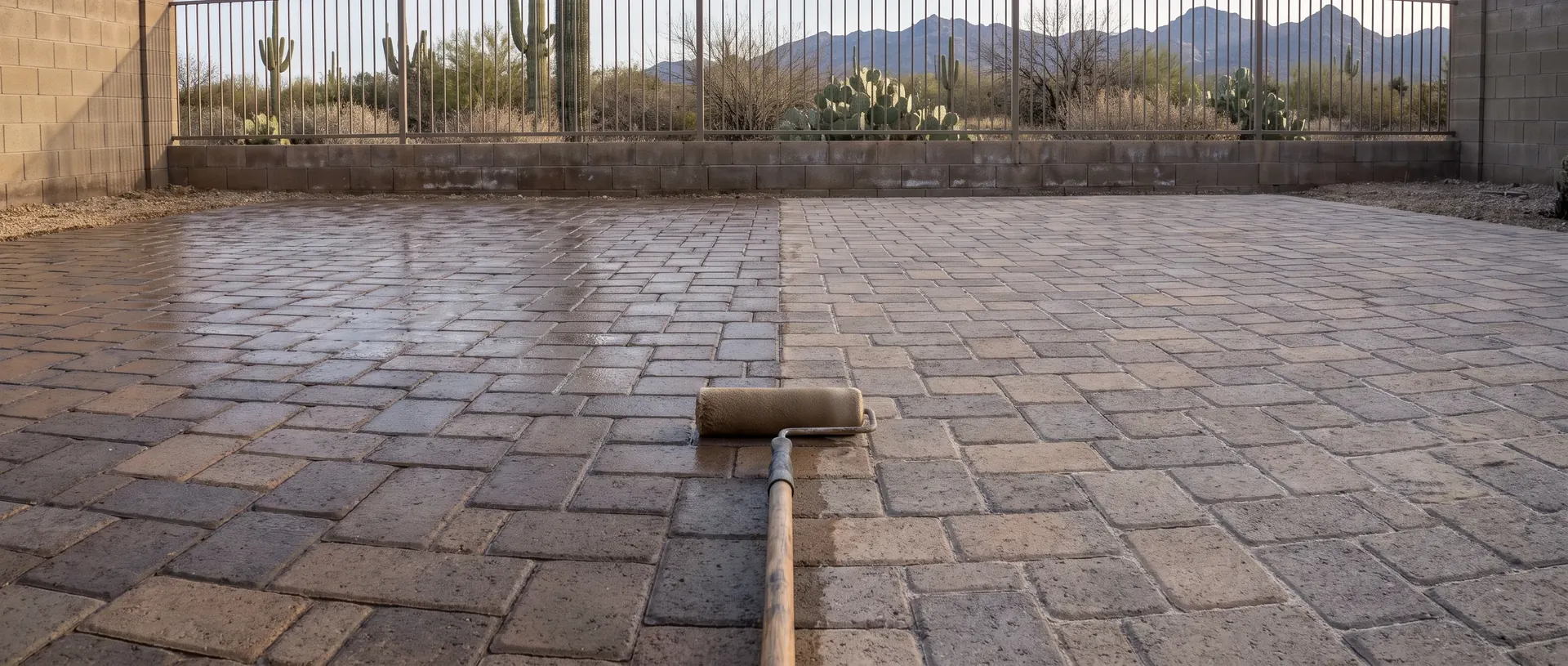
The standard job. The surface is cleaned properly, allowed to dry fully, joints topped where needed, then sealed at the correct coverage rate. Cleaning is most of the work and it is not optional, because sealing over a dirty surface locks the dirt in permanently.
Re-seal of a previously sealed surface
Different job, and more difficult. What was used before matters, whether it is failing or just worn matters, and sometimes the old product has to be stripped before anything new goes on. We work that out before quoting.
Sealing new installations
On a new surface, timing matters. Efflorescence needs to work its way out first, and sealing too early traps it under the film. We will tell you how long to wait, which is longer than most people expect.
Line by line
What is included
Assessment and honest recommendation
We look at the surface, the exposure, the traffic and what has been done to it before, then tell you whether sealing helps you. If the answer is that it does not, that is what we say.
Cleaning and preparation
Surface cleaned at a pressure the joint sand can survive, stains treated where they can honestly be treated, weeds and organic growth removed, and the surface left to dry completely. Drying time is not something to hurry in this trade.
Joint sand and repairs
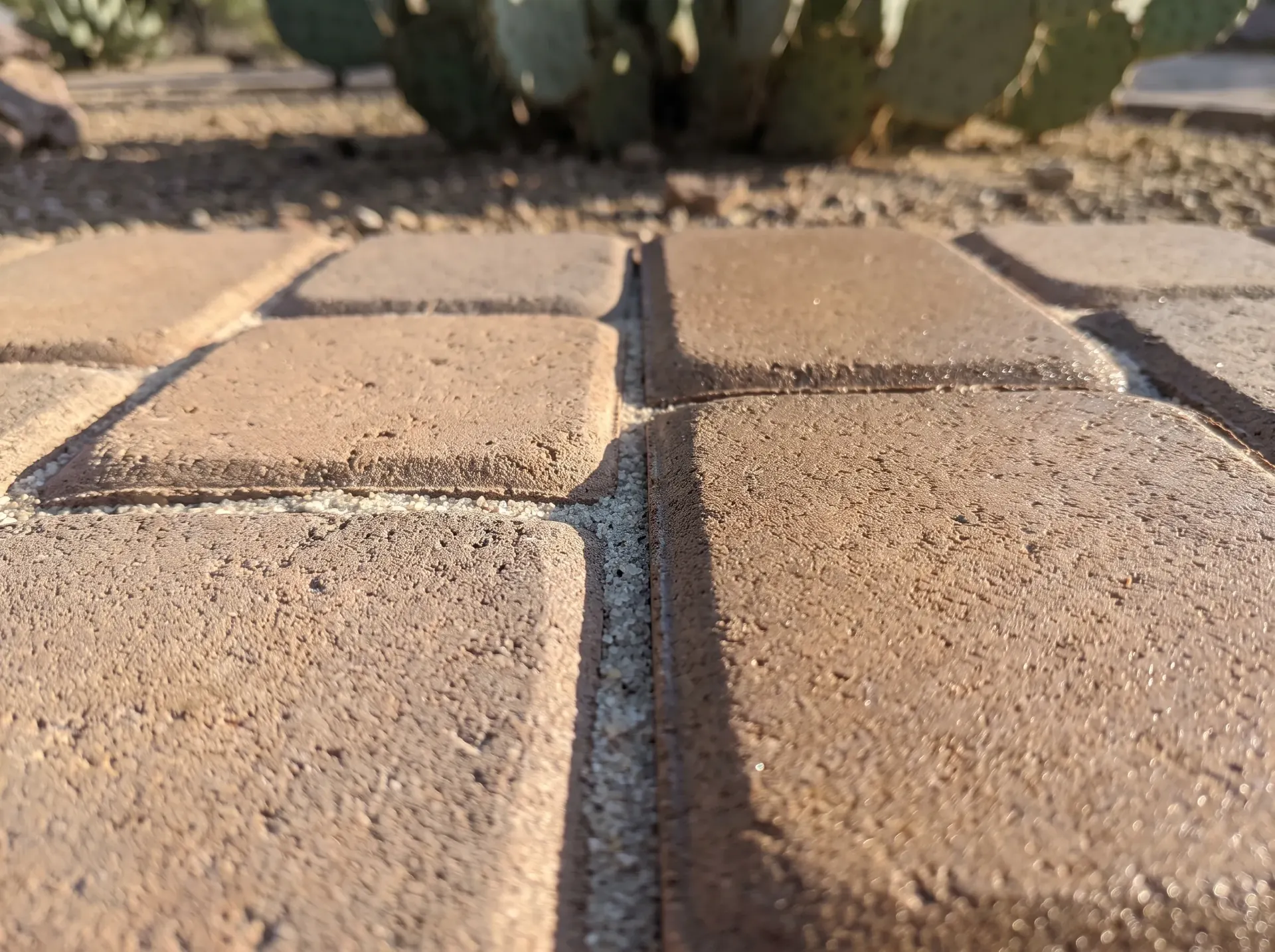
Joints topped up and settled before sealing, and any obviously loose or rocking pavers dealt with. Sealing over failing joints locks in the problem.
Application and cure
Product applied at a measured coverage rate rather than until it looks wet, in the number of coats the product and surface actually require, then protected while it cures with honest timings for foot traffic and furniture.
Six steps, in this order
How the work runs
1Site visit and assessment
We check the surface, the exposure, the shade, whether it has been sealed before and whether the joints are sound. We also ask what is actually bothering you, because sometimes the answer is a clean rather than a seal.
2Recommendation and product
A straight recommendation, then a product matched to the surface, the exposure and the finish you want. We will show you what each finish looks like on your actual pavers rather than on a brochure.
3Fixed quote
Itemised, with cleaning, joint sand and sealing shown separately, so you can see that most of the cost is preparation.
4Weather window
Sealing needs a dry surface and a dry forecast. We schedule around it rather than working through it, and we will move a date rather than seal onto damp pavers.
5Clean, dry, seal
Clean, then a proper drying period which usually means coming back on a later day, then joints, then application.
6Cure and handover
Honest timings for walking on it, putting furniture back and driving on it, plus what to expect as it settles in over the first weeks.
Why us
Why bring us in
We will talk you out of it. Sealing is quick, high margin and easy to sell door to door, which is exactly why so much of it happens on surfaces that did not need it. If your patio is in a shaded courtyard, rarely stained and you like the colour as it is, we will say so.
We treat cleaning as the job. Most of the labour and most of the value in a clean and seal is in the preparation. A crew that arrives and starts spraying sealer within the hour is skipping the part you are paying for, and the result is dirt sealed under a film that will not come out.
And we build these surfaces too. That means when we look at your patio we are reading the base and the edges as well as the surface, and if what you actually have is a settlement problem rather than an appearance problem, you will hear that instead of being sold a coating.
Not sure whether to seal?
Send us a photo and tell us what is bothering you about the surface. We will give you a straight answer before anyone comes out.
From a People Also Ask harvest
Paver sealing questions
How much does it cost to have your pavers sealed?
Sealing is priced per square foot and the range is wide because cleaning and preparation drive it. A clean, sound, never sealed surface is at the bottom of the range. A stained surface, or one with a failing previous sealer that needs stripping, can be several times that. Ask for cleaning and sealing to be quoted as separate lines.
How long does paver sealer last?
The honest answer depends on the product type, the coverage rate it was applied at, how much direct sun the surface takes and how much traffic crosses it. In this climate ultraviolet exposure is the limiting factor on most surfaces, and a driveway wears far faster than a shaded courtyard.
Does paver sealer lock in sand?
Some products are specifically designed to bind the top of the joint sand, and they do help on exposed sites where sand keeps blowing or washing out. Do not expect it to fix a joint that is already half empty, and do not expect it to substitute for edge restraint. Sealer stabilises sand that is properly installed. It does not hold a failing field together.
How many coats of paver sealer?
It depends entirely on the product and the porosity of the surface, and the correct answer is on the datasheet rather than in a rule of thumb. What matters more than the number of coats is the coverage rate, which is how much product goes down per square foot. Applying two coats at half the correct rate is not the same as applying it properly.
Can I seal my pavers myself?
Yes, it is one of the more achievable paver jobs for a homeowner. The mistakes to avoid are sealing over a surface that is not genuinely clean and dry, applying by eye rather than to a measured coverage rate, sealing in direct hot sun so the product flashes off before it penetrates, and sealing a new installation before the efflorescence has worked out. Any of those is difficult to undo.
What happens if it rains after sealing concrete?
It depends how long after. Rain on a sealer that has not cured can leave permanent cloudiness, blotching or a whitened film, and on some products it can stop it curing properly at all. This is why we schedule against the forecast rather than around it, and it is why we will move a booking rather than seal into a monsoon afternoon.
Is paver sealer necessary?
No. Nothing structural depends on it and an unsealed paver surface will last just as long. It is a choice about appearance, stain resistance and maintenance. On porous natural stone such as travertine the case is much stronger, and on a plain concrete paver patio in a shaded courtyard it is often not worth doing at all.
Pima County
Where we work
We work across Tucson, Oro Valley, Marana, Vail, Sahuarita, Green Valley, Catalina Foothills, Casas Adobes, Rita Ranch, Dove Mountain, Corona de Tucson and Tanque Verde.
Next door to this one
Related paver work
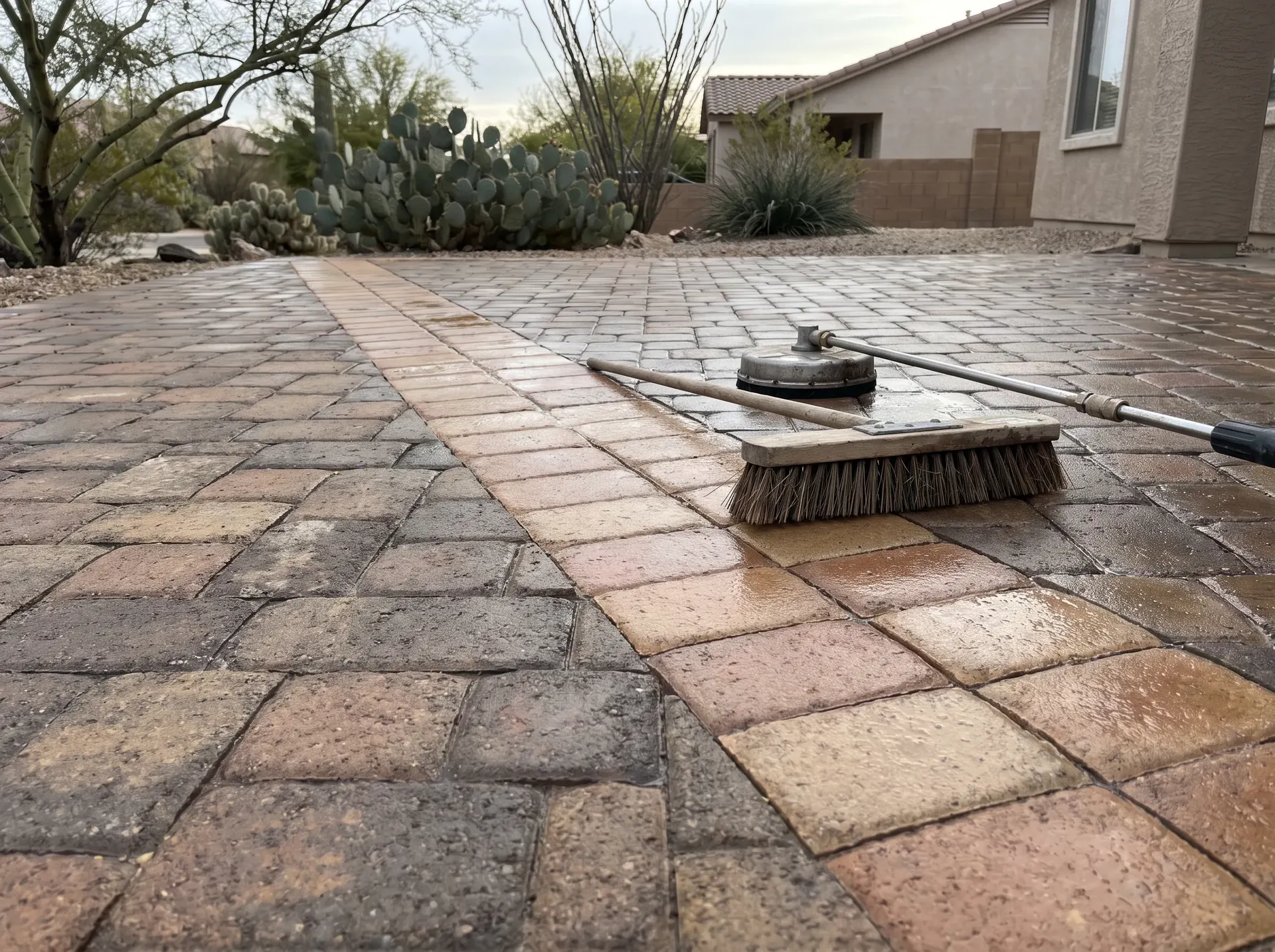 Paver CleaningHard water deposits, efflorescence, oil, rust and organic staining, dealt with at a pressure that does not strip the joint sand out of the whole field.See the detail
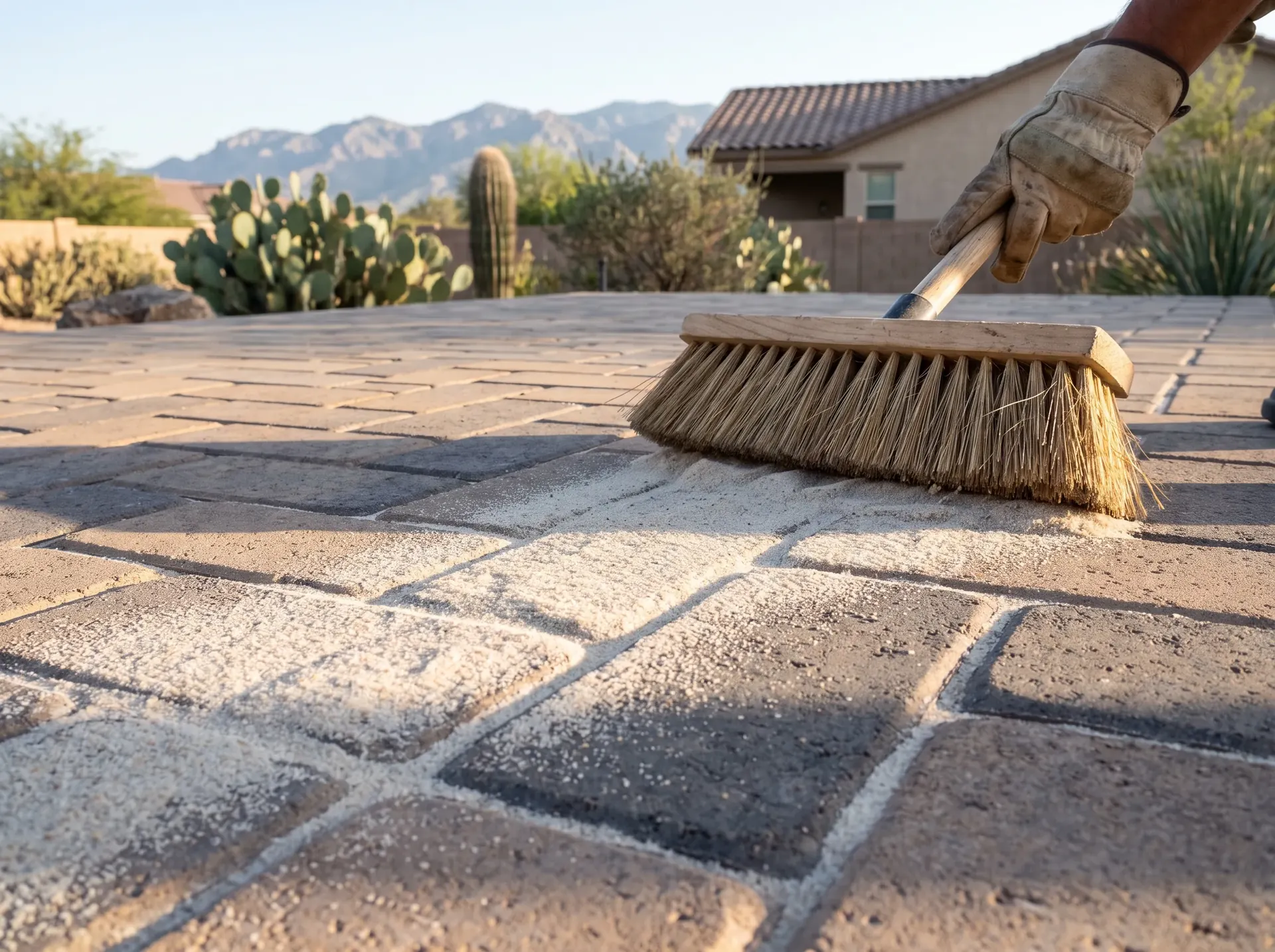 Joint Sand ReplacementJoints cleaned out and refilled properly, with a straight answer on whether polymeric sand suits your surface or whether plain sand is the better call.See the detail
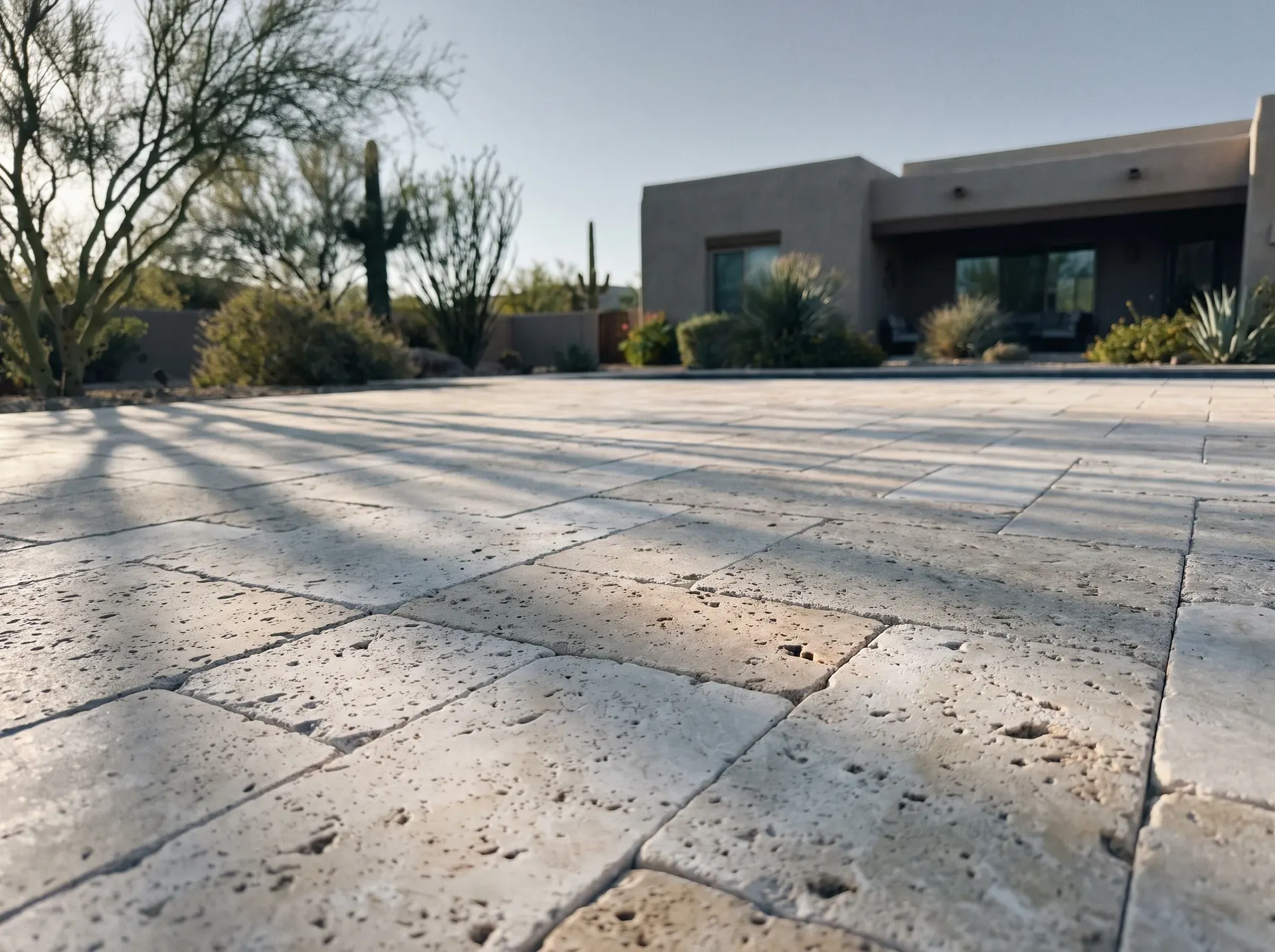 Travertine PaversNatural stone with real colour variation, noticeably cool underfoot for its tone, and porous enough that it wants sealing. Set on a compacted base, never on sand over dirt.See the detail
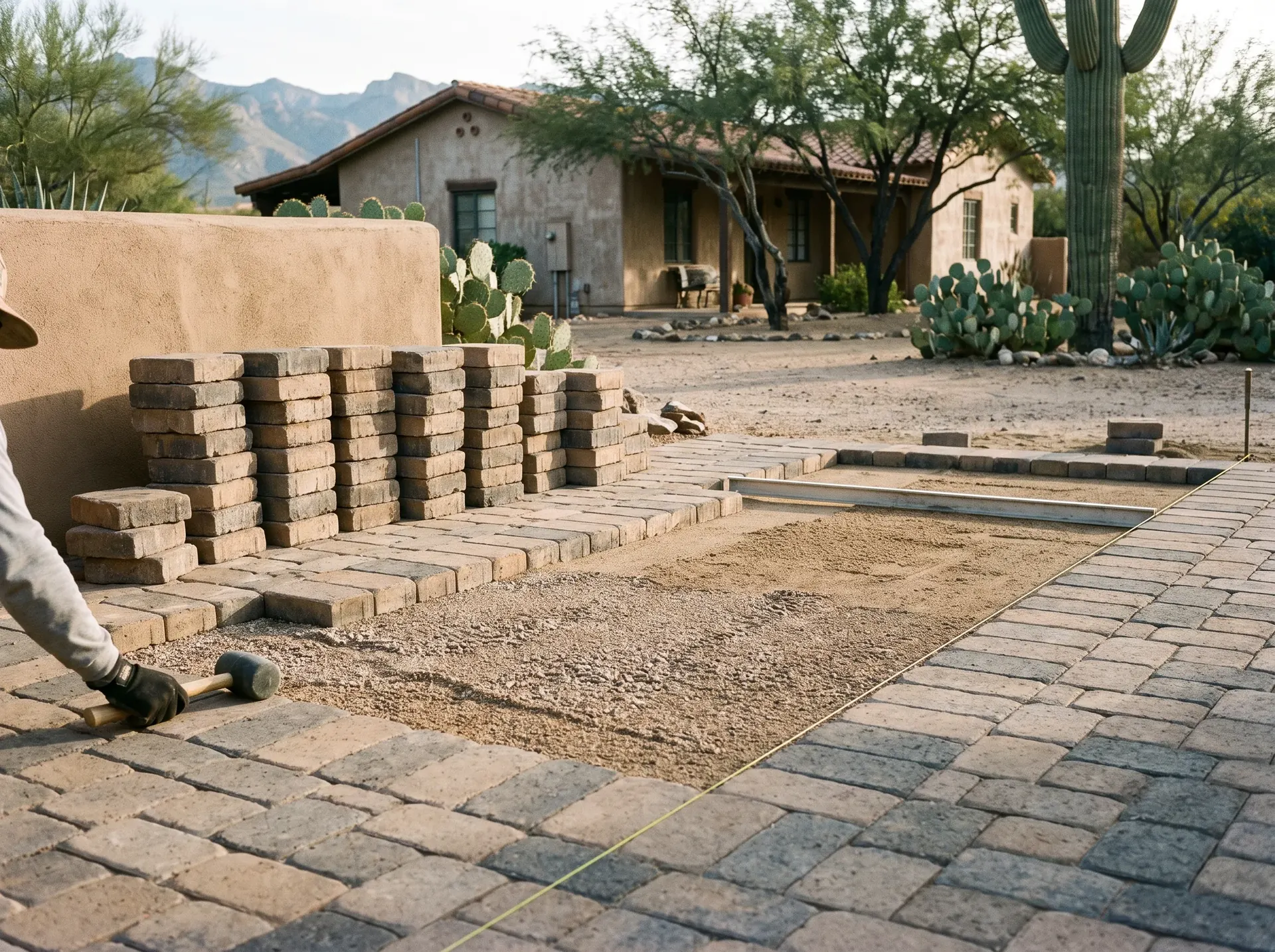 Paver Repair and RelevelingLift, find out why it moved, correct the base and the water source, relay the same pavers. A repair that skips the middle two steps is a repair you will pay for twice.See the detail
Free on site quote
Get a quote for sealing
Tell us roughly how big the area is, whether it has been sealed before, and what is bothering you about it. Photos help.
Or call (520) 555-0194. Mon to Fri, 7am to 5pm. Saturday by appointment.
That is with us
We will call to arrange the site visit, usually the same working day. If it is urgent, call(520) 555-0194.