Excavation depth and base thickness written into every quote
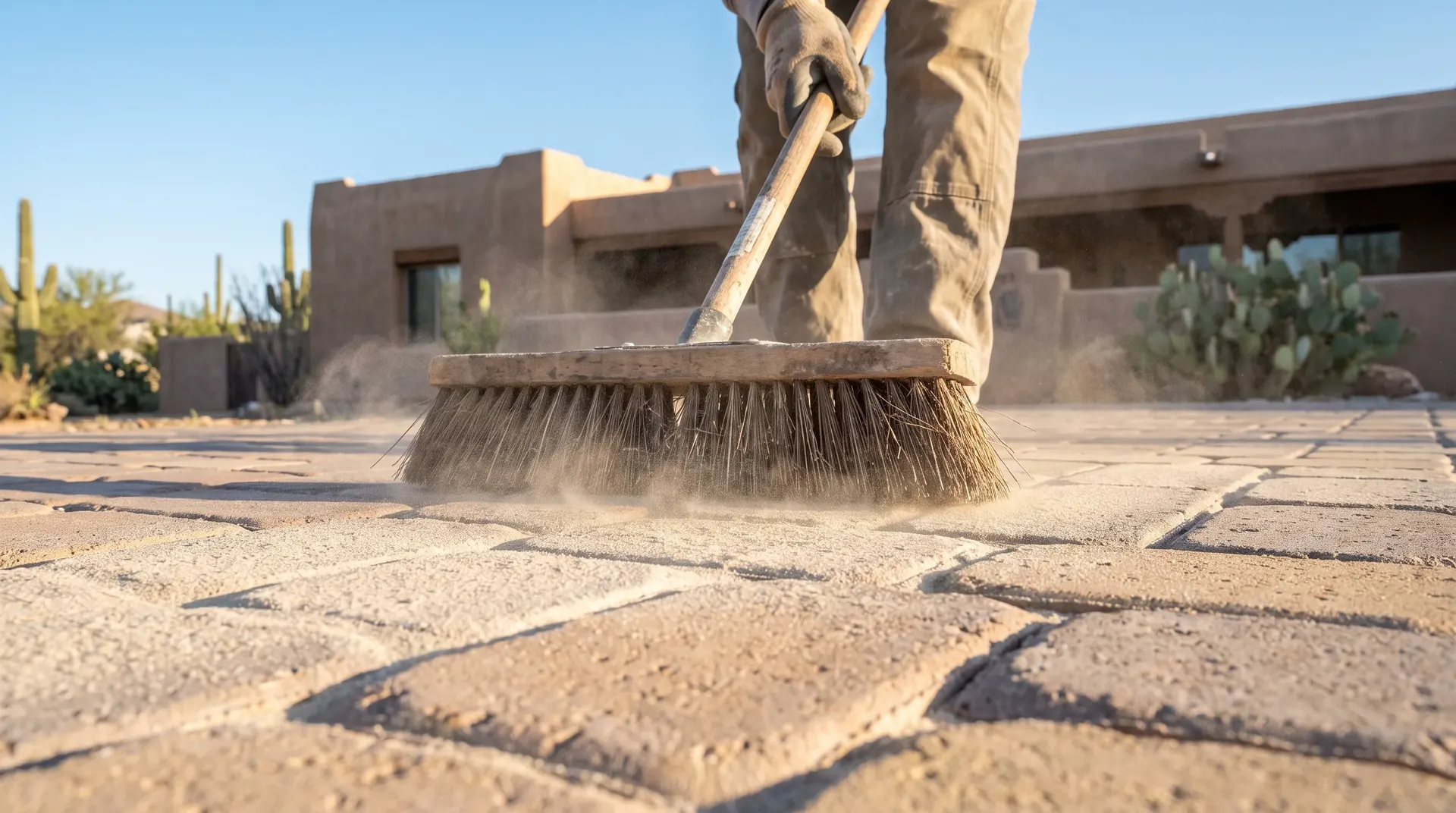
Compacted in lifts, not once at the end
Edge restraint on every open edge
Pavers only, so we do one thing properly
Polymeric sand is joint sand with a binder in it that sets when you wet it. It resists washing out, it slows down weed germination in the joints, and it is genuinely better than plain sand on exposed sites, on slopes and anywhere runoff crosses the surface.
It is also fussier to install, harder to repair, more expensive, and capable of producing a permanent haze across your patio if the person applying it gets the last step wrong. It is sold as the automatic upgrade and it is not always the right call. Here is the honest version.
Three real benefits
It resists washout
This is the main one and it is why we recommend it on the sites we do. Plain joint sand migrates under monsoon runoff, wind and pressure washing. Bound sand largely does not, which on an exposed lot or a sloping surface is the difference between topping up every couple of years and rarely thinking about it.
It slows weeds down
Weeds in pavers almost always germinate in the joint sand from windblown seed rather than growing up from below. A bound joint is a much less hospitable seed bed. It is not a herbicide and it is not permanent, but it reduces the problem noticeably.
It stabilises the field
A properly bound joint holds the load transfer between units more reliably over time, which is helpful anywhere sand keeps disappearing faster than it can be topped up.
Five real downsides
The haze
The one everybody eventually hears about. If any polymeric residue is left on the paver faces when the surface is activated with water, it sets there as a permanent dull film. It is much harder to remove than to prevent, and on a textured or porous paver it can be effectively permanent. Preventing it means clearing every grain off the surface before water goes anywhere near, which is slow and boring and gets rushed.
Water activation is unforgiving
Too little water and the binder does not set through the full depth of the joint. Too much and it washes the binder up out of the joints and onto the faces, which produces the haze. There is a correct method on the bag and it needs following exactly.
Rain at the wrong moment ruins it
Rain during or shortly after installation, before it has cured, causes exactly the same failures. During monsoon season that is a real scheduling constraint rather than a theoretical one.
It is harder to repair
Plain sand joints are easy to top up. A bound joint has to be cleared out properly before new polymeric sand goes in, because new material will not bond to old compacted material at depth. That makes future maintenance more work rather than less.
It does not fix structural problems
It will not hold a settling area together, it will not compensate for missing edge restraint, and it will not stop pavers rocking if the base beneath them has washed out. Sold as a fix for those things, which it is not.
Which one for your surface
Polymeric usually makes sense when
The site is exposed to wind, the surface slopes or takes runoff, the joints keep emptying faster than you want to deal with, or it is a pool deck with heavy splash out. Also worth it if weeds in the joints have been a persistent annoyance.
Plain sand is often the better answer when
The surface is a sheltered courtyard with tight joints, the joints are unusually wide or the layout is a stepping stone pattern where a rigid joint is a liability, the budget is tight and the money would do more good elsewhere, or you expect to be lifting sections for access at some point.
Neither, if the real problem is elsewhere
If joints on one side of a patio keep washing out, that side probably has an edge restraint problem or a water source. Filling the joints with a more expensive product treats the symptom. We would rather fix the edge.
What this climate does to the decision
Two local factors push in opposite directions.
Monsoon runoff pushes toward polymeric. A few intense storms a year move a lot of plain joint sand, particularly on any surface with a slope or a low edge, and that loss is cumulative across seasons.
Monsoon timing pushes against it, at least in summer. Installation needs a properly dry window either side, and between July and September that window is less predictable. It is a good reason to schedule this work outside the monsoon rather than a reason to avoid the product.
Windblown grit is the third factor and it is specific to the open desert edges of the metro. Out in Corona de Tucson, Vail and the more exposed parts of Marana, joints fill with fine grit and empty of sand faster than they do in a sheltered midtown yard, and that is exactly the situation polymeric handles well.
Worth asking before you buy a pallet
If someone is quoting joint sand as a line item, ask which product and why that one for your surface. The answer should reference your exposure, your slope and your joint width rather than being the same answer they gave the last customer.
From a People Also Ask harvest
Questions people actually ask
What are the downsides of using polymeric sand?
Haze on the paver faces if the surface is not cleared properly before activation, an unforgiving water activation step, vulnerability to rain before it cures, higher cost, and considerably more work to repair or top up later. It also gets sold as a fix for structural problems it cannot fix.
Is there anything better than polymeric sand?
For most residential paver surfaces, no, and the honest alternative is plain washed joint sand, which is cheaper, simpler and easier to maintain, and which suits sheltered sites perfectly well. There are proprietary jointing compounds and stabilising sealers that do a similar job by a different route, and none of them is a clear upgrade in a general sense. The right answer depends on the surface rather than on the product ranking.
Will rain wash away paver sand?
Plain joint sand, yes, gradually, and a monsoon downpour on a sloping surface will move a noticeable amount in a single event. That is the main argument for polymeric. Cured polymeric sand resists it well. Uncured polymeric sand is more vulnerable than plain sand, which is why the weather window during installation matters so much. ---
If you would rather we did it
The work behind this guide
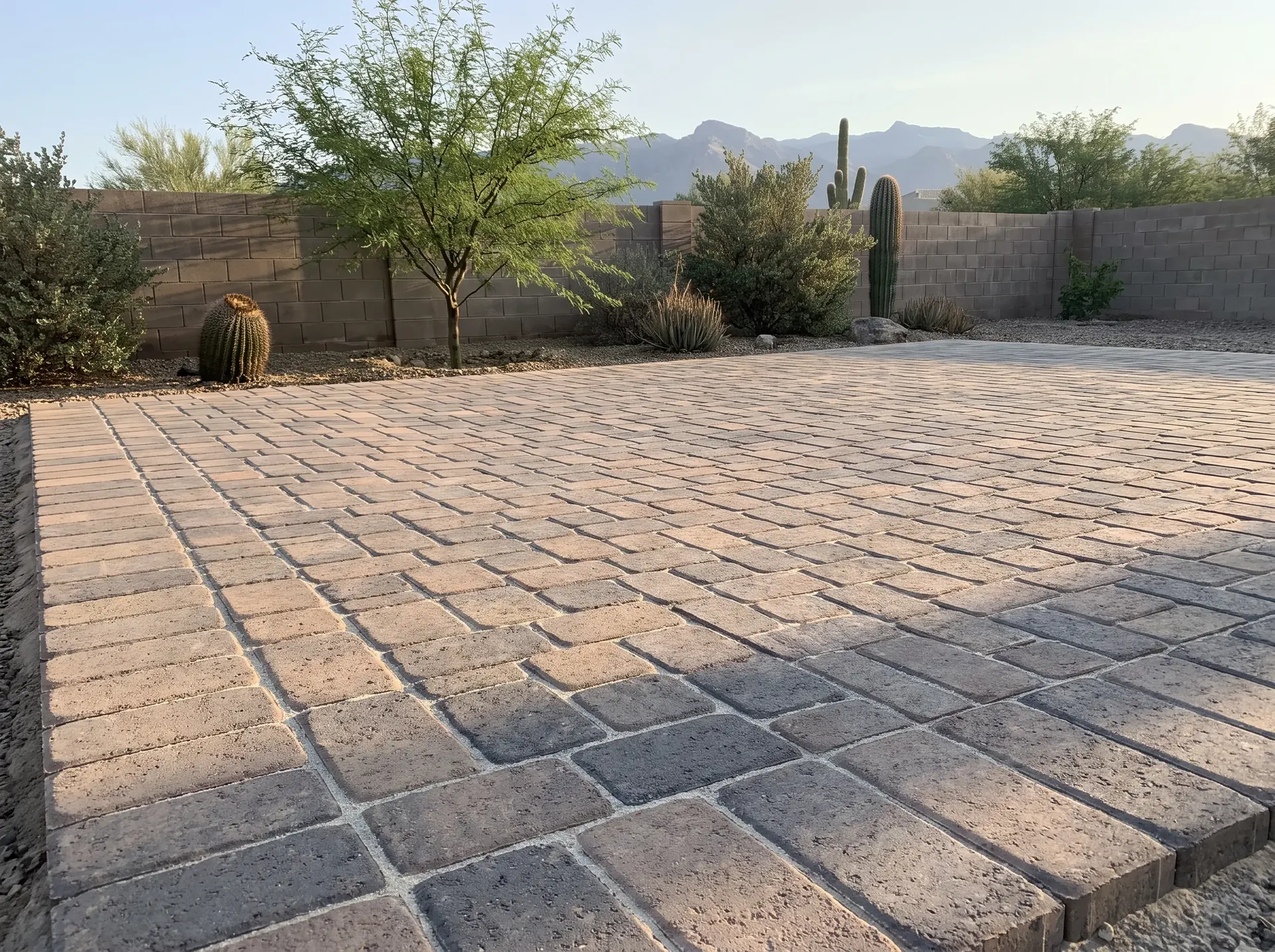 Paver PatiosThe main entertaining surface, sized around what actually goes on it and laid with the fall running away from the house. Excavation and base depth quoted in writing, edge restraint on every open edge.See the detail
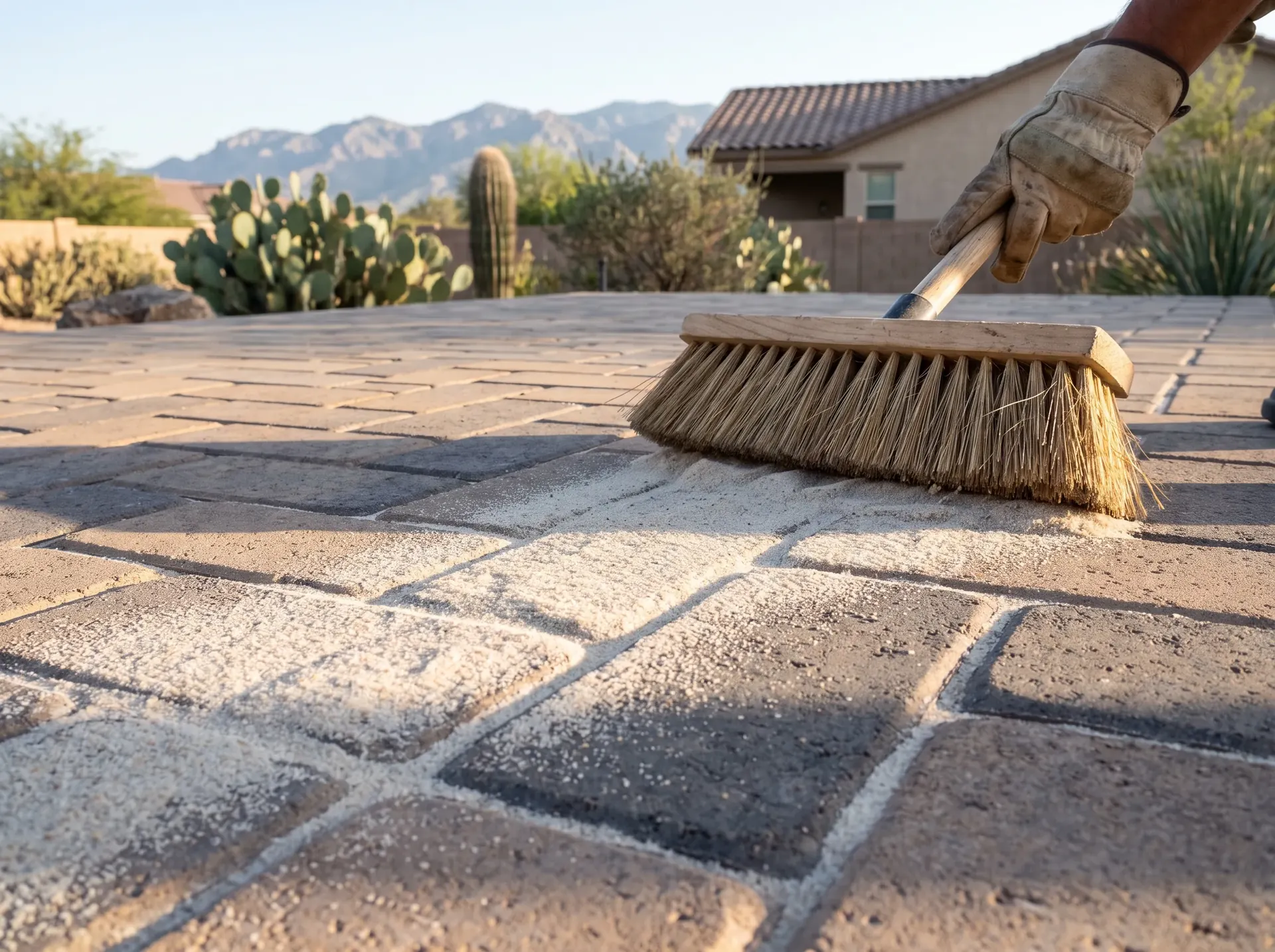 Joint Sand ReplacementJoints cleaned out and refilled properly, with a straight answer on whether polymeric sand suits your surface or whether plain sand is the better call.See the detail
Free on site quote
Joints emptying faster than they should?
Send us a photo taken close to the surface, and tell us whether it is one area or the whole patio. If it is one side, the answer is usually the edge rather than the sand.
Or call (520) 555-0194. Mon to Fri, 7am to 5pm. Saturday by appointment.
That is with us
We will call to arrange the site visit, usually the same working day. If it is urgent, call(520) 555-0194.