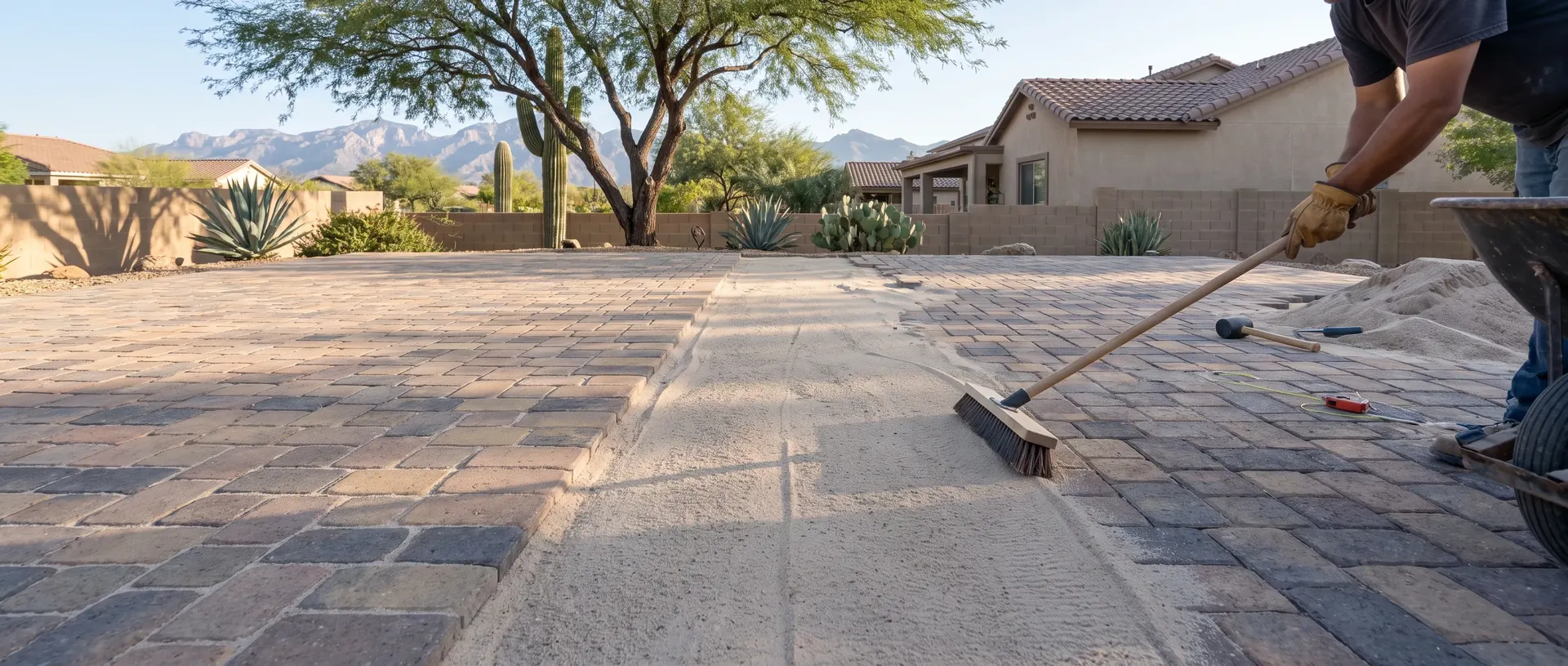
Old material cleaned out before new sand goes in
Maintenance and repair
Joint Sand Replacement in Tucson
The cheapest maintenance available on a paver surface, and the one that protects everything underneath it.
Joints filled, settled and topped rather than swept once
Straight advice on polymeric versus plain sand
Edge restraint checked while we are there
Before you choose anything
The sand is not filler, it is the structure
This is the part of a paver surface most people assume is cosmetic, and it is the part that makes the whole system work.
An interlocking pavement is not a few hundred separate blocks sitting next to each other. It behaves as one surface, and the thing that makes it do that is the sand in the joints. When a load lands on one paver, the sand transfers part of it sideways into the neighbouring units, which spread it further. That is the entire mechanism. It is why the surface can flex slightly with ground movement without cracking, and it is why the units do not need to be bonded to anything.
Take the sand out and the mechanism stops. Each paver carries its own load, so it rocks under foot, edges start chipping where units knock against each other, water gets straight down into the bedding layer and starts moving it, and the field slowly spreads. Every one of those is progressive.
Joints lose sand for ordinary reasons: settling in over the first season, wind on an exposed site, monsoon runoff, and above all pressure washing. It is normal and it is expected. What is not normal is leaving them empty for years.
Refilling them is the cheapest work anyone will ever do on your patio, and skipping it is how a patio becomes a releveling job.
The work itself
What we do
Full re-sand of a surface
Old and contaminated material cleaned out of the joints, new sand swept in, worked down, settled and topped up. The standard job on a surface that has not been maintained for a few years.
Polymeric sand installation
Where the site genuinely suits it: exposed windy areas, slopes, surfaces that keep losing sand and pool decks with heavy splash out. Installed properly, which means the right depth, the right cleaning, and the right activation with water.
Top up after cleaning or a repair
Joints refilled following pressure washing or a lifted repair. We include this as part of our own cleaning and repair work, and we will do it after someone else's too.
Line by line
What is included
Assessment and sand choice
We look at the exposure, the slope, the joint width and how the surface is used, then recommend plain washed joint sand or a polymeric product and explain the trade offs honestly.
Clearing the joints
Old degraded material, weeds, organic matter and debris removed from the joints to a proper depth. New sand over compacted old debris does not settle and does not transfer load.
Filling, settling and compaction
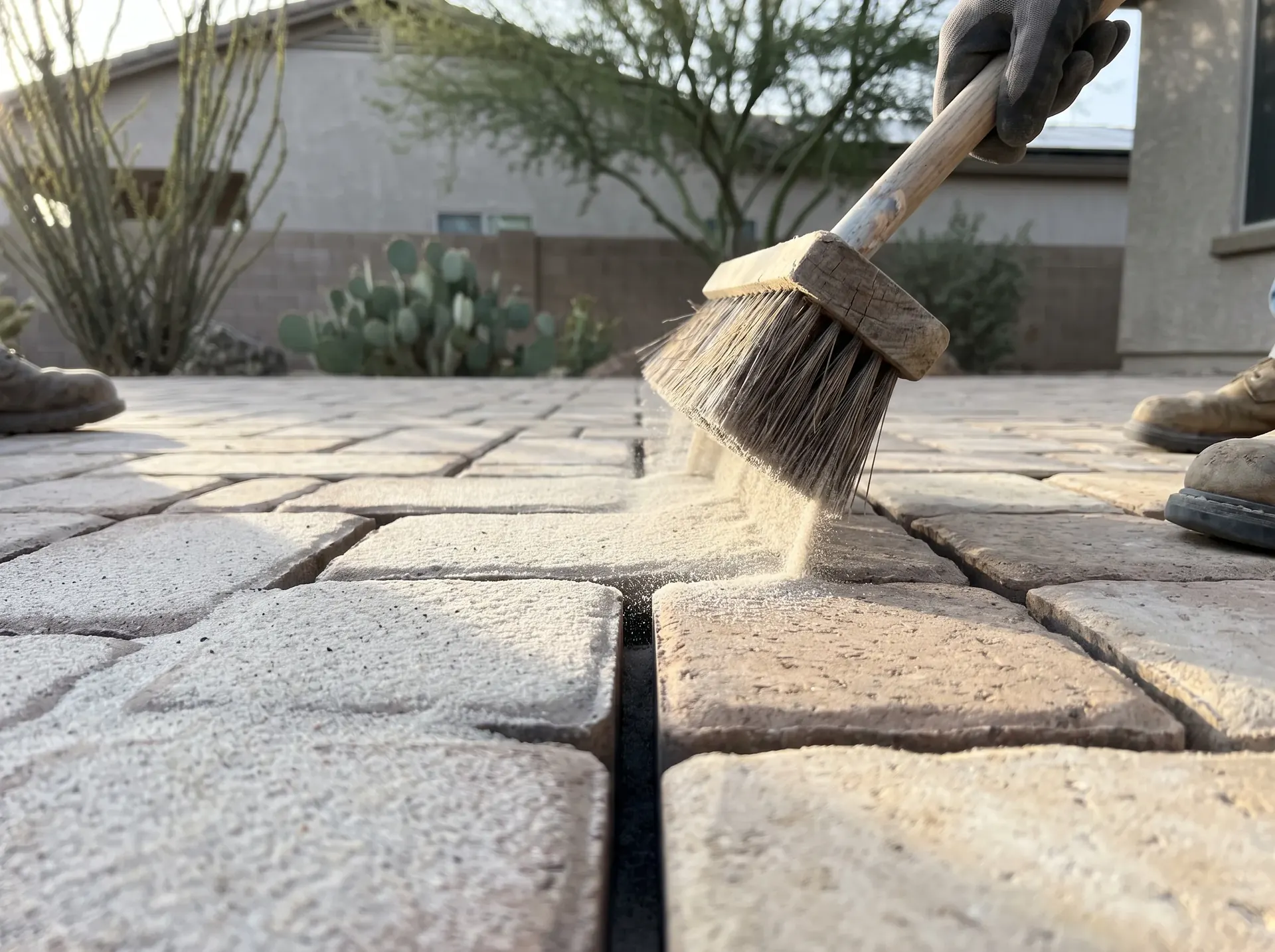
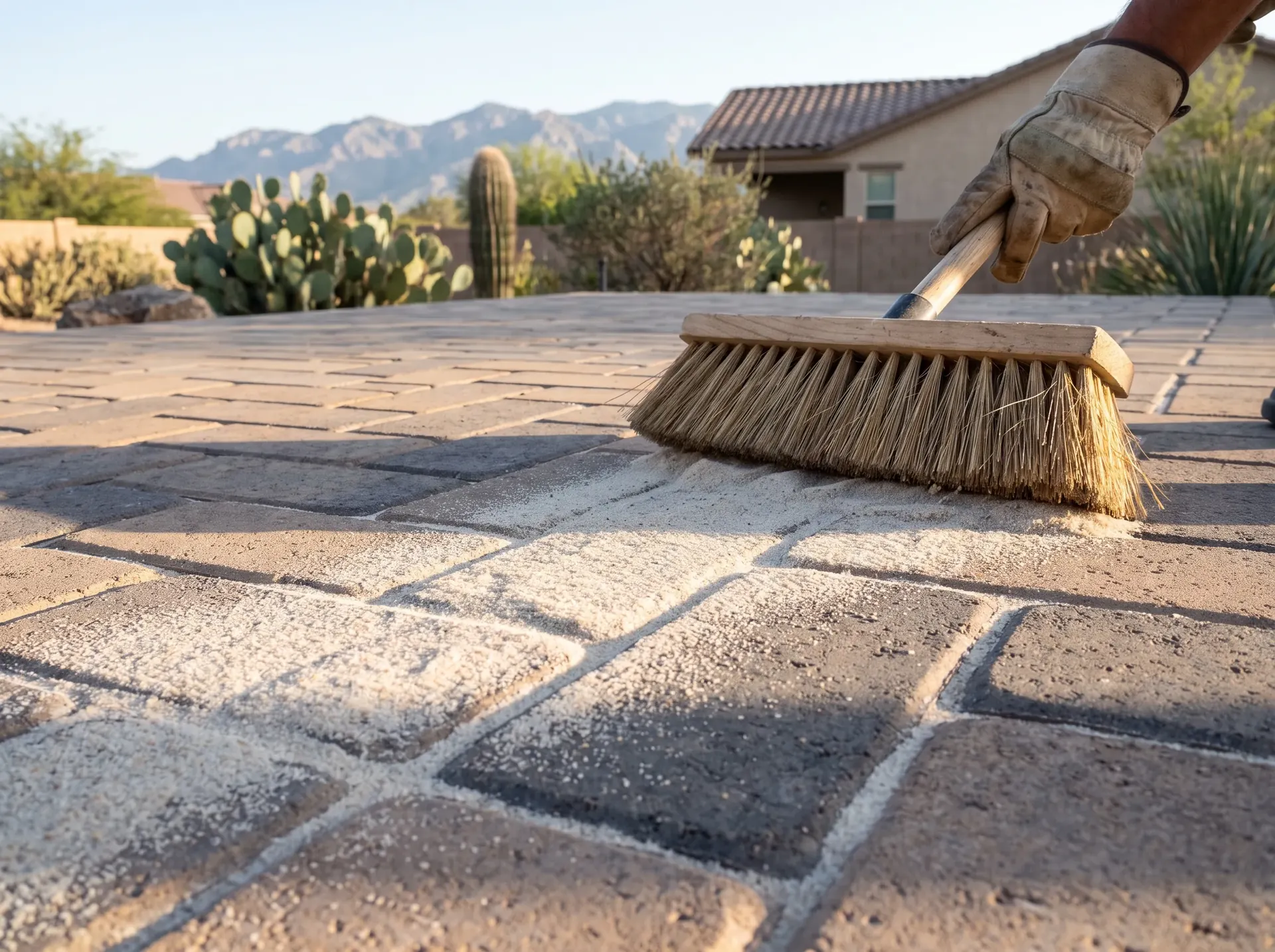
Sand swept in, worked down into the full depth of the joint, the field compacted with a protective pad so it settles, then topped up. One sweep across the surface is not the job.
Activation and clean down
On polymeric products, the surface is cleared of every grain from the paver faces before water activation, because polymeric residue left on the surface sets into a haze that is difficult to remove afterwards.
Six steps, in this order
How the work runs
1Photos or a site visit
Open joints are usually clear enough in a photograph for us to tell you what you are looking at and roughly what it will take.
2Sand choice
Plain or polymeric, decided by exposure and by how the surface is actually used rather than by which one has the better margin.
3Fixed quote
Itemised by area, with clearing the joints shown separately from filling them, because on a neglected surface the clearing is most of the work.
4Preparation
Furniture moved, joints cleared, surface swept, and on a polymeric job a check that the weather window is genuinely dry.
5Fill and settle
Sweep in, work down, compact, top up, repeat until the joints stay full. On polymeric, clear the faces completely, then activate with water exactly as the product requires.
6Handover
We leave you sand for topping up, and tell you honestly how often this surface will want doing given its exposure.
Why us
Why bring us in
We clear the joints first. Sweeping new sand over old compacted debris fills the top half inch and leaves the rest of the joint hollow, which looks finished and does nothing structurally. It is the difference between a job that lasts years and one that lasts months.
We are not automatically pro polymeric. It gets sold as the default upgrade and it is genuinely better on some surfaces and genuinely worse on others. On a shaded courtyard with tight joints, plain sand costs less, performs fine and is far easier to repair later.
And we check the edges while we are there. Joints that keep washing out on the same side of a patio are usually telling you the restraint has failed on that edge. Refilling them without mentioning that would be taking your money twice.
Joints looking empty?
Send us a photo taken close to the surface. We can usually tell from that whether it is a top up, a full re-sand or something more.
From a People Also Ask harvest
Joint sand questions
Can I put new polymeric sand over old?
Not successfully. New polymeric sand needs to bond down the full depth of the joint, and a layer of old compacted material stops it reaching depth, so you end up with a thin crust over a hollow joint that breaks up within a season. The old material has to come out first, which is most of the labour on this job and the main reason a proper re-sand costs what it does.
Will polymeric sand fix wobbly pavers?
Sometimes, and only when the wobble is caused by empty joints rather than by a problem underneath. Refilling the joints restores the load transfer between units, and a paver that was rocking because it had nothing to lean on will often settle down. If the bedding or the base under that area has washed out, no joint product will fix it and the area needs lifting.
Can I use regular sand for leveling pavers?
No, and the two jobs are separate. Joint sand goes in the joints. Bedding sand goes under the pavers as a thin screeded layer over a compacted base. Using loose sand to level individual pavers by shoving it underneath gives you a surface that is flat this month and uneven again in six, because loose sand under load consolidates.
What is the best material to repair loose pavers?
It depends on why they are loose. Empty joints call for joint sand, plain or polymeric. A unit that has lost its bedding needs lifting and re-bedding on properly screeded material over compacted base. Loose pavers over a soft area need the base rebuilding. Reaching for mortar or construction adhesive is the common mistake, because it prevents the surface flexing and simply moves the failure to the next joint.
Can I skip the gravel and just use sand under pavers?
No. Sand does not carry load, it moves under it, and it washes out at the edges. A surface on sand alone will look correct for one season and then dip wherever anything heavy sits. The compacted aggregate base is the structural part of the assembly and the sand layer above it is only there to set the final level.
How many inches of sand under pavers?
The bedding layer is thin, and consistent thickness matters far more than the number. A thicker bedding layer is not better and is actively worse, because it consolidates unevenly under load. If someone is proposing a deep sand layer instead of a proper compacted base, that is the warning sign rather than the specification.
Pima County
Where we work
We work across Tucson, Oro Valley, Marana, Vail, Sahuarita, Green Valley, Catalina Foothills, Casas Adobes, Rita Ranch, Dove Mountain, Corona de Tucson and Tanque Verde.
Next door to this one
Related paver work
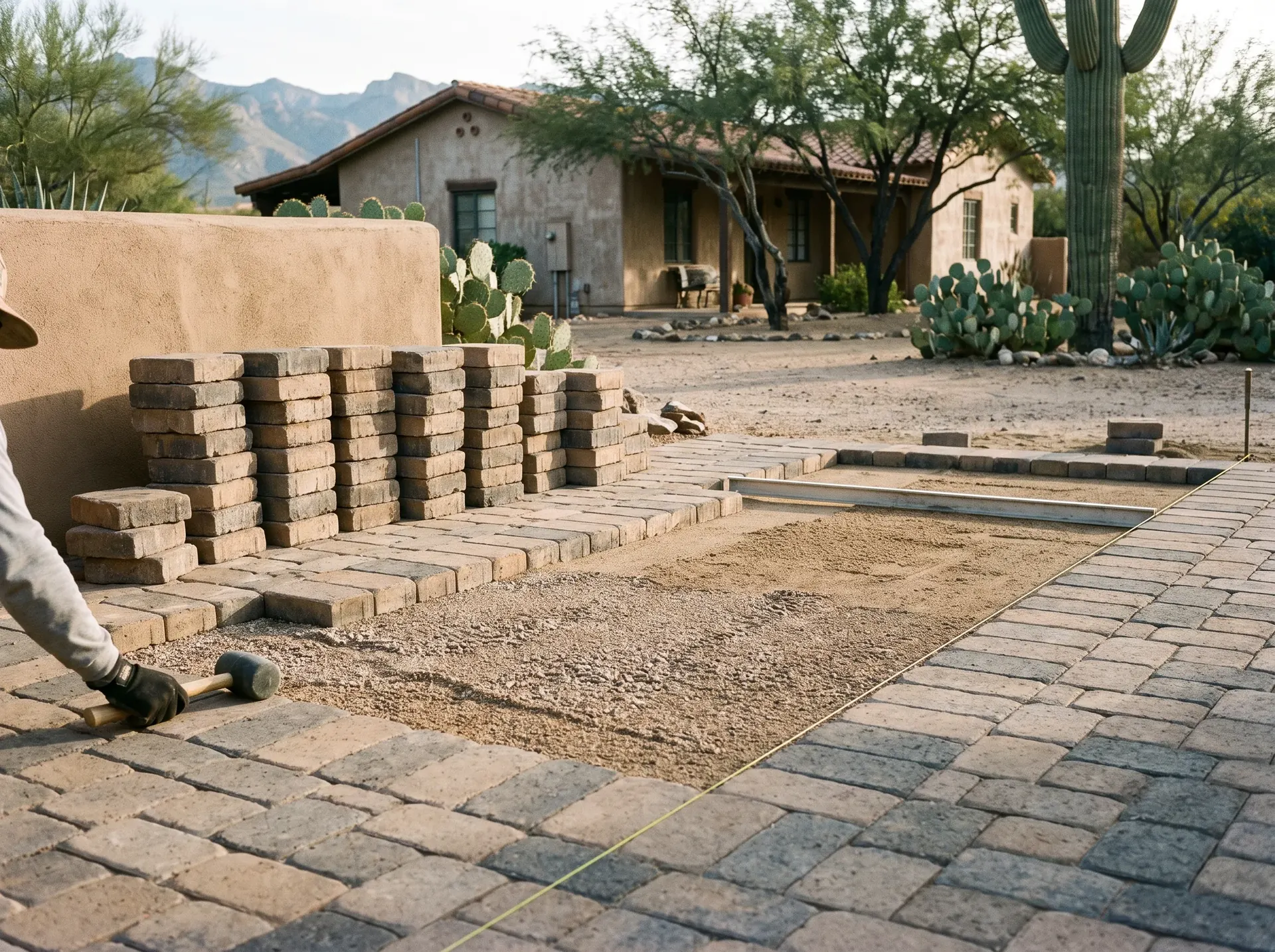 Paver Repair and RelevelingLift, find out why it moved, correct the base and the water source, relay the same pavers. A repair that skips the middle two steps is a repair you will pay for twice.See the detail
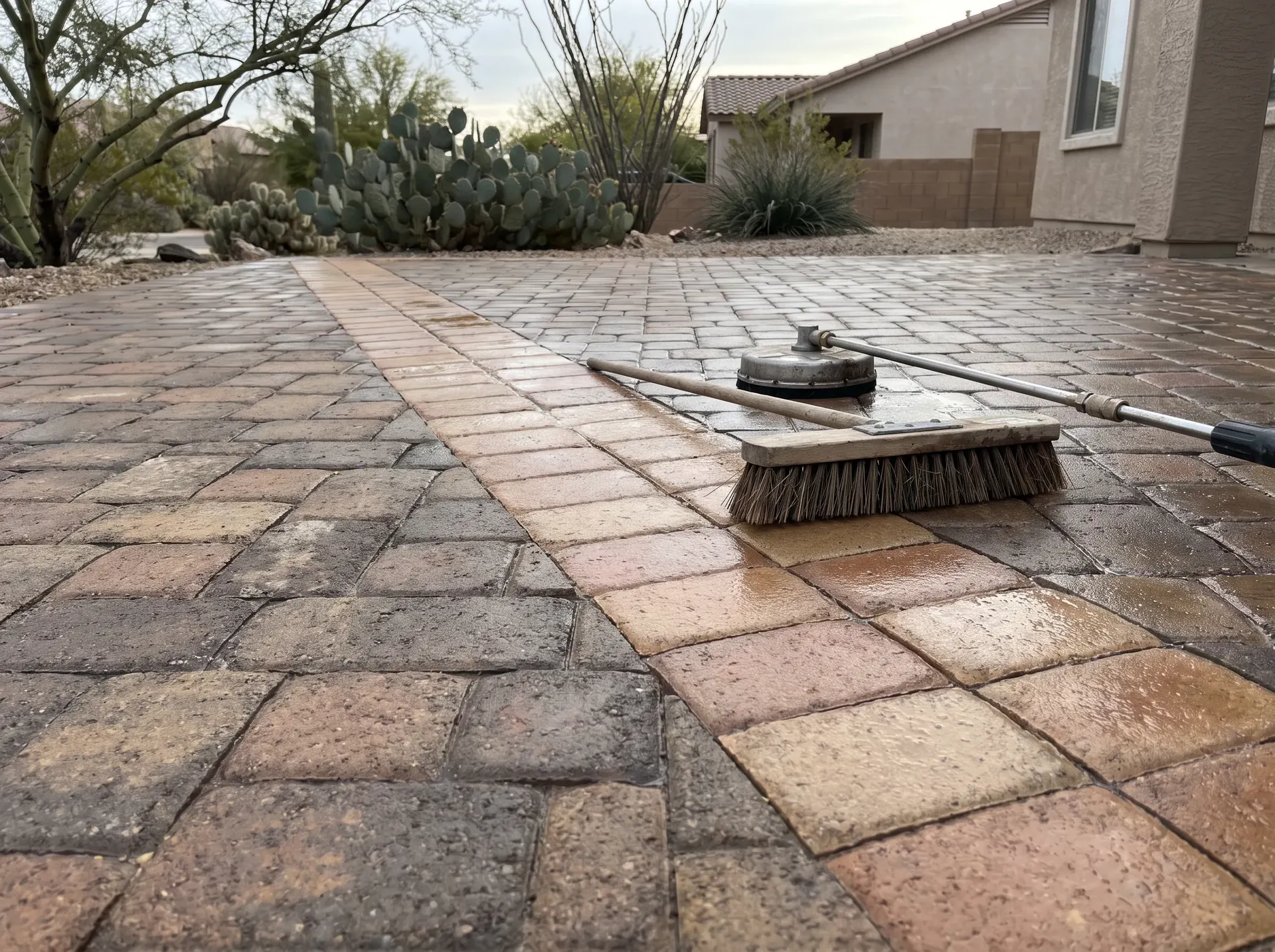 Paver CleaningHard water deposits, efflorescence, oil, rust and organic staining, dealt with at a pressure that does not strip the joint sand out of the whole field.See the detail
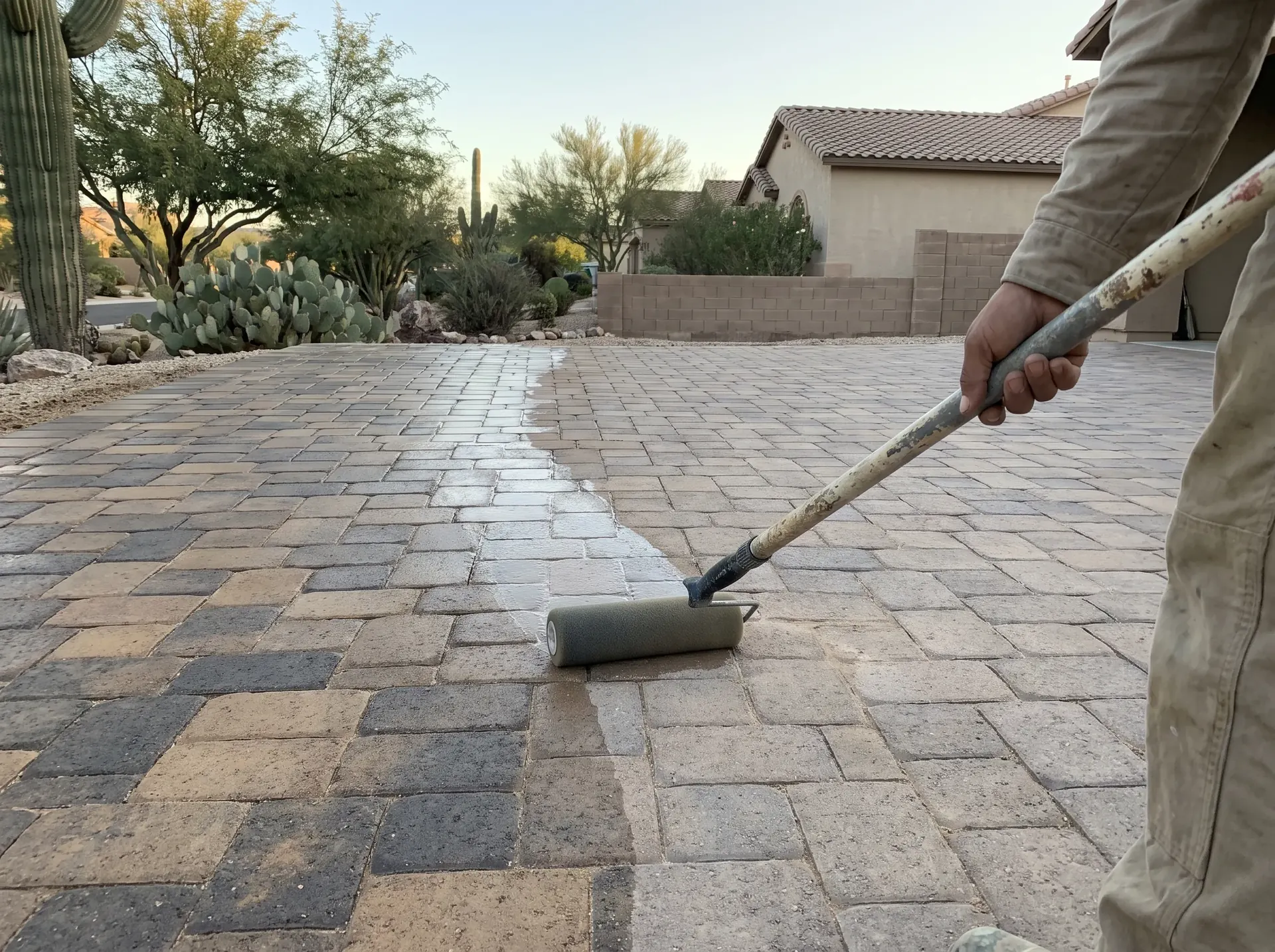 Paver SealingSealer specified for Tucson UV and applied at the right coverage rate, on the surfaces where it genuinely helps. We will tell you honestly when it is not worth doing.See the detail
 Paver Edging and BordersOne of the five services we offer that does not have a page of its own yet. It is on the services hub, and we are happy to quote it.On the services hub
Free on site quote
Get a quote for re-sanding
Tell us roughly how big the area is and send a photo taken close to the joints. We will tell you what it needs.
Or call (520) 555-0194. Mon to Fri, 7am to 5pm. Saturday by appointment.
That is with us
We will call to arrange the site visit, usually the same working day. If it is urgent, call(520) 555-0194.