Excavation depth and base thickness written into every quote
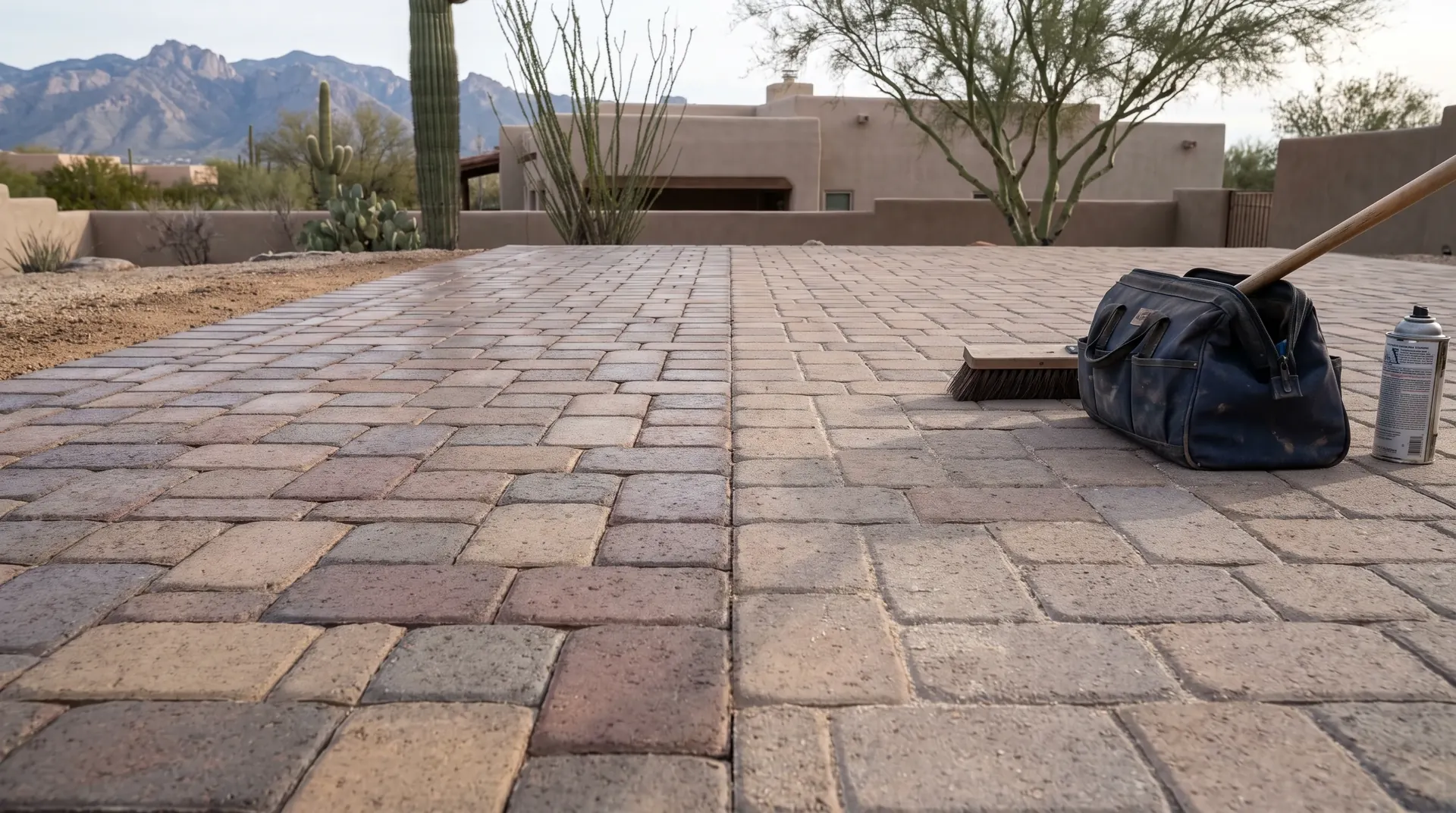
Compacted in lifts, not once at the end
Edge restraint on every open edge
Pavers only, so we do one thing properly
Often, no. Sealing a paver surface is optional, nothing structural depends on it, and an unsealed patio built on a proper base will still be flat and functional in twenty years.
That is worth saying first because of how this service gets sold here. Sealing is quick, high margin and easy to pitch at the door, and a lot of it happens on surfaces that did not need it. We do this work, so read the rest with that in mind, and note that the section on when not to seal comes before the section on when to.
Four situations where we would tell you not to bother
You like how it looks now
Sealing changes the appearance permanently. Most products deepen and enrich the colour, which many people love and some people dislike, and going back is difficult and expensive. If you are happy with the current look, the safest thing is to leave it alone.
It is a shaded courtyard that rarely stains
The main practical benefits of sealing are stain resistance and easier cleaning. A shaded, low traffic surface that has never had a stain on it is not getting much for the money. Wait until there is a reason.
It is around a pool and the product is film forming
Some sealers make a wet surface noticeably slicker. Around water, on a deck people cross barefoot and wet, that is a genuine safety consideration rather than a preference. If you seal a pool deck, the product choice matters more than anywhere else.
You are not prepared to keep doing it
This is the one people are not told. Sealing is not a one time upgrade, it is the start of a cycle. Sealer wears unevenly, faster where people walk and faster in full sun, so a surface that is sealed once and then left goes patchy rather than simply returning to how it was. Starting is a commitment.
Four situations where we would say yes
Travertine and other porous natural stone
This is the strongest case. Travertine is considerably more porous than a concrete paver, it stains more readily, and sealing meaningfully improves how it copes outdoors here. On natural stone we treat sealing as close to a recommendation rather than an option.
Near a cooking or eating area
Oil, grease, wine and food are the stains that concrete pavers hold onto. A sealed surface near an outdoor kitchen or a regular dining table is measurably easier to keep clean, and the difference shows up within the first year.
Under trees that drop
Mesquite, palo verde and citrus all leave organic staining that builds up over seasons. Sealing does not stop it but it keeps it on the surface where it can be washed off rather than soaking into the paver.
Exposed sites that keep losing joint sand
Some products bind the top of the joint sand, which genuinely helps on a windy exposed lot or a slope where sand keeps migrating. Set expectations properly: it stabilises sand that is correctly installed, it does not rescue a joint that is already half empty.
What this climate does to sealer
Ultraviolet exposure here is severe, and sealer is the component of a paver surface most affected by it. A product that performs for years in a mild climate can cloud, yellow or begin peeling far sooner on a fully exposed Tucson patio.
Two practical consequences. First, product choice matters more here than the marketing suggests, and the cheapest option is rarely the cheapest over five years. Second, exposure varies enormously across a single property: a covered patio and an unshaded pool deck twenty feet apart are effectively different climates, and they will not need redoing on the same schedule.
The other local factor is heat during application. Sealing onto a surface in direct sun in the middle of a Tucson afternoon lets the product flash off before it penetrates, which produces a poor bond and a patchy finish. This is a morning job, and in summer an early morning job.
Four ways a sealing job fails
Sealing over a surface that is not genuinely clean, which locks the dirt in permanently and cannot be undone without stripping.
Sealing over a surface that is not genuinely dry, including after a wash the day before, which causes cloudiness and adhesion failure.
Applying by eye rather than to the product coverage rate, which either wastes product or leaves areas under protected and visibly different.
Sealing a brand new installation too early, before efflorescence has worked its way out of the pavers, which traps a white bloom under the film.
Ask before you buy
If someone has knocked on your door offering to seal your driveway this week, that is the moment to get a second opinion rather than a deposit.
Send a photo. Most of the time it is possible to say from a picture whether a surface would actually benefit, whether it has been sealed before, and whether what is bothering you is a sealing problem or a cleaning problem.
From a People Also Ask harvest
Questions people actually ask
Why shouldn't you seal your pavers?
Because it is permanent, it commits you to a reapplication cycle, it can make a wet surface slicker, and on a surface that is not stained and lives in shade it buys you very little. There is also a real risk of doing it badly: sealing over a dirty or damp surface causes problems that are considerably harder to fix than the ones it was meant to prevent.
What happens if pavers are not sealed?
Nothing structural. They get dirtier over time, stains soak in rather than sitting on top, and the colour softens under sun exposure. That is the whole list. An unsealed paver patio on a properly built base performs exactly as well as a sealed one, it just looks a little more weathered.
What are the downsides of sealing block paving?
Permanent appearance change, a repeating cost, potential slipperiness with some products, the risk of trapping moisture or efflorescence if it is done at the wrong time, and patchy wear as it ages unevenly. Under Tucson ultraviolet exposure a poorly chosen product can also cloud or yellow, which looks worse than the unsealed surface did.
How often does a paver patio need to be sealed?
It depends on the product, the coverage rate it went down at, how much direct sun the surface takes and how much traffic crosses it. A shaded courtyard and a fully exposed driveway on the same property will not be on the same schedule.
How much does it cost to have a paver patio sealed?
Sealing is priced per square foot and the range is driven by cleaning and preparation rather than by the sealer. A clean, sound, never sealed patio sits at the bottom. A stained surface, or one with a failing previous sealer that needs stripping first, can be several times that. Ask for cleaning and sealing as separate lines.
If you would rather we did it
The work behind this guide
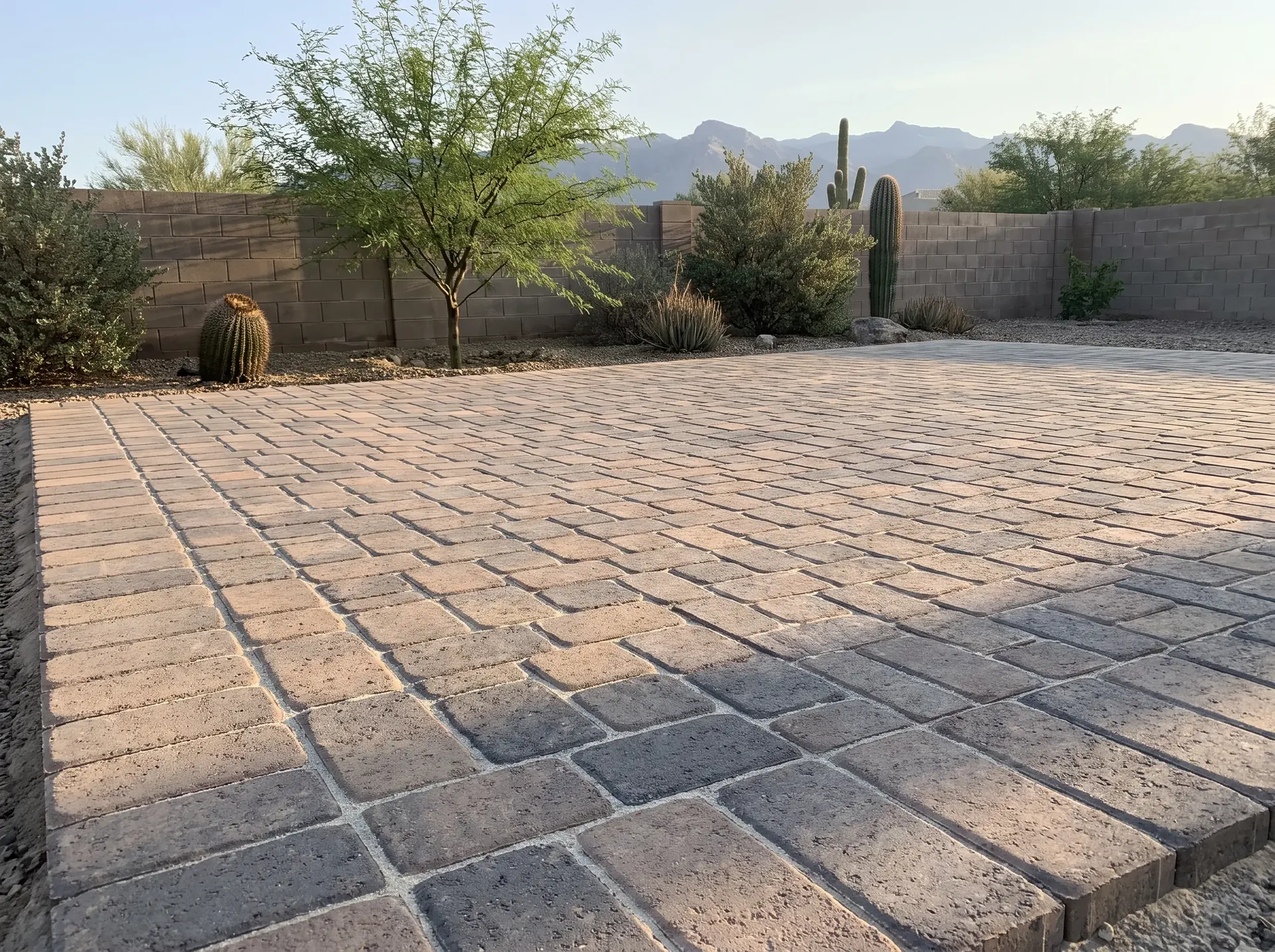 Paver PatiosThe main entertaining surface, sized around what actually goes on it and laid with the fall running away from the house. Excavation and base depth quoted in writing, edge restraint on every open edge.See the detail
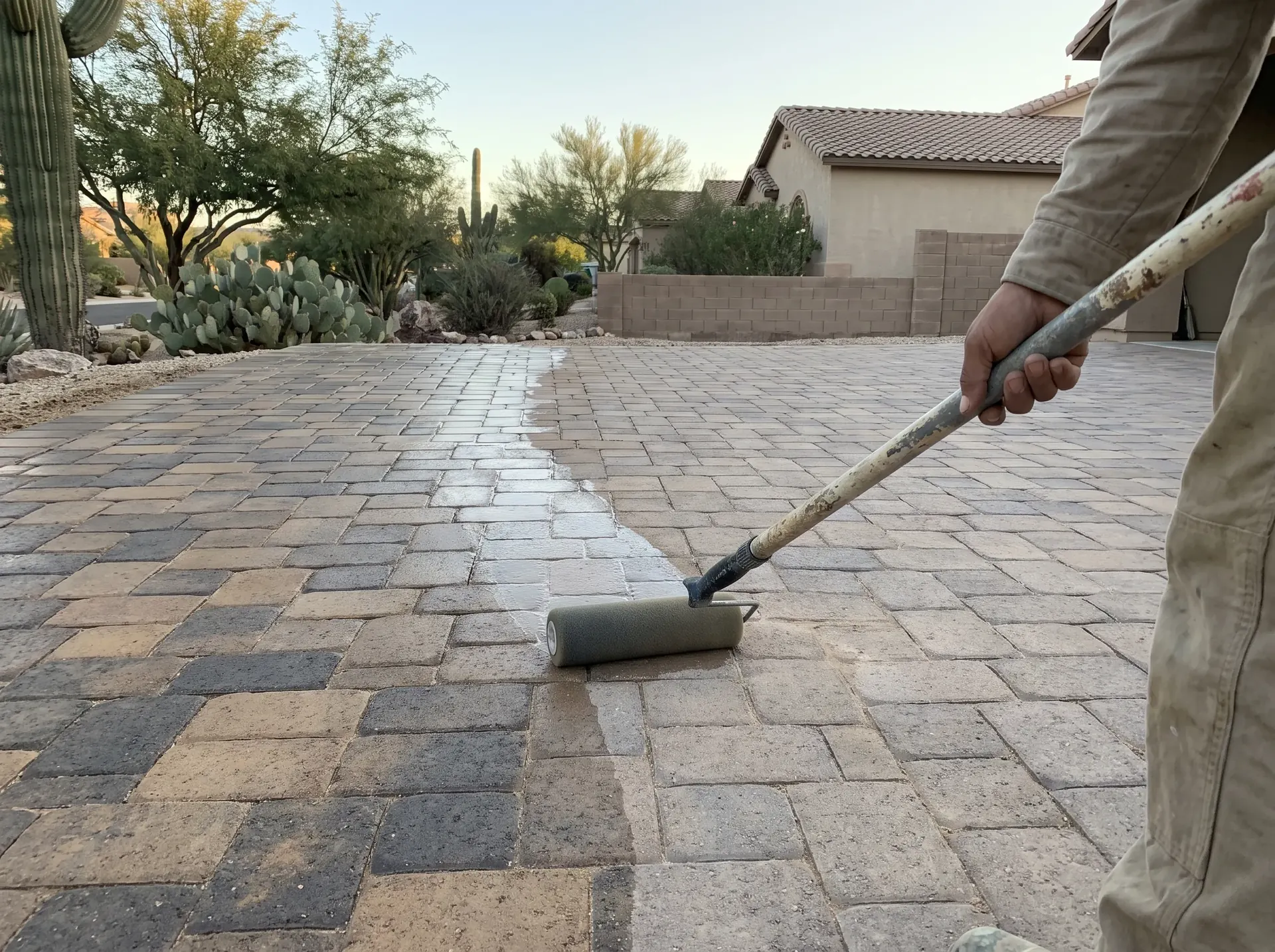 Paver SealingSealer specified for Tucson UV and applied at the right coverage rate, on the surfaces where it genuinely helps. We will tell you honestly when it is not worth doing.See the detail
Free on site quote
Not sure whether yours needs it?
Send us a photo and tell us what is actually bothering you about the surface. We will give you a straight answer, including if the answer is to leave it alone.
Or call (520) 555-0194. Mon to Fri, 7am to 5pm. Saturday by appointment.
That is with us
We will call to arrange the site visit, usually the same working day. If it is urgent, call(520) 555-0194.