Excavation depth and base thickness written into every quote
Compacted in lifts, not once at the end
Edge restraint on every open edge
Pavers only, so we do one thing properly
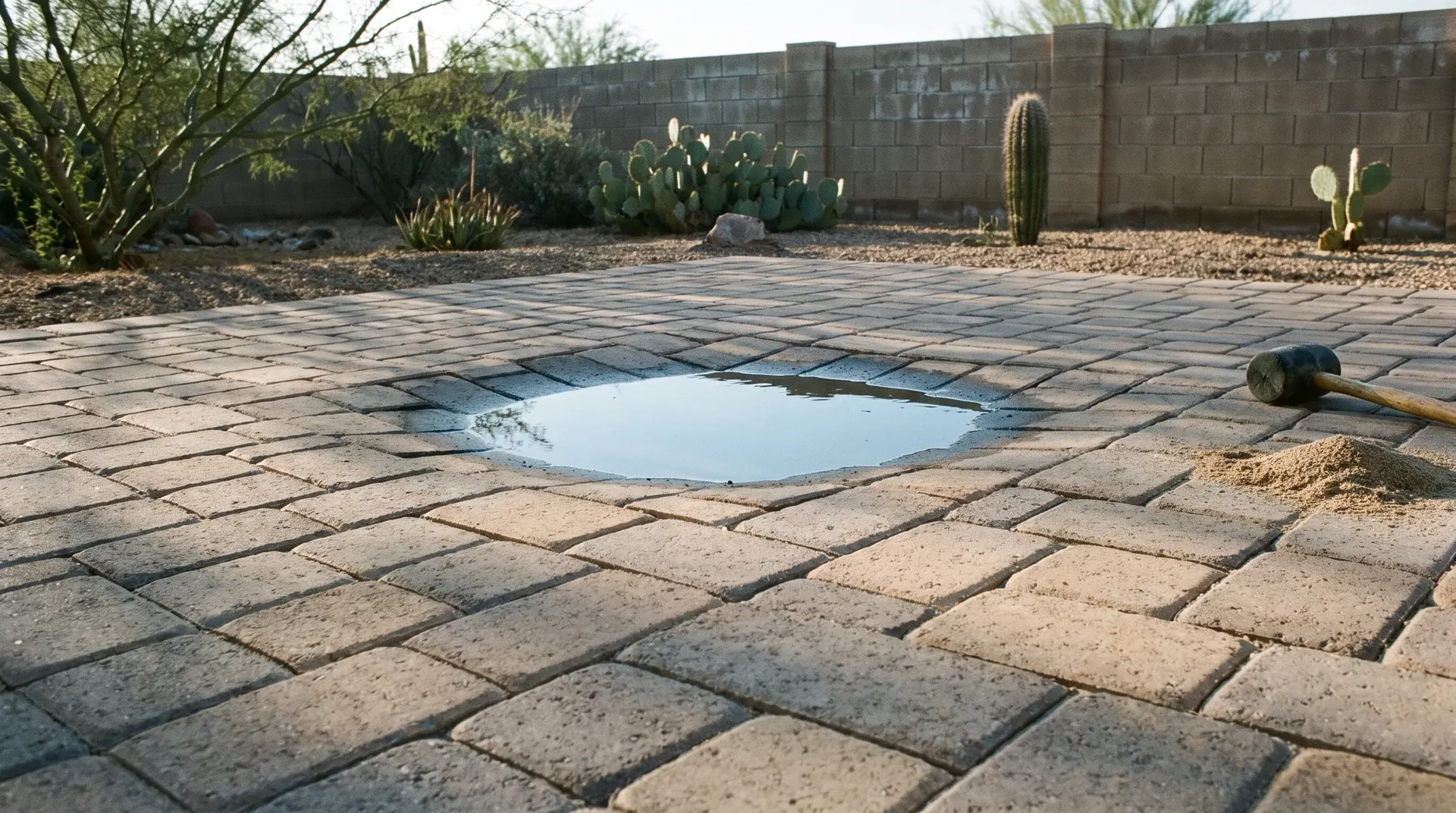
A dip in a paver surface is almost never a paver problem. The pavers are reporting on something underneath, and there are only four common causes: the base was too thin, it was not compacted in lifts, water has been washing material out from under it, or the edge was never restrained.
Which one you have decides what the repair costs and whether it holds. Fix the surface without fixing the cause and you will be looking at the same dip in two years, usually slightly larger.
Reading what the surface is telling you
1. The base was too thin
The most common cause and the hardest to see, because it is invisible from day one. A patio with a couple of inches of base where it needed considerably more carries foot traffic fine and then dips wherever something heavier sits, or where everyone walks the same line to the back door.
2. The base was not compacted in lifts
Base material has to go in in layers with a compactor pass on each one, because a plate compactor only densifies so far below itself. Dumped in at full depth and compacted at the top, it is a dense crust over loose material. It consolidates slowly under use over the following two or three years, which is exactly when these dips appear.
3. Water has been washing the base out
The Tucson classic. A downspout discharging onto the same square foot, an irrigation leak, or monsoon runoff crossing an unrestrained edge. Each event carries fine material out from underneath and the loss accumulates across seasons. If a dip is within a few feet of a downspout, that is almost certainly your answer.
4. The edge was never restrained
Without restraint the outer courses migrate outward under load. Joints near the border open, sand escapes, and the field loses interlock from the outside in. This usually reads as a wandering border first and a dip second.
A five minute diagnosis you can do yourself
A localised dip near a downspout or a sprinkler head. Water. Follow it before you look at anything else.
A gradual dish across a wide area that has been slowly worsening since the first year or two. Base thickness or compaction.
A border that has moved outward with wide joints near the edge. Restraint failure. The dip in the middle is a consequence.
Pavers that rock individually but sit at roughly the right level. Joint sand has gone, so the units are no longer sharing load. Often fixable by refilling the joints alone.
Lay a straightedge across the area and look at the daylight gap under it. That tells you how deep the dip is, and depth is what decides whether this is a small repair or a section rebuild.
Four steps, and two of them get skipped
The cheap version is two steps: lift the sunken pavers, put sand underneath, tap them back down. It costs very little and the area is flat again for a season.
The real version is four:
Lift the affected pavers, keeping them in order so they go back the way they came out.
Find and fix the cause. Extend the downspout, repair the irrigation, regrade the small area feeding water in, or rebuild the edge restraint.
Rebuild the base to proper depth and compact it in lifts.
Re-screed the bedding layer, relay the same pavers, refill the joints and compact.
Steps two and three are the ones that get skipped, and skipping them is why so many patios in this city have been repaired three times in the same spot.
Priced by area lifted, not by area of patio
Releveling is priced mostly as labour, because the pavers already exist on site and the material bill is small. What moves the number:
How much area has to come up. Not the size of the patio, the size of the failed area plus a working margin around it.
How much base rebuilding it needs. Correcting a thin base is a bigger job than correcting a washed one.
Access. If base material has to be barrowed through a side gate, that is the same constraint that drives new installation pricing.
Whether the cause fix is included. A downspout extension is cheap. Regrading an area, or rebuilding a run of edge restraint, is a real line item and should be quoted separately so you can see it.
The reassuring part is that this is repairable at all. A cracked concrete slab is patched visibly or replaced. A properly repaired paver area is invisible afterwards.
Sooner really is cheaper here
Settlement is progressive. The water that caused the first dip keeps arriving, and the affected area keeps growing. A small area is a straightforward job. The same failure left through three more monsoon seasons can involve most of the patio.
If you can see a dip that holds water after rain, a border that has moved, or pavers that rock underfoot, that is the moment rather than next year.
From a People Also Ask harvest
Questions people actually ask
How much does it cost to fix sinking pavers?
Pricing is per square foot of area lifted rather than by the size of the patio, and it is mostly labour because the pavers are reused. A small dip in an accessible area sits at the bottom of the range, and a large area with a poor original base and restricted access sits well above it. Ask for the cause fix to be quoted as a separate line.
How to fix block paving sinking?
Lift the affected area keeping the units in order, find and deal with whatever is putting water into it, rebuild the base to full depth compacting in lifts, then re-screed the bedding and relay. The temptation is to tip sand in and tap the pavers back down, which flattens it for a season. If the base was the problem, the repair has to be a base repair.
How to raise a sunken paver?
For a single unit that has dropped, lift it with two flat pry bars or paver tongs, add and screed bedding material underneath to the right level, set it back and refill the joints around it. If several neighbouring units have dropped together, do not treat them individually, because that pattern means the base beneath the area has failed and the fix is one area rather than several pavers.
How do I fix uneven pavers?
Work out first whether the unevenness is a level problem or a rocking problem. Rocking with correct levels usually means joint sand has gone, and refilling the joints properly fixes a surprising number. Actual level differences mean lifting and correcting from the base up. Levelling by shoving sand under individual pavers gives you a surface that is flat today and uneven again within months. ---
If you would rather we did it
The work behind this guide
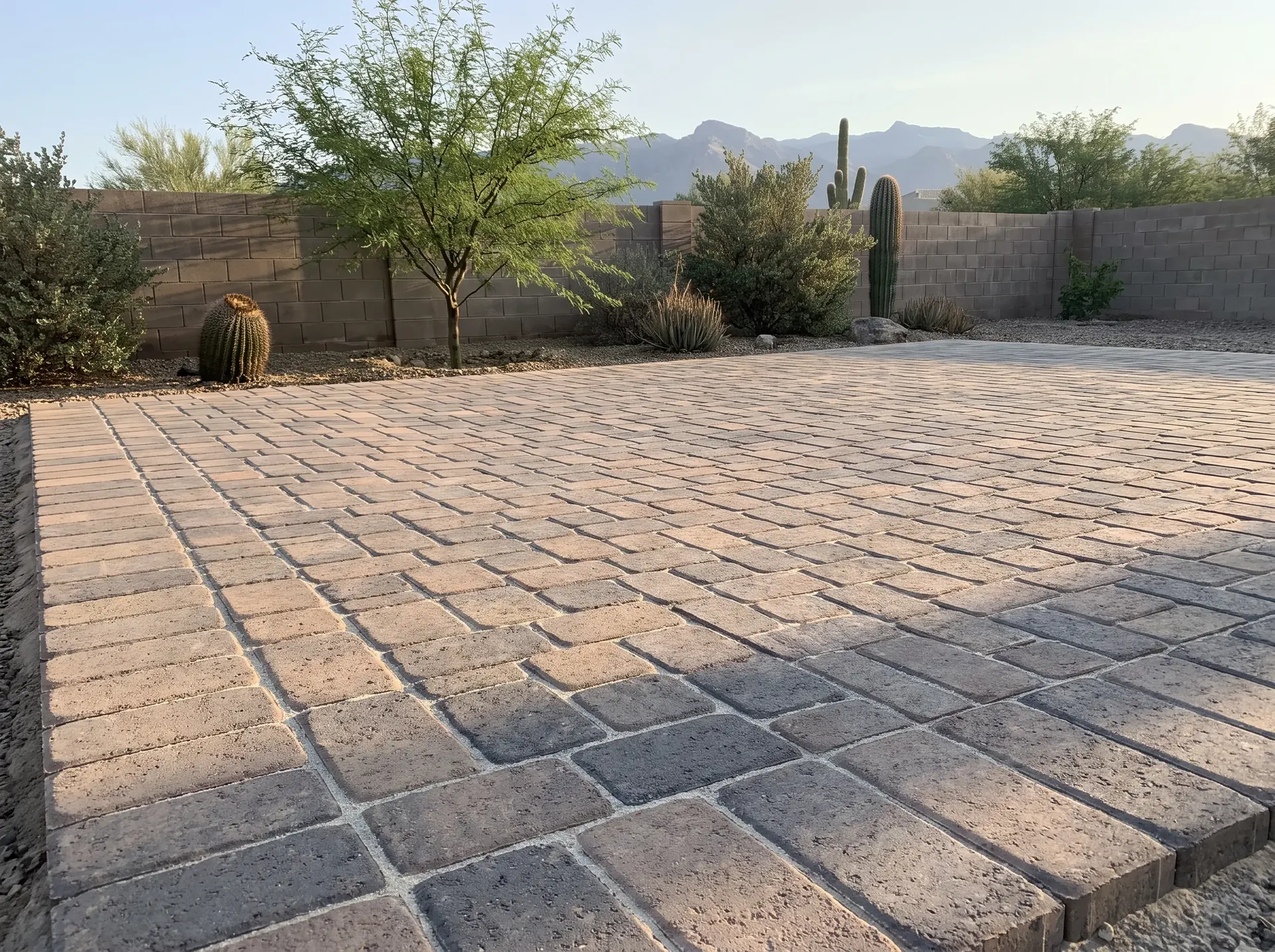 Paver PatiosThe main entertaining surface, sized around what actually goes on it and laid with the fall running away from the house. Excavation and base depth quoted in writing, edge restraint on every open edge.See the detail
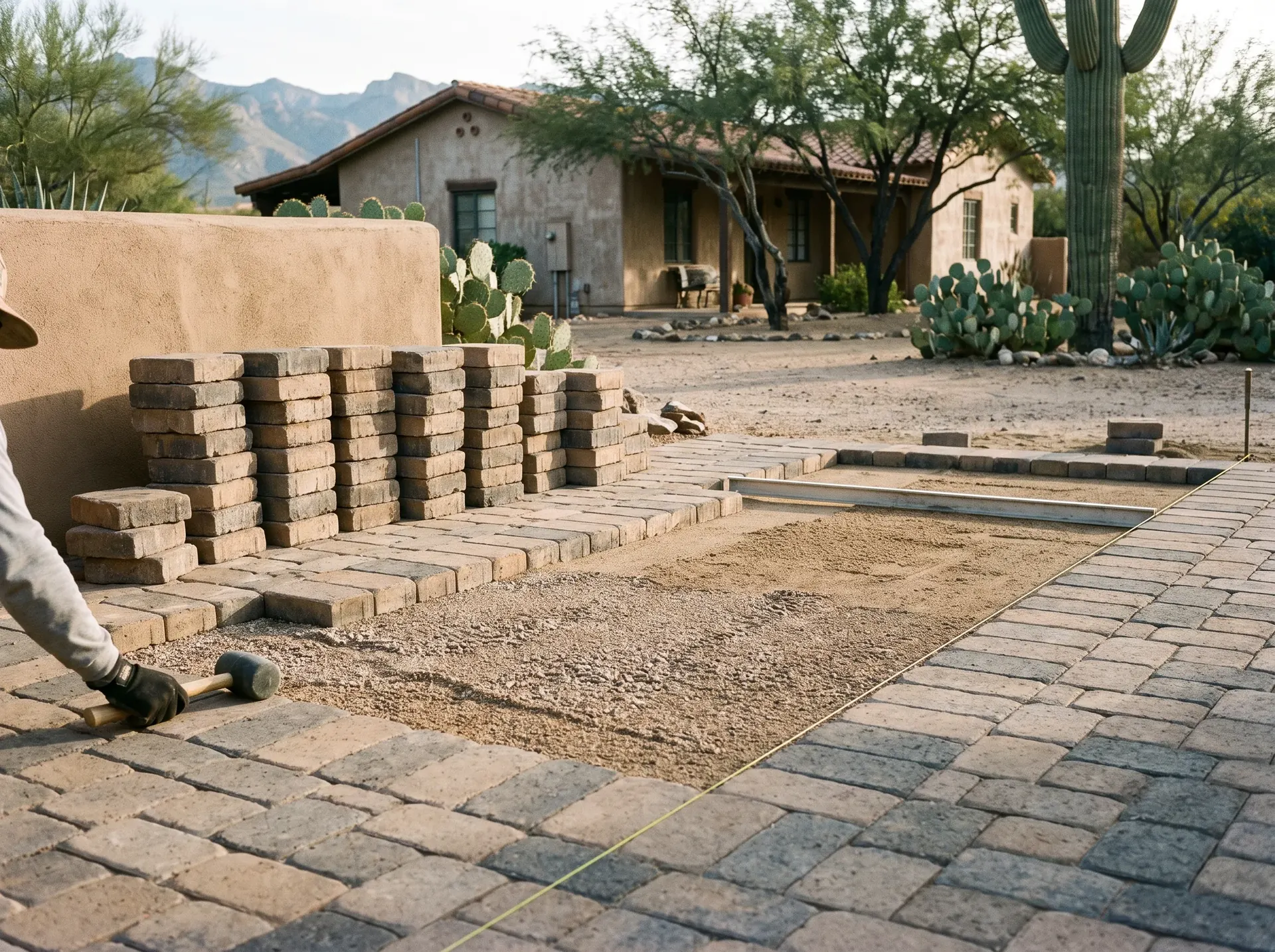 Paver Repair and RelevelingLift, find out why it moved, correct the base and the water source, relay the same pavers. A repair that skips the middle two steps is a repair you will pay for twice.See the detail
Free on site quote
Got a dip that keeps coming back?
Send us a photo of the area, plus one showing where the nearest downspout or sprinkler head is. That second photo answers the question more often than the first one.
Or call (520) 555-0194. Mon to Fri, 7am to 5pm. Saturday by appointment.
That is with us
We will call to arrange the site visit, usually the same working day. If it is urgent, call(520) 555-0194.