We find the cause before we quote the repair
Maintenance and repair
Paver Repair and Releveling in Tucson
A dip is a symptom. Lift it, find out why, correct the base and the water, then relay the same pavers.
Base rebuilt to depth, not topped up with sand
Your existing pavers reused wherever they are sound
Edge restraint checked as part of every repair
Before you choose anything
There is a cheap version of this repair and it does not last
Lift the sunken pavers, tip sand underneath, tap them back down, sweep the joints, leave. It takes an afternoon, it costs very little, and the area is flat again.
Then the same thing that caused it in the first place carries on. Loose sand under the repaired area consolidates again under traffic. The downspout that has been discharging onto that same square foot for six years keeps discharging. Water keeps running across the unrestrained edge and carrying fines out from underneath. Within a season or two the dip comes back, usually slightly larger.
We do it the longer way, and it is not complicated, it is just four steps instead of two. Lift the affected area keeping the pavers in order. Work out why it moved. Fix that, whether it is a roof downspout, an irrigation leak, a grade that funnels water into the area or an edge that was never restrained. Then rebuild the base properly to depth, compact it in lifts, re-screed and relay the same pavers.
The good news in all of it is that pavers are the one hard surface where this is possible at all. A cracked slab gets patched visibly or replaced. A settled paver area, correctly repaired, is invisible afterwards, and most of what you are paying for is labour rather than material because the pavers already exist on site.
The work itself
What we fix
Settled and sunken areas
Dips, dished areas and the classic depression under a downspout. Lifted, base corrected to full depth, water source dealt with, relaid.
Rocking and uneven pavers
Individual units that move underfoot, usually because the joint sand has gone and the field has lost its load transfer, sometimes because the bedding layer beneath a small area has washed.
Spread edges and wandering borders
Fields that have crept outward because restraint failed or was never installed. This one needs the edge rebuilt rather than the pavers pushed back, because pushing them back achieves nothing.
Line by line
What is included
Diagnosis and cause
Before anything is lifted we work out why the area moved. If the cause is a downspout, an irrigation leak or a grade problem, repairing the surface without addressing it is money wasted and we will say so before you spend it.
Lift, correct and rebuild
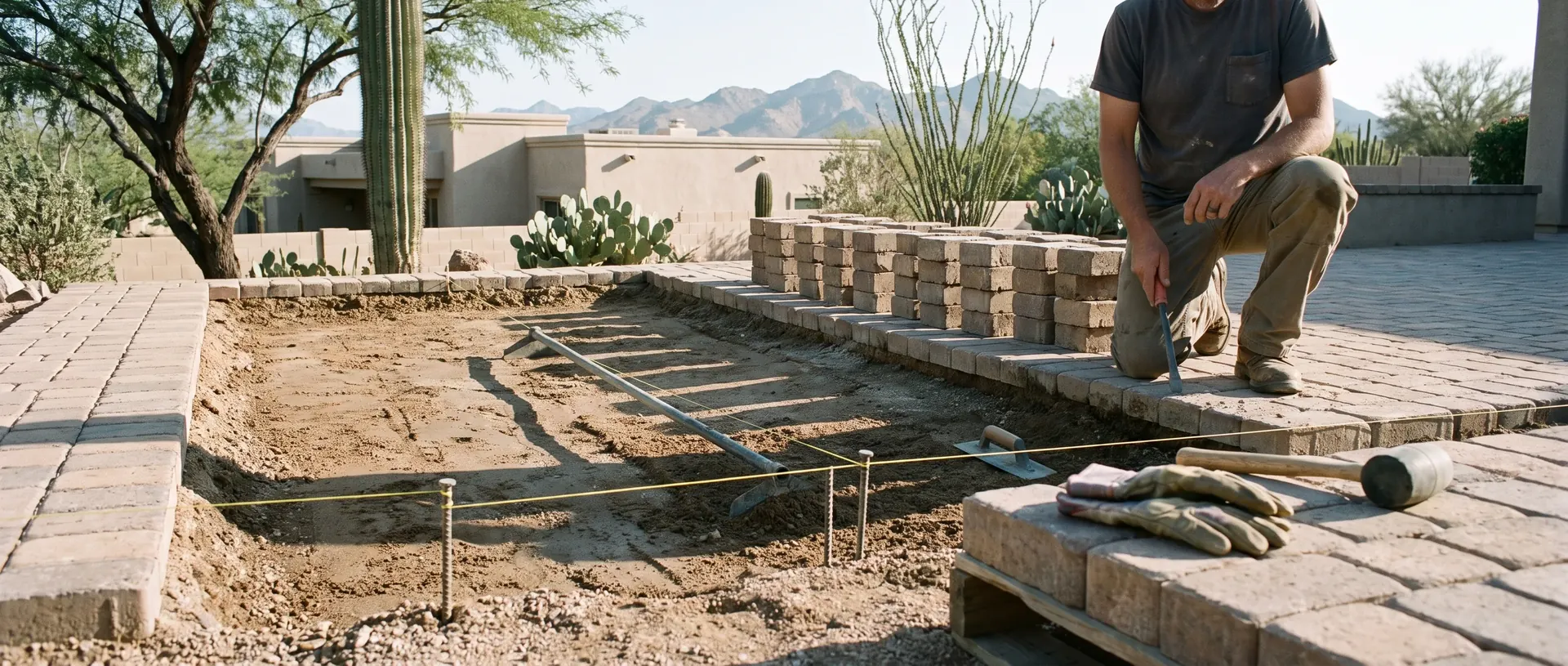
Pavers lifted and stacked in order so they go back the way they came out, base excavated and rebuilt to proper depth, compacted in lifts, then bedding re-screeded.
Relay and joint sand
The same pavers relaid to the surrounding levels, replacements only where a unit is genuinely broken, then joints filled, settled and compacted with a protective pad.
Edge restraint and water fix
Restraint installed or repaired where the edge was the cause, and the water source dealt with, which sometimes means a downspout extension and sometimes means regrading a small area next to the surface.
Six steps, in this order
How the work runs
1Site visit and diagnosis
We look at the failure, check the surrounding grade, and find the water. Most paver failures in Tucson trace back to where water goes during a monsoon storm.
2Honest options
Sometimes the right answer is a small repair. Sometimes an area has been patched so many times that rebuilding it properly is better value than fixing it again. We will lay out both and tell you which we would choose.
3Fixed quote
Itemised, with the cause fix shown separately from the surface work so you can see exactly what you are paying for.
4Preparation
Furniture moved, area cleared, and where a downspout or irrigation line is the culprit that gets sorted before the surface goes back.
5Repair
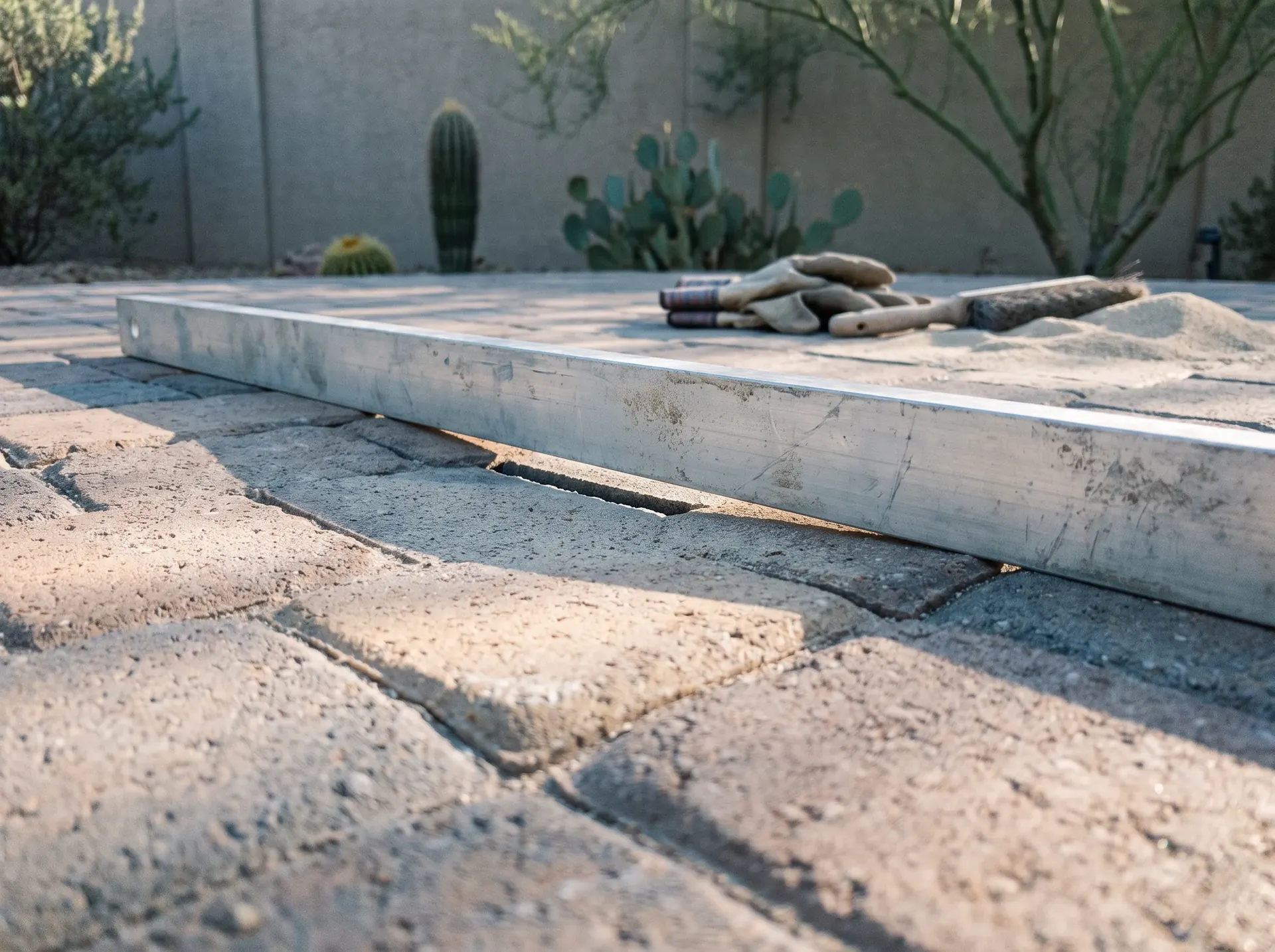
Lift, excavate, rebuild base in lifts, compact, screed, relay, sand, compact, top up.
6Walkthrough
We show you what was under there, which is usually the most convincing part of the whole job, and leave joint sand for topping up.
Why us
Why bring us in
We diagnose before we quote. A repair priced without knowing why the area moved is a guess, and it is usually a guess that needs repeating in two years.
We rebuild the base rather than topping up with sand. Sand under a lifted area is the fast fix and it is why so many patios in this city have been repaired three times in the same spot. If the base was thin, the repair is a base repair.
And we reuse your pavers. A job where most of the material is already on site should not be priced like a new installation, and we itemise it so you can see that.
Got a dip that keeps coming back?
Send us a photo and tell us where the nearest downspout or irrigation head is. That one detail usually answers it.
From a People Also Ask harvest
Paver repair questions
How do I fix my sinking pavers?
Properly, it is four steps: lift the affected pavers keeping them in order, find and fix whatever is putting water into that area, rebuild the base to full depth and compact it in lifts, then re-screed and relay. The step people skip is the second one, and skipping it is why the same area sinks again. Adding sand under the pavers without touching the base is a temporary flattening rather than a repair.
How do you repair damaged pavers?
If individual units are cracked or chipped, they come out and get replaced, which is the main practical advantage of a paver surface over a slab. Matching is the tricky part on an older surface, since colour softens with sun exposure. Where an exact match is impossible we will often take replacements from an inconspicuous area, such as under furniture or against a wall, and put the new units there instead.
What's the best way to level pavers?
From the base up. Lift the area, correct and compact the base to proper depth, then re-screed a consistent bedding layer and relay. Levelling by adding sand under individual pavers gives you a surface that is flat today and consolidates unevenly over the following months, because loose sand under a load always finds its own level eventually.
How to fix a wobbly paver?
A single rocking paver usually means the joint sand around it has gone, so it is no longer sharing load with its neighbours, or that the bedding beneath that one unit has washed out. Refilling the joints properly fixes a surprising number of these. If it still rocks afterwards, lift that unit, check what is under it and re-bed it. If several nearby units rock, treat it as a base problem rather than a paver problem.
What to put under pavers to level them?
For a proper repair, compacted aggregate base with a thin screeded bedding layer on top, exactly as in a new installation. What people commonly reach for instead is loose sand, which works for a season. Never use soil or unwashed fill, and do not use a rigid mortar bed under a flexible pavement, because it prevents the surface from behaving as an interlocking system.
How much does it cost to re-level pavers?
Releveling is priced by the area lifted and by how much base rebuilding it needs, and it is mostly labour because the pavers already exist. A small dip in an accessible area is at the bottom of the range. A large area, a poor original base, or restricted access that means barrowing base material through a side gate moves it up quickly.
How to stop pavers from sinking?
Deal with the water and the edges, because those are the two mechanisms. Make sure roof downspouts discharge away from the surface rather than onto it, check irrigation is not soaking the base along one side, keep the joint sand topped up so the field shares load properly, and make sure every open edge has a working restraint. Those four things prevent most of what we get called out to.
Pima County
Where we work
We work across Tucson, Oro Valley, Marana, Vail, Sahuarita, Green Valley, Catalina Foothills, Casas Adobes, Rita Ranch, Dove Mountain, Corona de Tucson and Tanque Verde.
Next door to this one
Related paver work
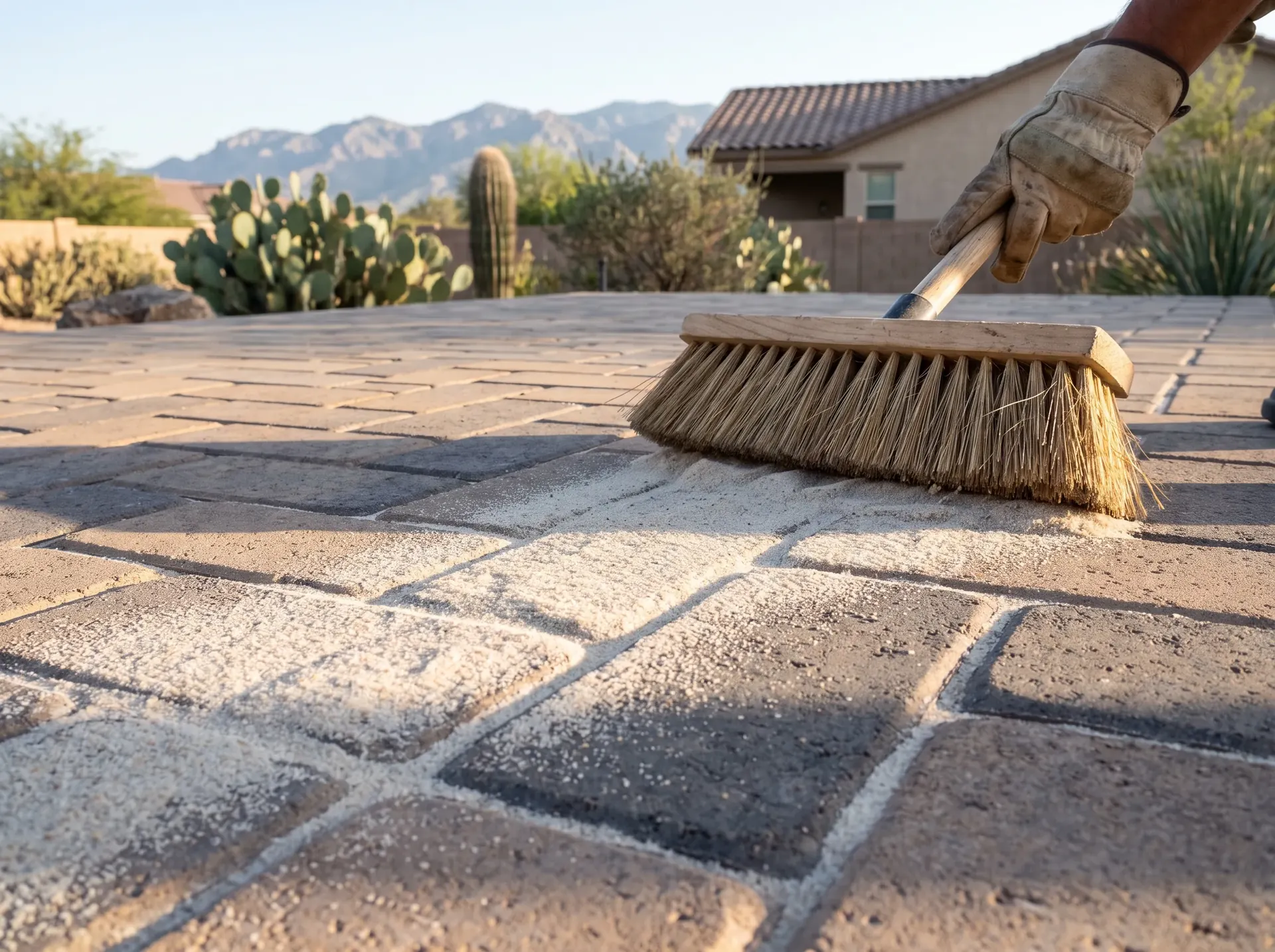 Joint Sand ReplacementJoints cleaned out and refilled properly, with a straight answer on whether polymeric sand suits your surface or whether plain sand is the better call.See the detail
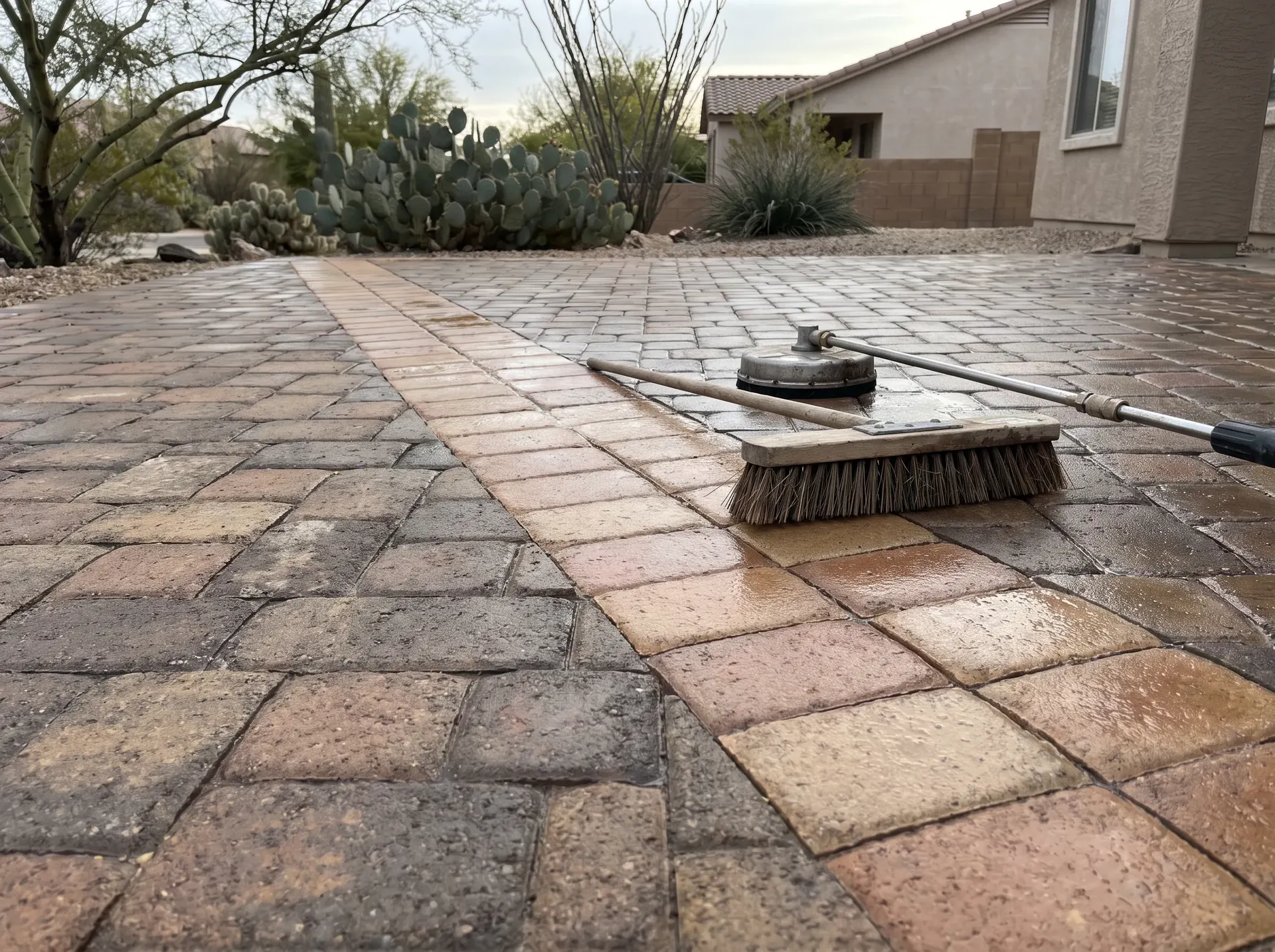 Paver CleaningHard water deposits, efflorescence, oil, rust and organic staining, dealt with at a pressure that does not strip the joint sand out of the whole field.See the detail
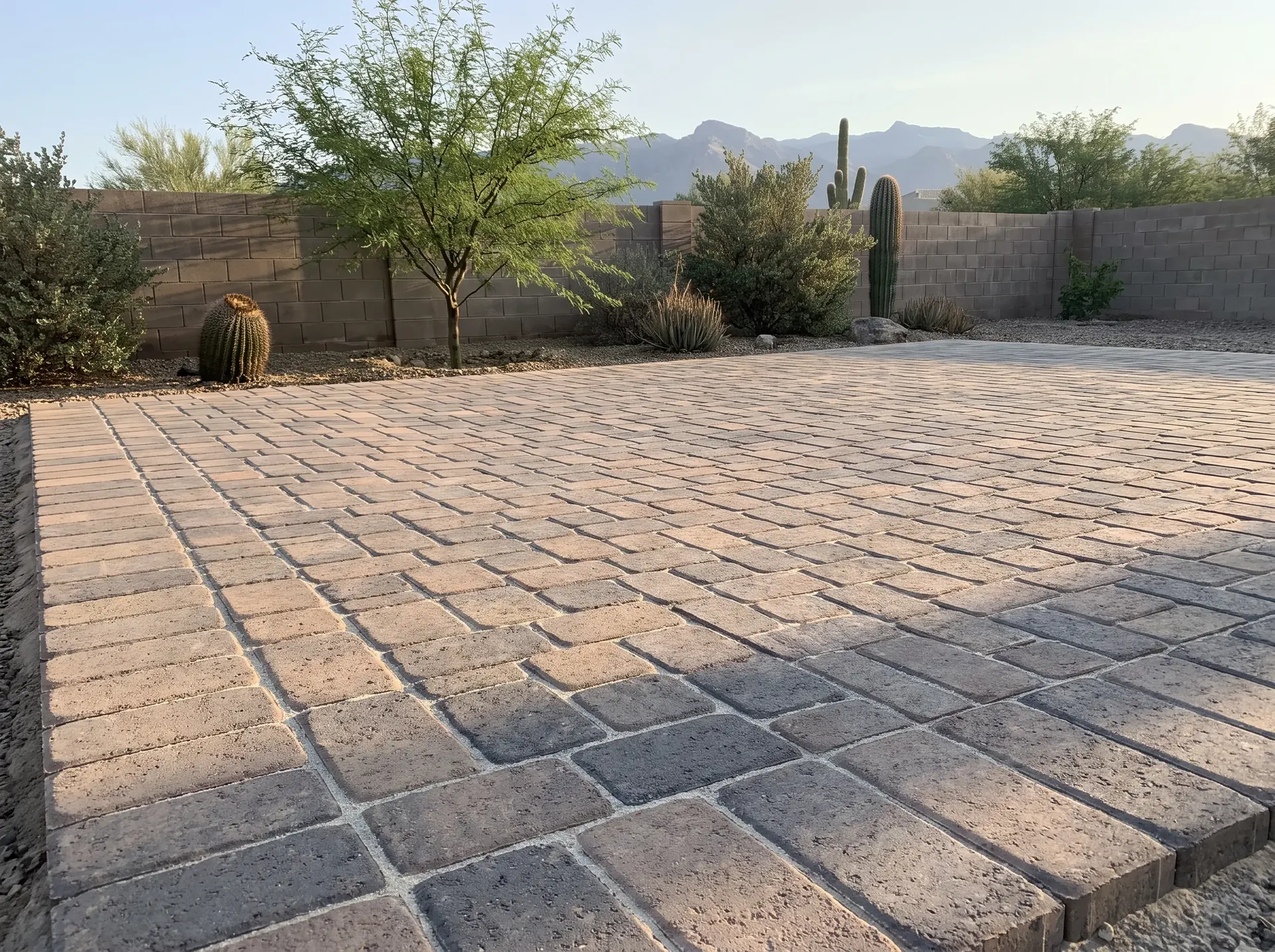 Paver PatiosThe main entertaining surface, sized around what actually goes on it and laid with the fall running away from the house. Excavation and base depth quoted in writing, edge restraint on every open edge.See the detail
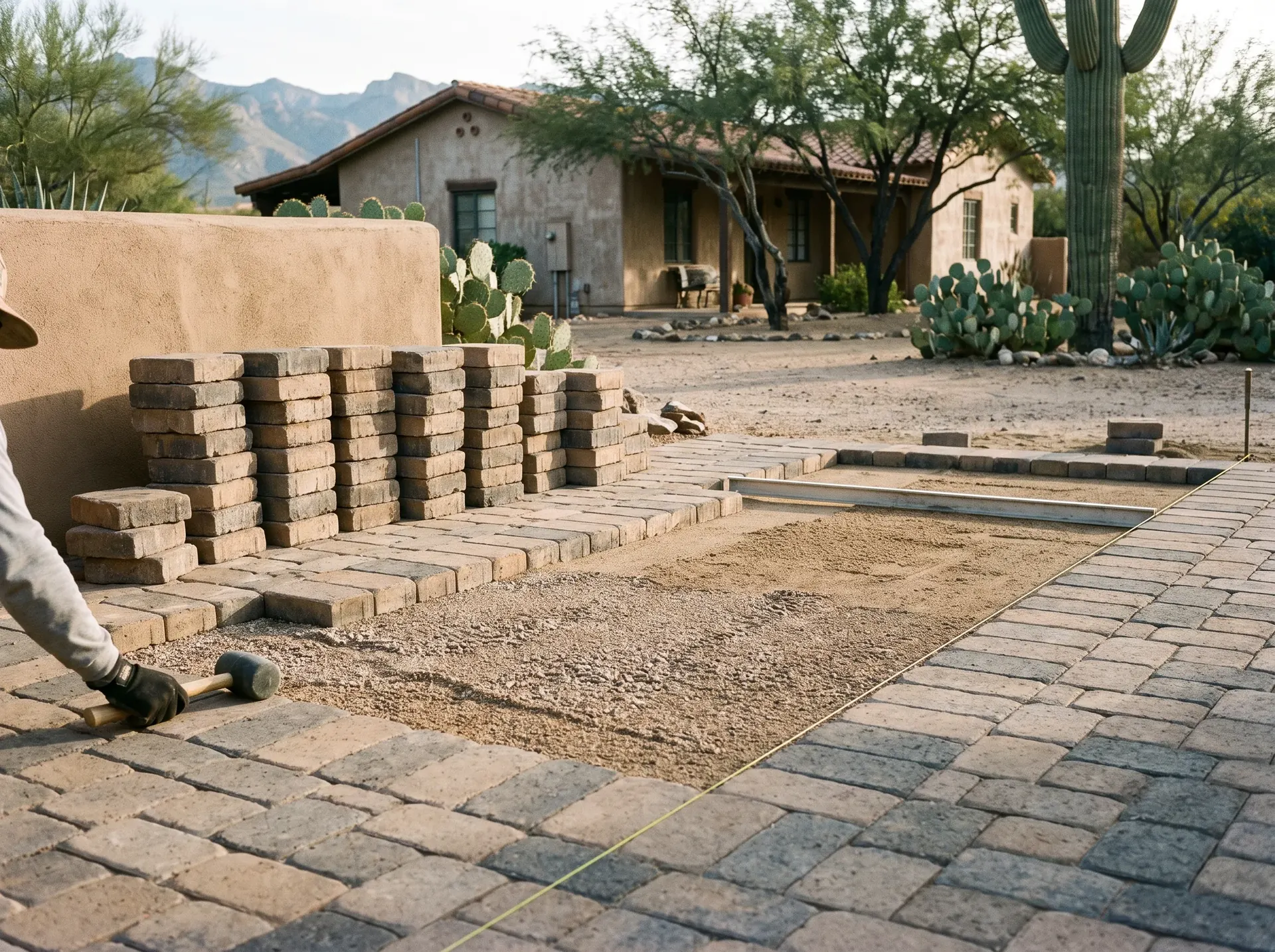 Paver Edging and BordersOne of the five services we offer that does not have a page of its own yet. It is on the services hub, and we are happy to quote it.On the services hub
Free on site quote
Get a quote for your repair
Send a photo of the problem area, roughly how big it is, and how long it has been getting worse. We will come out and find the cause.
Or call (520) 555-0194. Mon to Fri, 7am to 5pm. Saturday by appointment.
That is with us
We will call to arrange the site visit, usually the same working day. If it is urgent, call(520) 555-0194.