Real clay brick, not concrete made to look like it
Materials
Brick Pavers in Tucson
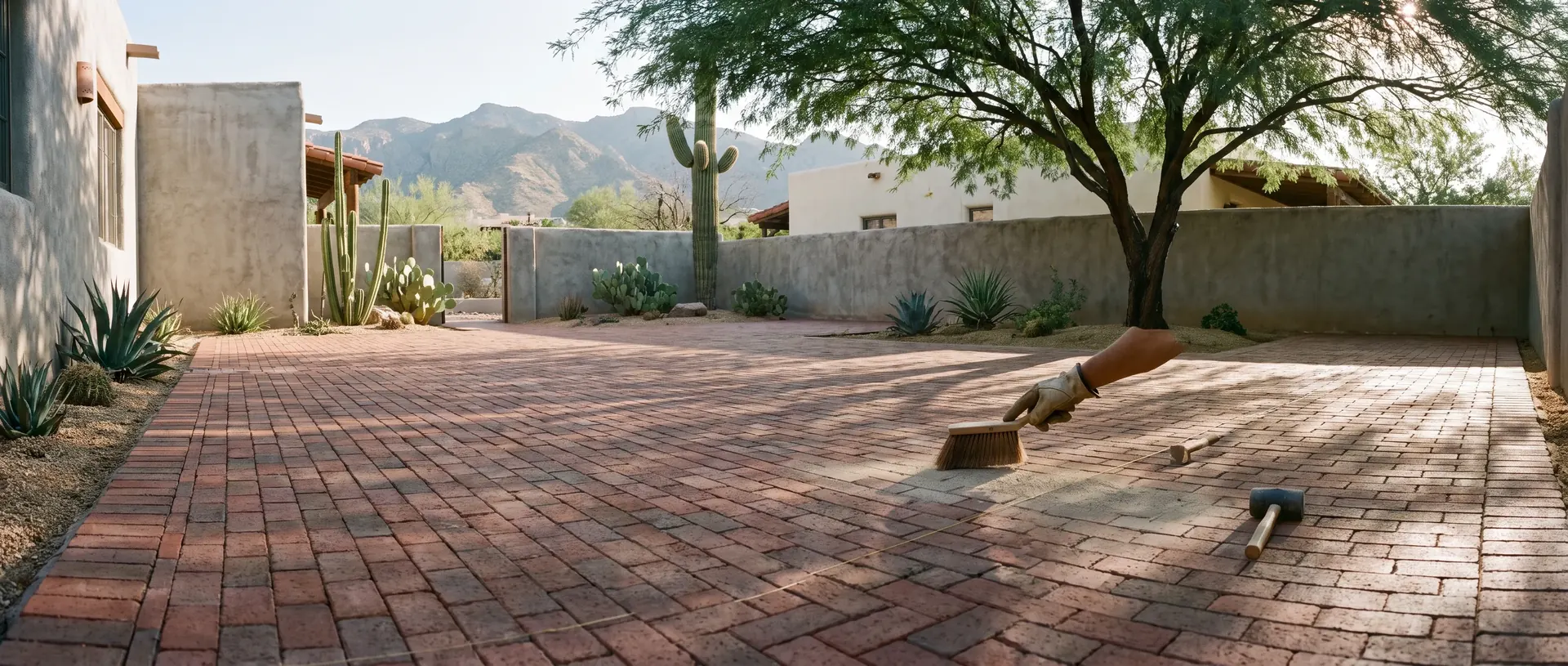
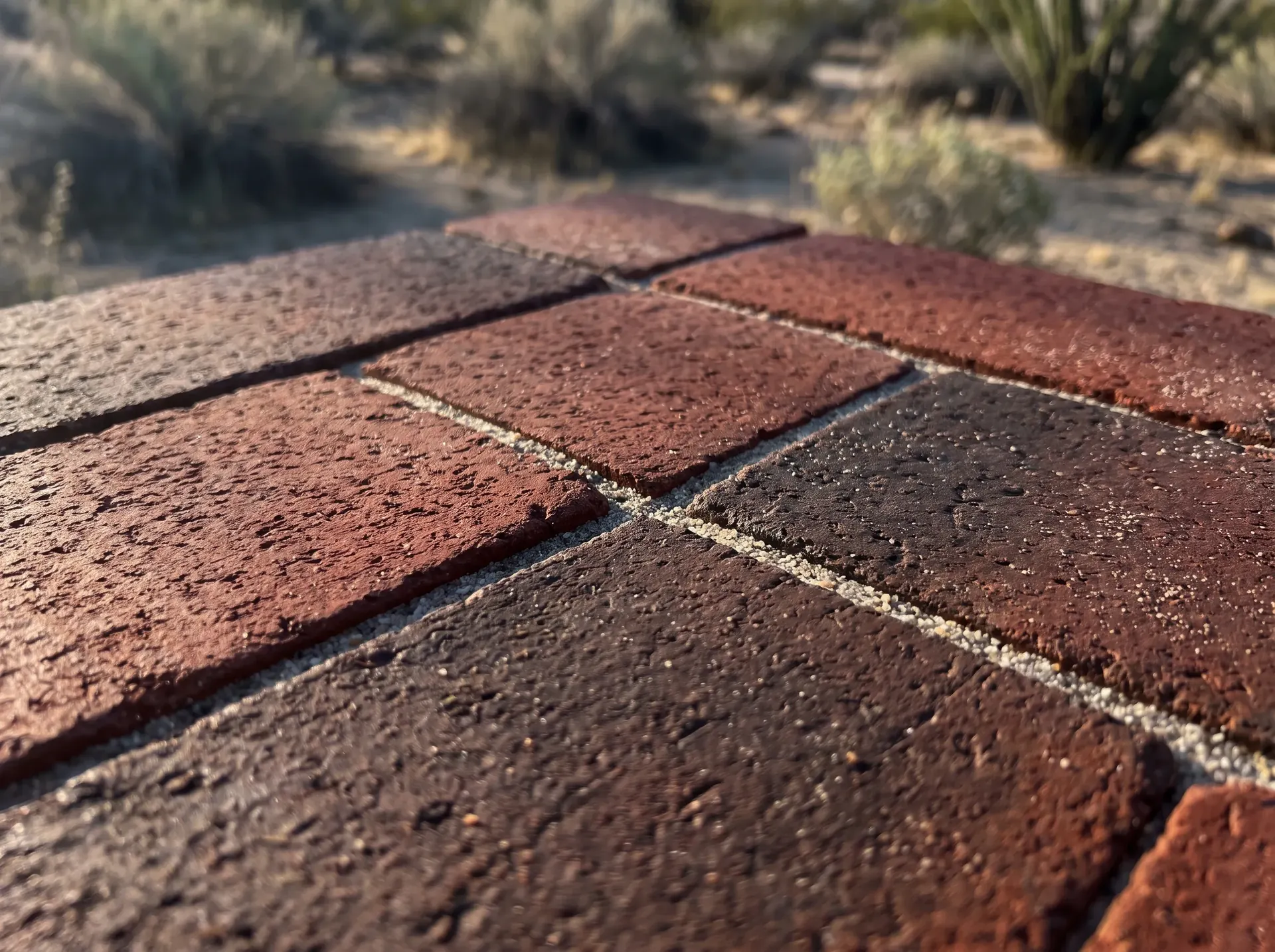
Fired clay, coloured all the way through. Twenty years of Tucson sun does very little to it, because there is no surface colour to lose.
Colour through the unit, so UV fade is minimal
Matched to existing brick on repairs and extensions
Running bond, herringbone and basket weave
Before you choose anything
First, the thing nobody explains at the yard
Around here "brick paver" gets used to mean almost any paving unit, including concrete ones moulded into a brick shape. They are not the same product and they do not age the same way.
A concrete paver takes its colour from pigment mixed into the concrete, and under this much ultraviolet exposure that colour softens over the years. Good ones do it evenly and it reads as maturing rather than fading. A clay brick takes its colour from the clay it was fired from, which means the colour is the material. There is nothing on the surface to lose, so a clay brick path laid twenty years ago looks essentially like it did on day one, just with a little more character in the joints.
That is the case for clay, and it is a strong one in a climate like this. The case against is that clay comes in a narrower colour range, mostly reds, umbers and buffs, it is usually a smaller unit so there is more laying labour per square foot, and it generally costs more than the concrete equivalent.
Where it really earns its place is on older Tucson properties. Clay brick sits naturally against slump block, stucco and mature planting in a way a large format concrete paver does not, and on a midtown house it often looks like it was always there.
The work itself
What we build
Entry courtyards and front paths
The most common use, and the one where clay brick most obviously suits the architecture. Small areas, high visibility, and a material that reads as permanent.
Brick patios and courtyards
Full entertaining surfaces in running bond, herringbone or basket weave, usually with a contrasting header or soldier course border to frame the field.
Repairs, extensions and matching
Extending or repairing existing brick paving, which is mostly a matching exercise. Older Tucson brick varies a lot, and finding a close match is worth the extra time because a mismatched patch is visible forever.
Line by line
What is included
Selection and matching
Brick chosen from real samples outdoors, and on repairs and extensions a genuine effort to match what is already there rather than using whatever is on the truck.
Excavation, base and bedding
Excavation to depth, subgrade compacted, aggregate base compacted in lifts, then a screeded bedding layer. Identical to any other paver assembly and just as important.
Laying, pattern and cutting
Laid to a string line in the agreed pattern, with the smaller unit size meaning more units and tighter tolerances per square foot. Cuts made on a saw, and border courses set out so the cuts land sensibly.
Edging, joints and finish
Restraint along every open edge, joint sand swept and settled, the field compacted with a protective pad, then washed down.
Six steps, in this order
How the build runs
1Site visit
We look at the area, the architecture it sits against, and any existing brick on the property that a new area would need to relate to.
2Brick, pattern and border
Samples seen outdoors in daylight, pattern chosen for the shape of the area, and a border course decided. On a small courtyard the border does most of the visual work.
3Fixed quote
Itemised, with base work and laying labour shown separately, since the smaller unit size affects the labour line more than the material line.
4Utilities and access
Blue stake locates before we dig, and access planned, which on a midtown lot usually means a wheelbarrow route rather than a machine.
5Install
Excavate, compact, base in lifts, screed, lay, cut, restrain, sand, compact, top up.
6Walkthrough
We walk it with you, check the borders and the line, and leave joint sand for the first season.
Why us
Why build with us
We tell you which product you are actually buying. If you ask us for brick pavers we will ask whether you mean clay or a concrete unit in a brick format, because the price, the look and the way it ages are all different and a lot of quotes in this market leave that ambiguous.
We take matching seriously on repairs. Older Tucson brick varies by manufacturer, by batch and by how much sun that particular area has taken, and a patch in the wrong red is more noticeable than the damage was. Sometimes the right answer is lifting and redistributing existing brick so the new material ends up somewhere less visible, and we will suggest that where it applies.
And we lay the small stuff properly. A clay brick field has roughly twice the joints of a large format concrete paver field, which means twice as many opportunities for the line to wander. It needs more string lines and more patience, and that is in the price rather than absent from the result.
Want a real number on brick?
Send us the area and a photo of the house it sits against. We will come out with samples.
From a People Also Ask harvest
Brick paver questions
What are the disadvantages of using brick pavers?
A narrower colour range than concrete, mostly reds, umbers and buffs. A smaller unit, so more laying labour per square foot and a higher installed cost. Clay is also more variable batch to batch, which matters if you ever need to match it later. And on a large modern house a small unit can read as busy where a large format paver would read as calm.
What goes underneath brick pavers?
The same assembly as any other paver: compacted aggregate base over a compacted subgrade, then a thin screeded bedding layer. Clay brick is not more forgiving than concrete about base preparation, and because the units are smaller, a soft spot in the base shows up as a visible dip sooner rather than later.
What is the average lifespan of brick pavers?
Clay brick paving is genuinely long lived and it is common to see it still performing decades on, which is why it turns up on old buildings all over the world. What needs attention on a much shorter cycle is the joint sand and the edge restraint. In this climate the colour advantage compounds: the brick looks close to original long after a pigmented concrete unit has softened.
Are brick pavers still in style?
On the right building, yes, and it is not really a fashion question. Clay brick suits older Tucson houses, courtyards and entries in a way that does not date, because it is reading as a traditional material rather than as a current one. On a contemporary desert house a large format concrete or porcelain paver usually sits better.
Which is cheaper, pavers or bricks?
Concrete pavers are generally cheaper, both in material and in laying labour, because the units are larger and there are fewer of them per square foot. Clay brick carries a premium on both lines. The base work underneath is identical either way, so the installed gap is proportionally smaller than the material gap suggests.
Which is better for a patio, bricks or pavers?
For a large patio, concrete pavers usually win on cost, on colour choice and on the calmer look of a larger unit. For a small courtyard, an entry or anything attached to an older house, clay brick often looks considerably better and the extra cost is small in absolute terms because the area is small. We install both and the recommendation follows the building.
What is the most popular paver color?
In this market, warm neutrals: buff, sand, tan and warm grey, usually in a blend rather than a single tone. There is a practical reason as well as a taste reason, since lighter colours are markedly more comfortable underfoot in summer. Charcoal and deep browns are popular in photographs and much less popular in July.
Pima County
Where we build
We build across Tucson, Oro Valley, Marana, Vail, Sahuarita, Green Valley, Catalina Foothills, Casas Adobes, Rita Ranch, Dove Mountain, Corona de Tucson and Tanque Verde.
Next door to this one
Related paver work
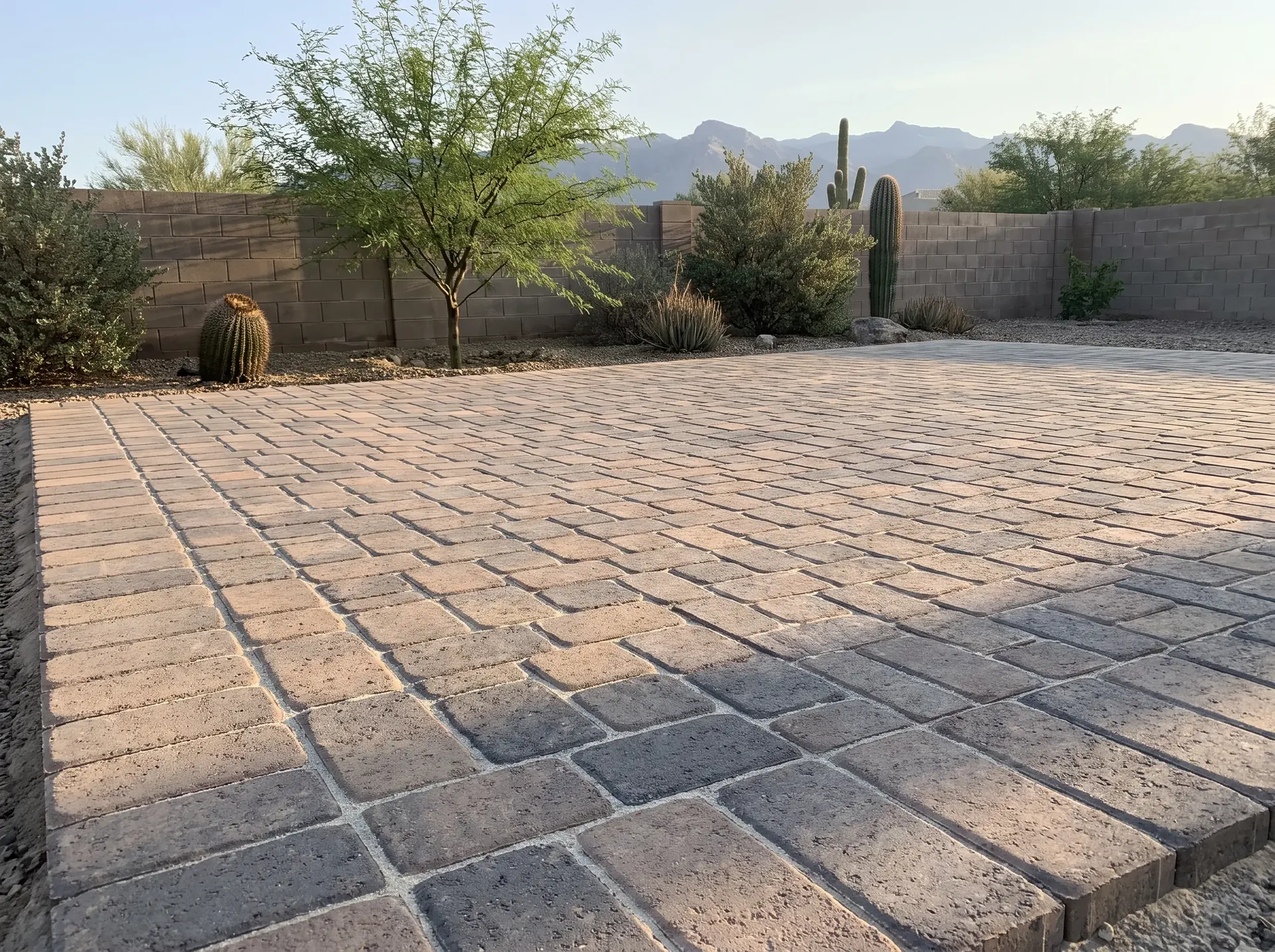 Paver PatiosThe main entertaining surface, sized around what actually goes on it and laid with the fall running away from the house. Excavation and base depth quoted in writing, edge restraint on every open edge.See the detail
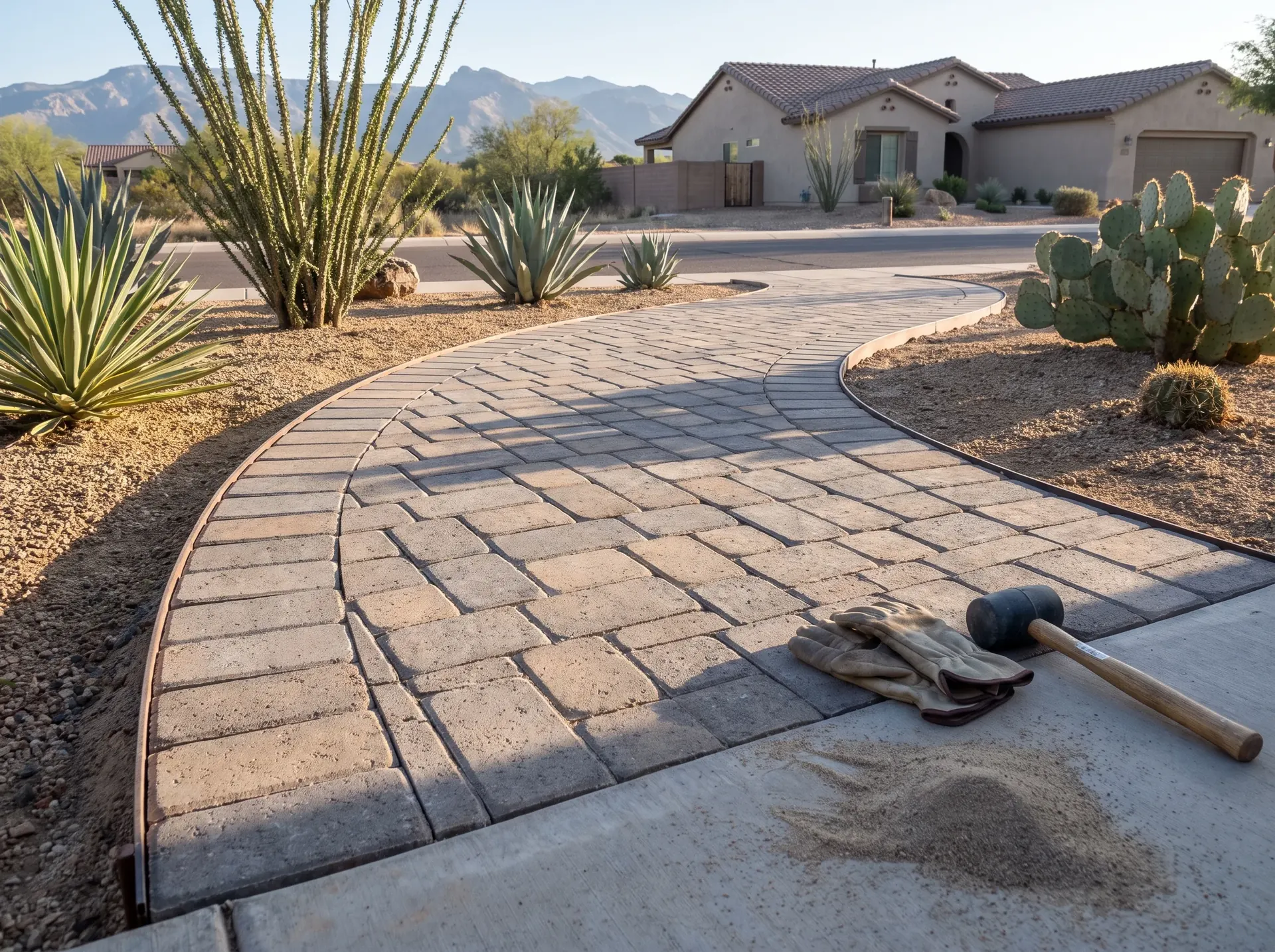 Paver Walkways and PathsNarrow surfaces have nowhere to hide. Both edges restrained, curves set to a radius rather than eyeballed, and cuts made on a saw so the border reads clean from the sidewalk.See the detail
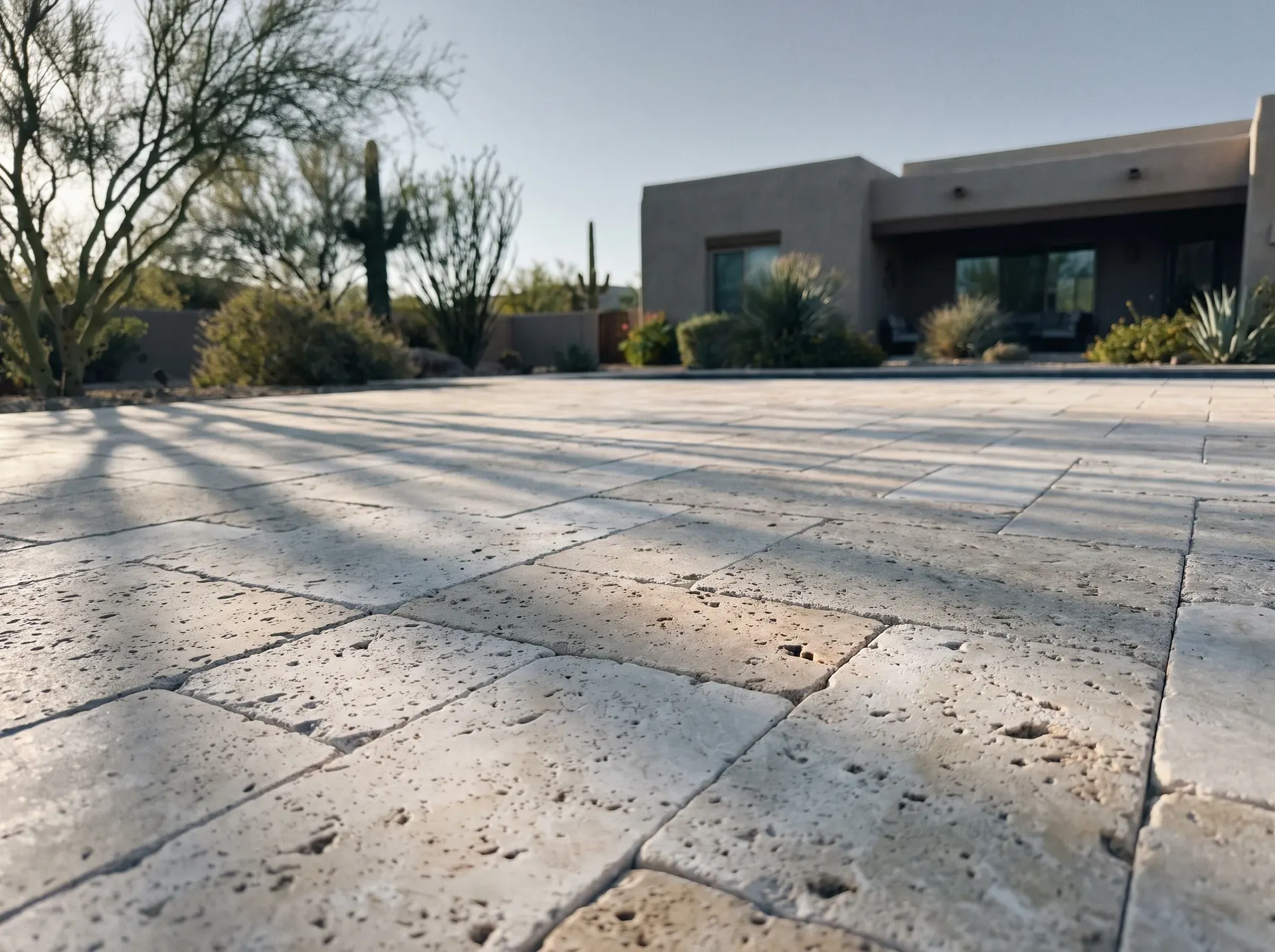 Travertine PaversNatural stone with real colour variation, noticeably cool underfoot for its tone, and porous enough that it wants sealing. Set on a compacted base, never on sand over dirt.See the detail
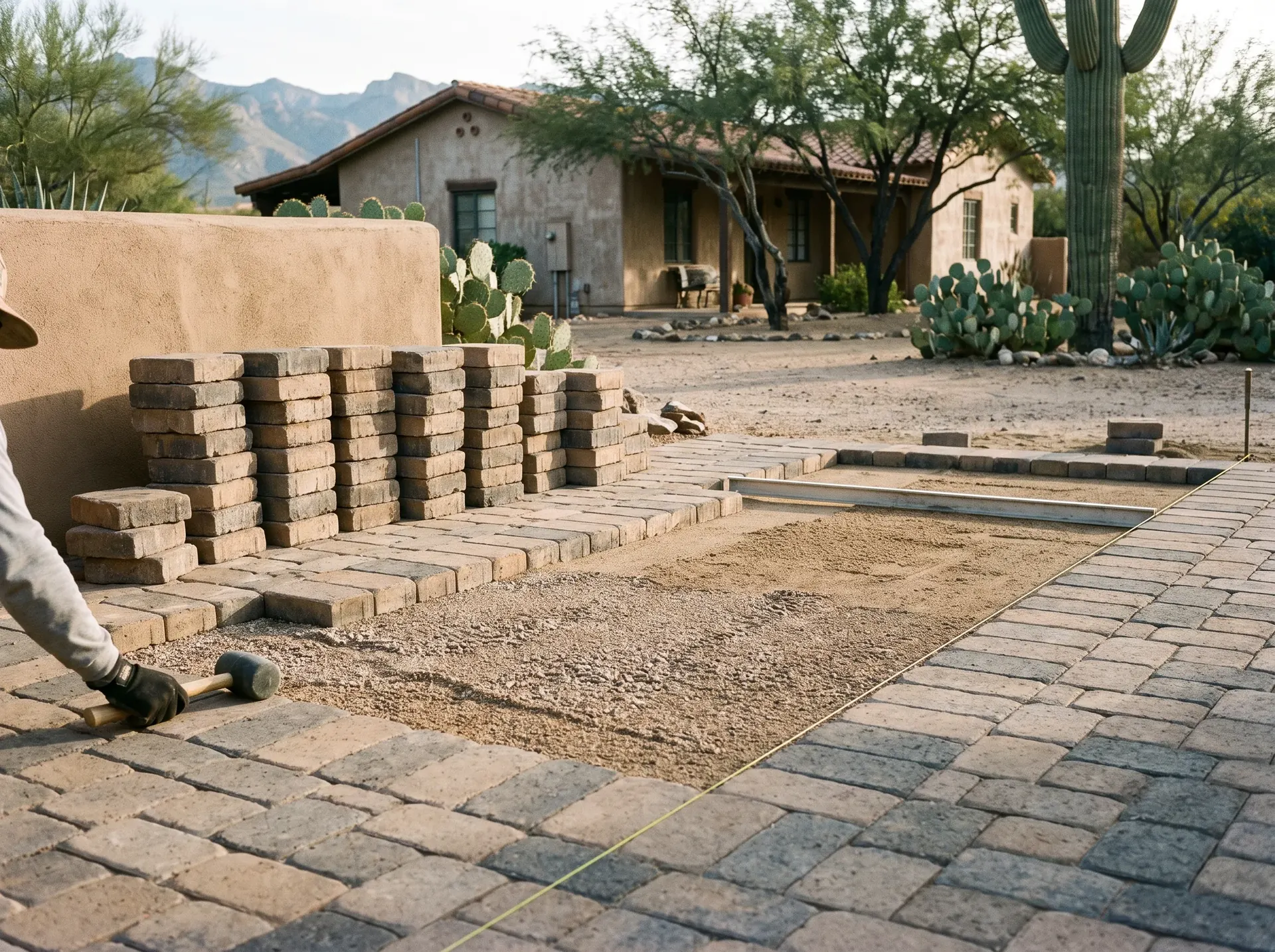 Paver Repair and RelevelingLift, find out why it moved, correct the base and the water source, relay the same pavers. A repair that skips the middle two steps is a repair you will pay for twice.See the detail
Free on site quote
Get a quote for brick paving
Tell us the area and whether you are matching existing brick. Photos of what is already there help a lot.
Or call (520) 555-0194. Mon to Fri, 7am to 5pm. Saturday by appointment.
That is with us
We will call to arrange the site visit, usually the same working day. If it is urgent, call(520) 555-0194.